
DISCLAIMER: I have tried to recreate events, locations, and conversations from memory. Some names and identifying details have been changed.

It has now been several — approaching many — years since the salad days of college. I’ve grown in a myriad of ways. I had, until recently, a “real” job — and may have one again. But before that, prior to about 2017, a solid chunk of my early work experience came from the service industry: barista, server, cleaning crew member. Some roles I look back on with mild fondness; others with lingering anger. More importantly, all have left me with a vast array of quirky workplace stories. One of them takes me back over a decade, to the spring and summer of 2013.
Staying Behind
In May of that year, I had just wrapped up my junior year at Purchase College in Westchester County, New York. In an effort to assert my independence, I opted not to return home to Brooklyn for the summer. Instead, I stayed in Westchester, thanks to my friend at the time, Sierra, who offered me her room in her parents’ house in Ossining while she headed to Northern California to stay with her boyfriend. She didn’t know how long she’d be gone, and I didn’t ask many questions. It felt like a perfect solution.
Landing the Job
I figured I’d find a summer job quickly — and I did. I landed a position as a counter server at a fast-casual organic restaurant in White Plains, reachable by Westchester’s Bee-Line bus system. I didn’t have a car or even a driver’s license at the time. Growing up in New York City, driving wasn’t a priority — and driver’s ed was never in the budget. The Bee-Line buses and I got acquainted fast, and I quickly learned why the vast majority of people in Westchester cling to their cars.
The Health Bar Life
The restaurant billed itself as a “health bar,” with organic cold-pressed juices as its main attraction. They also served wraps, smoothies, grain bowls, salads, and “sweet potato meals,” which were literally just reheated sweet potatoes with toppings. My uniform consisted of an olive-green patrol cap, a white T-shirt emblazoned with the phrase “CHUG IT, LIVE IT, LOVE IT,” and a cartoon coffee cup with wings. Paired with jeans and fluorescent orange Reeboks, I looked like a hyper-caffeinated crossing guard. That shirt was doomed from the start — permanently stained with berry juice, cacao powder, and sweat within the first couple of weeks.
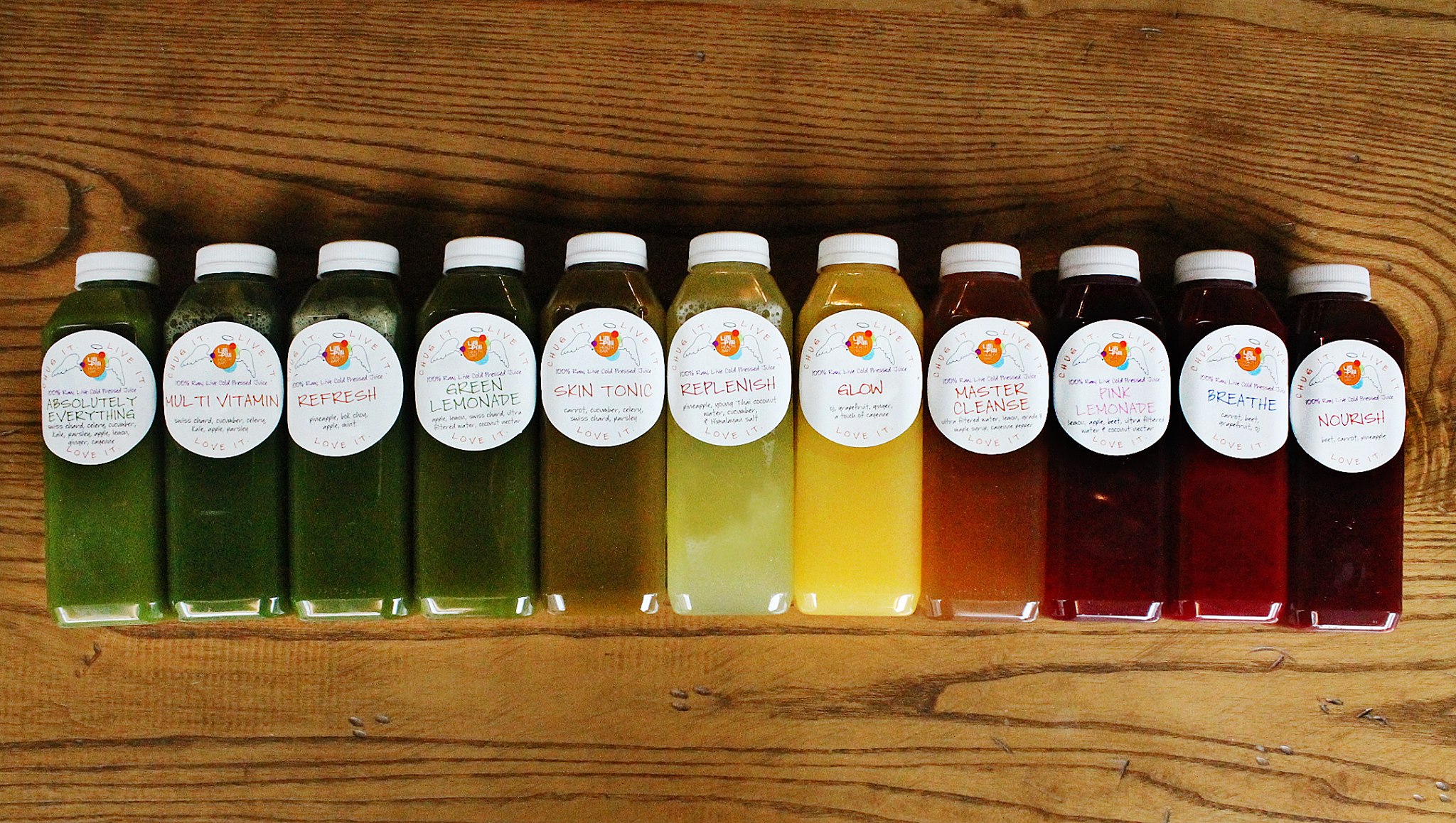
At eight dollars an hour — a whole seventy-five cents above minimum wage at the time — it wasn’t white-collar work, but it was something. I was trained by Eileen, a brisk, no-nonsense woman in her fifties. My first task was to hand-bag loose tea into silk sachets, a chore allegedly designed to extend the tea’s freshness. It would be the first of many tasks whose point would grow increasingly hard to detect.
Long Days, Longer Shifts
I spent my first couple of weeks at the health bar working the 11:00 AM to 4:00 PM shift, including the supposed “lunch rush” that seldom materialized. Most days blurred into long, boring stretches of wiping counters and standing around, trying to look busy. Eileen warned me that Sloane — the owner, and wife of one of Westchester’s most successful real estate developers — would often watch the restaurant’s security cameras remotely, then call to complain if anyone was caught standing still. Many a countertop got wiped down out of sheer paranoia.
The Watchful Eye of Sloane
Sloane lived in the Residences at the White Plains Ritz-Carlton, and her occasional presence in the restaurant was dreaded by all. The first time we met, she demanded a “cacao coffee.” No one had yet shown me how to prepare that particular item, so she screamed at me. She wore dark sunglasses and had a face so full of Botox that it barely moved. She also screamed if Pandora (the music streaming service) stopped playing. We had to keep the pop music going at all times. That summer’s soundtrack was Gotye’s Somebody That I Used to Know, Daft Punk’s Get Lucky, and Robin Thicke’s Blurred Lines — all blaring over the hum of smoothie blenders.
The restaurant was remarkably clean but simultaneously maintained questionable compliance with health codes. I didn’t once see a date dot on anything during my time there. However, the place always smelled pleasantly of fresh fruits and vegetables. Neither the manager of the health bar nor his backup, Sloane’s personal assistant, had any real concept of running a restaurant. The manager seemed more concerned with CrossFit than anything happening on the floor.

Commuting Chaos
Despite there being less than fifteen miles between White Plains and Ossining, getting to and from work was an ordeal from the start. I couldn’t take opening shifts because there were no buses running that early.
Most of the time I worked closing shifts instead, but even then, the Bee-Line buses would stop running before I could get back to the house. That left me with one option: calling a cab. A one-way ride from White Plains to Ossining cost a minimum of thirty dollars — nearly four hours of work at my eight-dollar wage — and that was if a cab would even come. Some nights I sat on the curb outside the Walmart across the street, wiping sweat and smeared Almay concealer off my face with my already stained T-shirt, blasting the Rolling Stones through my cheap earbuds, trying not to think about how much money I was losing just by existing.
Walmart Dinners
Since spending half my paycheck on cab fare wasn’t depressing enough, I usually capped off my night by wandering Walmart’s fluorescent aisles, looking for something — anything — to fill my stomach. It wasn’t uncommon for a midnight dinner to double as my first and last meal of the day. I’d load up on whatever felt easiest: a couple of microwaveable meals (Healthy Choice butternut squash ravioli was my go-to), a tube or two of Pringles — original or pizza-flavored — and an energy drink to keep me upright until I made it back to Ossining.
Sierra’s parents were light sleepers, so I tried to avoid making noise in their kitchen after hours. Most nights I’d quietly nuke a plastic tray of food and eat it cross-legged on Sierra’s bed, the smell of sweet potatoes and melted cheese blending into the damp summer air.
Business, and Life, Slowing Down
Business at the health bar was often painfully slow. Most customers were affluent, wellness-obsessed types, fully bought into the juice-fast culture of the era. When July came around, the health bar offered a Groupon for their juices. This led to a flood of new customers — and a flood of dumb questions. (“Can we replace the Replenish juice because the negligible amount of Himalayan pink salt threatens my health?”) A well-known rapper became a semi-regular; I still remember his order: arugula salad, no tomatoes, tuna instead of chicken.

Between the cab rides, bus fares, convenience food, and the occasional splurge — a couple of drinks at a bar, frozen yogurt, a halfway decent meal — I was chronically broke. My meager wages barely covered my rides home, let alone allowed me to save.
As the summer dragged on, the physical exhaustion layered with a deeper, scarier fatigue: a creeping fear that maybe this — the endless cycle of low pay, bad management, and expensive survival — was all my future would ever hold.
The Breaking Point
It was a lonely kind of tired, sitting cross-legged on a borrowed bed, scraping the last bites of microwaved pasta out of a plastic tray, scrolling through pictures of Sierra’s adventures in California. At nineteen or twenty, you’re supposed to believe you have the world at your feet. I felt like the world had been padlocked shut — and I’d somehow lost the key.
By August, it became untenable — physically, financially, emotionally. I made the decision to leave the job early and spend the last couple of weeks of summer doing nothing in particular. I was making so little money that not having a job barely made a difference. That said, I was happy to no longer be serving $12 smoothies to wealthy housewives. The restaurant itself closed down a few years later, as did the Walmart across the street.
Lessons That Stayed
While I’m no longer bagging tea or scrubbing countertops to shitty pop music, money, stability, and creative fulfillment remain stubbornly elusive. But I’m different now. I have more agency, more awareness of what I can and can’t tolerate. I’m still fighting for a better life, but at least now, I’m fighting on my own terms.
The Summer of Blah wasn’t a failure. It was my first real education in resilience, self-knowledge, and the economic realities no one warned us about.
 factorycandy