โ€œA Parade of Slutsโ€

Sexual Politics, Female Agency, and the Moral Framework of The Handmaidโ€™s Tale

Image via Huluโ€™s The Handmaidโ€™s Tale (Promotional Still)

โ€œBoy, look at these outfitsโ€ฆitโ€™s a parade of sluts.โ€

Thatโ€™s how Aunt Lydia snarls her assessment of the world before Gileadโ€”an era of sexual freedom, pants, dating apps, and bad decisions. In her eyes, the collapse of the former United States was inevitable. A society built on female autonomy was too much for her to stomach. It was bound, she believes, to unravel.

And yet, when you watch The Handmaidโ€™s Taleโ€”not just read it, but see it in its contemporary iterationโ€”it becomes clear that what Lydia (Ann Dowd) calls chaos is really freedom in disguise. Freedom to love badly. Freedom to grieve, to fuck, to run, to refuse. Freedom to choose, even when those choices are messy, shameful, or simply โ€œincorrect.โ€

Huluโ€™s adaptation doesnโ€™t just dramatize a dystopian futureโ€”it reflects, refracts, and confronts the moral panic of the present. In its brutal choreography of scarlet robes and white bonnets, it shows us what happens when protection becomes control, when โ€œfreedom fromโ€ is used to erase โ€œfreedom to.โ€

Lydia isnโ€™t just a characterโ€”sheโ€™s a mouthpiece for a worldview that sees freedom as chaos, and womenโ€™s bodies as the battleground.

In this scene where she delivers this โ€œparade of slutsโ€ line (season 1, episode 10), a group of young women, including June Osborne (portrayed by Elisabeth Moss), are marched through the Red Centerโ€”a repurposed gymnasium turned indoctrination facility where fertile women are โ€œtrainedโ€ to become Handmaids. It is here that they are taught to accept their assigned role in Gileadโ€™s monthly ritual of state-sanctioned rape known as The Ceremony. In this ritual, the Commander has sex with the Handmaid while she lies between the knees of his barren wife, whose hands rest on hers as a symbolic gesture of ownership and compliance.

Gilead has, with the exception of Alaska and Hawaii, replaced the United States of America. Fertile women are whittled down to their uteruses. Their identities erased, their names stripped. Their bodiesโ€”functionally desecratedโ€”are rendered public property.

Lydia refers to them always as โ€œgirls,โ€ never โ€œwomen.โ€ Her power comes from belittling theirs. And in that same scene, she preaches to them: โ€œHumble yourself in the eyes of the Lord, and He shall lift you up.โ€ How do they humble themselves? By disappearing. Hands clasped. Eyes down. Even in forced service to this new world order, sexually active women must hang their heads in shame.

This is where Lydiaโ€™s fatal miscalculation begins. She believes modesty can erase memory. That shame can erase longing. That rebranding women as vessels will unwrite their history. But even in this forced new order, the truth seeps through: sex is still happening. Desire still hums beneath the ritual. And everyoneโ€”Commanders, Wives, Handmaidsโ€”knows it.

Letโ€™s be honest: Gilead cloaks the Ceremony in Biblical reverence, but itโ€™s a pageant of control. The sex is stiff, quiet, choreographedโ€”designed to be clinical. Thereโ€™s supposed to be minimal touching, no intimacy. Itโ€™s meant to look like healing. But it is, by all measures, state-sanctioned rape. A performance for the benefit of power.

And yet, even in this cold and calculated setting, the lines blur. Commanders bend the rules. Wives develop resentments. Handmaidsโ€”particularly the younger onesโ€”are still viewed through a lens of temptation. Which brings us back to something obvious that too many pretend isnโ€™t true: humans gonna human. They want. They deviate. They make up stories to justify the gap between what theyโ€™re told to want and what they actually crave.

Peopleโ€”not just men, and I cannot emphasize that enoughโ€”will use almost any excuse to justify their desire to color outside the lines. Rather than own up to non-monogamy, sexual need, or the hunger to imprint on more than one life, they build myths. Rituals. Ideologies. Sometimes entire nation-states.

Gilead wasnโ€™t born of perversion. It was born of denialโ€”denial of messiness, of ambiguity, of the very human impulse to want what youโ€™re told you shouldnโ€™t. Most people donโ€™t want absolute power. They want permission. They want the illusion of righteousness wrapped around their hungers.

And honestly? I get it. Human beings are kind of gross. Iโ€™m gross too. But Iโ€™d rather name it than pretend itโ€™s virtue.

We see this need for control masquerading as righteousness most clearly in the men of Gileadโ€”particularly in Commander Waterford and later with Commanders Blaine and Wharton.

In season two, we see Nick Blaine (Max Minghella) get assigned a teenage wife. She is quiet, compliant, pious, and visibly nervous. This isnโ€™t courtship. Itโ€™s state-sponsored grooming at best. And no one flinches, except for June. Because in Gilead, ritual is how they normalize the unthinkable.

The girl is later executed by drowning for having an affair (with a young man closer to her age) after Blaine neglects her. And he does neglect her, because he is not, in every horrifying sense, a pedophile. He doesnโ€™t abuse her. But he doesnโ€™t protect her either.

Commander Putnam (Stephen Kunken), too, takes his pubescent Handmaid as a mistress, only to ultimately be executed for apostasy, as he raped the young girl before she was officially assigned to him, a stark violation of Gilead law.

And then of course, there is Commander Waterford (played by Joseph Fiennes), Serena Joyโ€™s first husband. Waterford is a rapist. A hypocrite. A pompous ass. A pervert. A founder of Gilead and a leader in its government, he is directly responsible for the suffering and deaths of thousands, at least. His eventual fate suits him. He is eventually executed via beating and then hanged, but not before spending years benefiting from the very system he helped construct. Heโ€™s beaten to death and hanged by a horde of women whose lives his ideology attempted to destroyโ€”destiny catching up to cruelty after years of impunity.

Then, finally, in the final season, Commander Wharton (Josh Charles) marries Serena Joy (Yvonne Strahovski) in a lavish, unsettling ceremony, only to receive a Handmaid as a โ€œgiftโ€ that same night. Itโ€™s positioned as practicalโ€”about fertility, about dutyโ€”but the reality is far more sinister. When Serena protests, trying to humanize the girl and pleading with Wharton that she herself is fertile, he looks her in the eyes and says, โ€œBut youโ€™re only one person, my love.โ€ And there it is. The quiet confession. The truth beneath the system. This isnโ€™t about building big families. Itโ€™s about leaving a mark on multiple women. Itโ€™s about indulgence under the guise of order.

Not every woman in Gilead is raped. But that does not mean theyโ€™re free.

The system has its own form of punishment for women it doesnโ€™t want to fuck: it makes them invisible. If some women are over-sexualized in Gilead, others are erased altogether.

Marthas are the domestic classโ€”women too old, infertile, or noncompliant to bear children. They cook. They clean. They keep the household running in silence. They wear drab olive and speak in whispers. There is no ritual to their existence. No protection. No recognition. Marthas compete with Handmaids to represent the worst of the chattel slavery that defines Gilead.

EconoWives are allowed to live with their husbandsโ€”if you can call it living. They wear grey. They do everything and get nothing. They raise children if they can, labor if they must, but they are seen as second-class even by other women. They are barely acknowledged by the state.

And then there are the women in the Coloniesโ€”exiled to dig through toxic waste, stripped of purpose, future, or identity. Gilead doesnโ€™t execute them, but it doesnโ€™t let them live either. It rebrands slow death as spiritual grace.

These women are not seen as sexual. They are not even seen as dangerous. They are simply erased. And in Gilead, thatโ€™s supposed to be a mercy.

But not every woman is erased. Some are repurposed.

Enter Jezebelsโ€”Gileadโ€™s underground brothel, reserved for powerful men and visiting diplomats. Itโ€™s where โ€œfallenโ€ womenโ€”rebels, queers, former professionals and several former Handmaidsโ€”are given a second chanceโ€ฆ if you can call it that. Their lives are spared, but their bodies become a playground.

The hypocrisy is brutal. Jezebels is the physical manifestation of Gileadโ€™s central lie: that it values purity. It doesnโ€™t. It values control. These women are dressed up in cocktail dresses and lingerie, forced to perform sexual servitude in secret while the regime praises chastity in public. Itโ€™s a system that punishes visibility while quietly indulging in everything it condemns.

Moira, Juneโ€™s best friend (played by Samira Wiley), ends up here after escaping the Red Center early in the story. Her survival comes at the cost of her freedom. Her slow walk through that mirrored hallwayโ€”wrapped in silk, neon, and dangerโ€”is one of the seriesโ€™ most chilling visuals. Sheโ€™s not protected. Sheโ€™s not empowered. Sheโ€™s tolerated, because sheโ€™s useful. Because her body can still serve a purpose.

Jezebels isnโ€™t a loophole. Itโ€™s a mirror. A funhouse reflection of every system that pretends to protect women while exploiting their bodies behind closed doors.

If Jezebels is where Gilead hides its appetites, then Janine is where it reveals its cruelty.

Janine (Madeline Brewer) is often treated as a form of dark comic reliefโ€”flighty, overemotional, naรฏve. But her story is one of the most brutal in the entire series. Lydia has one of her eyes taken out early on for resisting. She is raped, repeatedly, under the guise of The Ceremony. She becomes pregnant, gives birth, and then watches her child be taken from her and renamed. She tries to end her life. She survives. And somehow, she remains tenderโ€”an impossible softness in a world that rewards only silence and steel.

She is everything Gilead hates: vulnerable, loving, defiantly alive.

Commander Lawrence (Bradley Whitford), who first shelters June as his Handmaid, is one of the few men in Gilead who shows sincere glimpses of guilt. He refuses to perform the Ceremony with Juneโ€”less so out of virtue, more so out of discomfort and a simple lack of desire to do so. He is only forced to comply when a state doctor comes to literally check that he ejaculated. Itโ€™s one of the most viscerally humiliating scenes in the seriesโ€”for everyone involved. Even his resistance is bureaucratized. The trauma of witnessing the ordeal ultimately drives Lawrenceโ€™s wife to madness.

Later, Lawrence arranges for Janine to be sent to Jezebels after his new wife, Naomi (formerly Naomi Putnam) refuses to have her in the home. Naomiโ€™s daughter is in fact Janineโ€™sโ€”she is Angela to Gilead, Charlotte to Janine. Itโ€™s a grotesque act of protection. A trade-off. A life spared, but at what cost? Lawrence doesnโ€™t save Janine. He simply chooses the less immediate cruelty. And in Gilead, sometimes thatโ€™s the closest thing to mercy anyone gets.

Throughout the series, June is trapped between two men: Luke (O-T Fagbenle), the man she loves from before, and the aforementioned Nick, the man she loves in captivity. Neither can save her. Neither fully understands her. And yet, their existence in her orbit is a reminder that even in systems built to erase choice, desire still flickers. Juneโ€™s agency is constrained, but never extinguishedโ€”not emotionally, intellectually, or sexually.

Toward the end of the series, June gives a monologue that cracked something open in me. Iโ€™ve lived long enough to know what it feels like to be both too much and not enough. To be wanted and discarded. To be told silence is safety. Thatโ€™s why Juneโ€™s voice matters so much. She speaksโ€”not with sorrow, but with fireโ€”about the women whose voices have been taken.

โ€œโ€ฆweโ€™re not fallen women,โ€ she says.

โ€œWeโ€™re rising up because, in each and every one of us, is this immaculate soul that was given to us by God thatโ€™s just crying out for dignity and freedom.โ€

Not just survival. Not protection. Dignity. Freedom.
The things weโ€™re told we donโ€™t deserve unless we behave properly. Unless we play the part.

But June doesnโ€™t behave, despite her early efforts. She defies. She resists. She choosesโ€”over and over againโ€”herself, her daughters, her rage, her complexity. She is not pure. She is not polite. And thatโ€™s precisely what makes her powerful.

Which brings me back to that line, that insult Lydia flung like scripture: โ€œa parade of sluts.โ€

Maybe thatโ€™s what we are.
Women who refuse to be simple.
Women who choose desire, even when it makes us look bad.
Women who make mistakes, then get up and make more.
Women who want to be touchedโ€”and left alone
Women who want to own our bodiesโ€”even when weโ€™re still figuring out how.

Gilead fears sluts not because theyโ€™re dirtyโ€”but because theyโ€™re free. And so do a lot of people, honestly.

But Iโ€™ll take a parade of sluts over an army of sanctimonious zealots any day.

Originally published via Gigi After Hours on Substack (May 16, 2025).

Let me know what you thinkโ€”DMs are open, comments welcome, or find me over at Gigi After Hours for more like this.

I Canโ€™t Afford It, But I Still Love It: Eating in NYC

The places I return to โ€” physically, spiritually, and otherwise.

New York City is changing, faster than ever, it seems. But these are a few of the places I return to โ€” sometimes physically, sometimes just in memory. Some are holdouts. Some are chains. Some are ridiculous. All of them are real to me. A combination of old and new in a city thatโ€™s constantly shifting identities.

Collage of New York City restaurants featured in the article

Nathanโ€™s Famous (Coney Island)

Iโ€™ve been going to Nathanโ€™s for as long as I can remember. My paternal grandmother lived in Coney Island, and a visit always held the promise of a stop at the flagship location on Surf Avenue. As far as Iโ€™m concerned, the Fourth of July isnโ€™t complete without the Nathanโ€™s Hot Dog Eating Contest broadcast โ€” and yes, Iโ€™ve watched every year, even when Iโ€™ve lived abroad. I even met Joey Chestnut once โ€” at a Kroger in Cincinnati, of all places. (He was lovely. Very polite. Iron stomach.)

Are the hot dogs overpriced? Absolutely. But theyโ€™re also delicious. I stopped eating pork hot dogs decades ago โ€” too pale, too rubbery, too weird โ€” so the fact that Nathanโ€™s uses all-beef kosher-style dogs (are they technically kosher? unclear) has always worked in my favor. The crinkle-cut fries are elite. The cheese fries? Divine. This place is a relic, a tourist trap, a national institution masquerading as a corner stand โ€” and I love it. Get the lemonade.


Levain

Chocolate Chip Walnut. Oatmeal Raisin. And my favorite โ€” the perennial Black and White Chocolate Chip. Decadent. Delectable. Delightful. No shade to Dominique Ansel, but Iโ€™ve never cared for the gooey treacliness of cronuts or the greasy pats of salted butter masquerading as cookies. Levain gets it right: hefty, crisp at the edges, chewy without being molten.

Anselโ€™s Double Chocolate Pecan is quite good, and Iโ€™ll give credit where itโ€™s due. But if you want a cookie fit for a queen? Go no further. Levain is the indulgence I crave when I want something truly celebratory โ€” and now, sadly, one I canโ€™t quite afford. Iโ€™m weirdly fine with that. Some cookies should be reserved for special occasions.


Katzโ€™s Delicatessen

Yes, itโ€™s touristy now. Sure, the ticket system makes me a little anxious every time. But Katzโ€™s is still Katzโ€™s. The question of pastrami or corned beef remains evergreen. Some people pretend thereโ€™s a right answer. There isnโ€™t. It matters less which option you choose than how you prepare it: get it in its original fatty state, falling apart on rye with grainy mustard โ€” it may be painfully overpriced for many nowadays, but it remains one of the most satisfying things you can eat in this city.

You donโ€™t need the โ€œIโ€™ll have what sheโ€™s havingโ€ table to feel something here. Just the fluorescent hum, the clatter of trays, the guy at the counter who slices you a sample without being asked. Katzโ€™s has personality, and a sense of humor: the last time I was there, someone had hung a framed photo of Al Goldstein eating pastrami next to the ladiesโ€™ room. I nearly choked laughing. Whoever did that? God bless.

Katzโ€™s is one of the few places in Manhattan that still feels like it operates on its own rules. Not faster, not fancier โ€” just there, pulsing with a very specific kind of New York energy. A sandwich, a Dr. Brownโ€™s, fries or maybe a knish if youโ€™re feeling bold. Itโ€™s chaos, salt, and permanence.


Shake Shack

I know what it represents: a sanitized burger chain posing as nostalgia, the poster child for gentrification served in a paper boat tray. Jeremiah Moss would spit on my crinkle fries. And yet โ€” Iโ€™ve been there, more than once. Midtown. Astor Place. Flatbush Avenue in Brooklyn. Discreetly shoving my Shake Shack bag into a zippered reusable tote for the commute home.

I recently discovered the Shack Stack: a quarter-pound of 100% Angus beef with American cheese, topped with a crispy-fried portobello crown, lettuce, tomato, and ShackSauce on a toasted potato bun. Hands down, one of the best burgers Iโ€™ve ever had. I canโ€™t deny it. Sometimes, youโ€™re too tired to resist the tide. And a $9 burger tastes like a massage feels.


Serendipity 3

I love Serendipity 3 in large part because of the Warhol connection. Itโ€™s sugary, campy, a little over the top โ€” exactly the kind of place that made sense in Andyโ€™s orbit. Legend has it he adored the Frrrozen Hot Chocolate and the lemon icebox cake. My favorites? The โ€œSummer Briesโ€ sandwich, once available only at the original East 60th Street location but now relegated to the Times Square spin-off: sliced turkey, melted Brie, sliced apples, alfalfa sprouts, raisin pumpernickel, and Thousand Island dressing. It shouldnโ€™t work. It absolutely does. Perfect for the wandering palate โ€” mine included.

The frozen drinks are as absurd as they are wonderful. The Frrrozen Hot Chocolate is the classic, but Iโ€™ll take the Frrrozen Hot Strawberry White Chocolate any day. Serendipity is like a dreamscape of unique desserts and elevated American fare. I canโ€™t afford it right now, but Iโ€™ve made peace with that. Some places, like Serendipity, should exist just outside your daily reality. Theyโ€™re not for errands. Theyโ€™re for occasions. They make you feel like youโ€™ve stepped sideways into a pastel-colored dream fueled by sugar and style.


Jollibee

I first learned about Jollibee from the late, great Anthony Bourdain โ€” which feels both extremely Filipino and extremely New York: a white guy with impeccable taste blessing the masses with a new brand of fried chicken and rice. In 2016, I made the pilgrimage to Woodside, Queens, home of the cityโ€™s first Jollibee.

That mascot alone โ€” bee, bowtie, irrepressible joy โ€” was enough to earn my loyalty. But the real magic? Chickenjoy fried chicken, sweet Jolly Spaghetti, and the crisp, golden Peach Mango Pie. I still donโ€™t understand why they took halo-halo off the menu. I mourn it like I mourn the McDonaldโ€™s chicken fajita. (Yes, Iโ€™m dating myself. I donโ€™t care.)


Economy Candy

There are candy stores, and then thereโ€™s Economy Candy. No minimalist displays. No artisanal branding. Just bins, buckets, and chaos. Itโ€™s what childhood felt like โ€” if childhood came with 2,000 kinds of sugar and walls nearly collapsing under the weight of nostalgia.

Licorice laces. Chocolate coins. Pez dispensers. Turkish taffy. Sour belts. International treats like Canadian Coffee Crisp, Japanese Kit Kats, and Milka bars (oh man, the Milka bars). The smell alone is half-sweet, half-industrial, and it sticks with you for hours. Iโ€™ve walked in with $5 and walked out with a sensory overload and at least one item I forgot I loved. Every time Iโ€™m in there, I rediscover Chuckles. Itโ€™s tied to a private joke, but I feel compelled to buy a pack anyway.

Itโ€™s cluttered. Itโ€™s dusty. Itโ€™s everything a candy store should be. A place where joy is crammed onto every surface and no one is too old for sugar. Long live this storied institution.


Taim

Taim: bright, clean, unexpectedly satisfying. I discovered this place in 2014 through a coworker and walked out converted. The falafel โ€” crisp, herbaceous, soft inside โ€” is some of the best Iโ€™ve had outside the Middle East. The cauliflower shawarma pita has the power to uplift. But my personal recommendation: The Sabich Pita. Itโ€™s not quite Sabich Frishman in Tel Aviv, but itโ€™s the best Iโ€™ve had in the U.S. And get the fries, with any of the delicious sauces.

What I love about Taim is how quietly confident it is. No trend-chasing. No overwrought packaging. Just good food made well and served fast. Itโ€™s healthy without being smug, casual without being forgettable.

In a city that sometimes confuses excess with quality, Taim is a reminder that simple can still slap.


Donut Shoppe (Shaikhโ€™s Place)

Tucked under the Q train on Avenue U in Brooklyn, the Donut Shoppe โ€” also known as Shaikhโ€™s Place โ€” is a relic of old New York charm. Its unassuming exterior hides the warmth inside, where the scent of freshly fried dough greets you at the door. The glazed donuts โ€” crisp on the outside, pillowy on the inside โ€” have a cult following, and the cheap coffee is a comforting constant in a city that never stops inflating its prices.

Cash only. The sandwiches and tacos are pretty good too. Open 24 hours, itโ€™s the kind of spot where night owls and early risers cross paths over paper Anthora cups and quiet conversation about Yankees vs. Mets. Back in 1999, I was commuting from Bergen Beach and caught my bus right across the street. The Donut Shoppe was there then, and itโ€™s still there now. Some places donโ€™t need a rebrand.


Rice to Riches

Thereโ€™s no reason this place should work. Maybe thatโ€™s the real reason people have accused it of being a front for a criminal enterprise. Itโ€™s a sleek, aggressively branded temple to rice pudding โ€” a dessert that sounds like something youโ€™d be served at some sad hospital or institution. And yet, Rice to Riches is irresistible. Futuristic fonts. Wall-to-wall snark. A menu that reads like someone dared them to make rice pudding sexy.

Coconut Coma. Sex, Drugs, and Rocky Road. Oreo โ€œGasm.โ€ You get the idea. The pudding itself? Shockingly good. Thick, creamy, borderline obscene in its richness. Dessert as performance art. Thereโ€™s something deliciously unserious about walking into a place that treats rice pudding like haute couture for the stomach. Sometimes indulgence needs to be ridiculous.


I donโ€™t know how much longer Iโ€™ll be here. But I know these places helped shape my life in this city โ€” and when I think of โ€œhome,โ€ these are some of the flavors Iโ€™ll remember.

Summer of Blah

DISCLAIMER: I have tried to recreate events, locations, and conversations from memory. Some names and identifying details have been changed.


It has now been several โ€” approaching many โ€” years since the salad days of college. Iโ€™ve grown in a myriad of ways. I had, until recently, a โ€œrealโ€ job โ€” and may have one again. But before that, prior to about 2017, a solid chunk of my early work experience came from the service industry: barista, server, cleaning crew member. Some roles I look back on with mild fondness; others with lingering anger. More importantly, all have left me with a vast array of quirky workplace stories. One of them takes me back over a decade, to the spring and summer of 2013.

Staying Behind

In May of that year, I had just wrapped up my junior year at Purchase College in Westchester County, New York. In an effort to assert my independence, I opted not to return home to Brooklyn for the summer. Instead, I stayed in Westchester, thanks to my friend at the time, Sierra, who offered me her room in her parentsโ€™ house in Ossining while she headed to Northern California to stay with her boyfriend. She didnโ€™t know how long sheโ€™d be gone, and I didnโ€™t ask many questions. It felt like a perfect solution.

Landing the Job

I figured Iโ€™d find a summer job quickly โ€” and I did. I landed a position as a counter server at a fast-casual organic restaurant in White Plains, reachable by Westchesterโ€™s Bee-Line bus system. I didnโ€™t have a car or even a driverโ€™s license at the time. Growing up in New York City, driving wasnโ€™t a priority โ€” and driverโ€™s ed was never in the budget. The Bee-Line buses and I got acquainted fast, and I quickly learned why the vast majority of people in Westchester cling to their cars.

The Health Bar Life

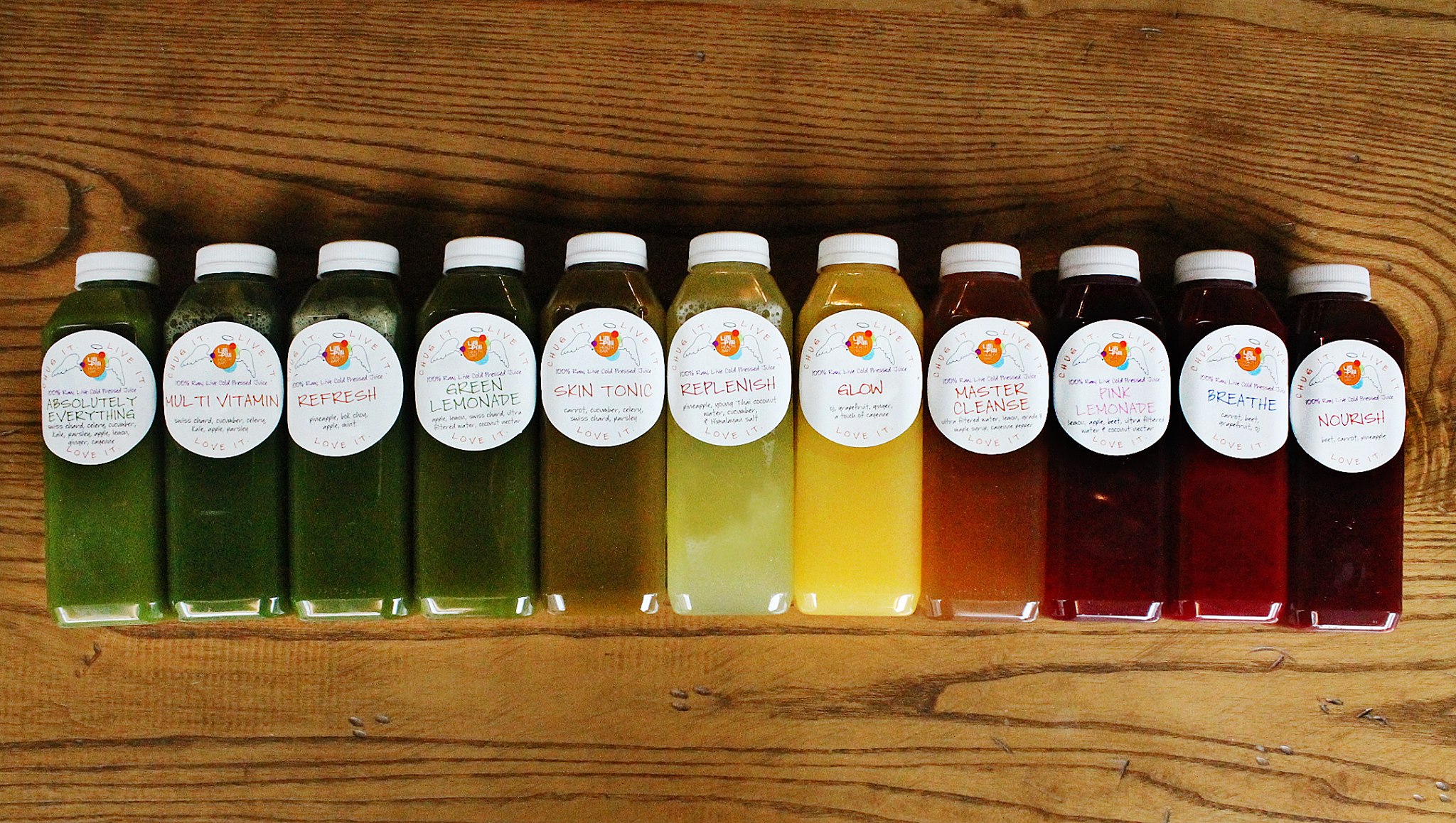
The restaurant billed itself as a โ€œhealth bar,โ€ with organic cold-pressed juices as its main attraction. They also served wraps, smoothies, grain bowls, salads, and โ€œsweet potato meals,โ€ which were literally just reheated sweet potatoes with toppings. My uniform consisted of an olive-green patrol cap, a white T-shirt emblazoned with the phrase “CHUG IT, LIVE IT, LOVE IT,” and a cartoon coffee cup with wings. Paired with jeans and fluorescent orange Reeboks, I looked like a hyper-caffeinated crossing guard. That shirt was doomed from the start โ€” permanently stained with berry juice, cacao powder, and sweat within the first couple of weeks.

10991533_798440110241342_4881832034208515140_o
Lightning in bottles (or so they said). This wasn’t even their full collection of juices!

At eight dollars an hour โ€” a whole seventy-five cents above minimum wage at the time โ€” it wasnโ€™t white-collar work, but it was something. I was trained by Eileen, a brisk, no-nonsense woman in her fifties. My first task was to hand-bag loose tea into silk sachets, a chore allegedly designed to extend the teaโ€™s freshness. It would be the first of many tasks whose point would grow increasingly hard to detect.

Long Days, Longer Shifts

I spent my first couple of weeks at the health bar working the 11:00 AM to 4:00 PM shift, including the supposed โ€œlunch rushโ€ that seldom materialized. Most days blurred into long, boring stretches of wiping counters and standing around, trying to look busy. Eileen warned me that Sloane โ€” the owner, and wife of one of Westchesterโ€™s most successful real estate developers โ€” would often watch the restaurantโ€™s security cameras remotely, then call to complain if anyone was caught standing still. Many a countertop got wiped down out of sheer paranoia.

The Watchful Eye of Sloane

Sloane lived in the Residences at the White Plains Ritz-Carlton, and her occasional presence in the restaurant was dreaded by all. The first time we met, she demanded a โ€œcacao coffee.โ€ No one had yet shown me how to prepare that particular item, so she screamed at me. She wore dark sunglasses and had a face so full of Botox that it barely moved. She also screamed if Pandora (the music streaming service) stopped playing. We had to keep the pop music going at all times. That summerโ€™s soundtrack was Gotyeโ€™s Somebody That I Used to Know, Daft Punkโ€™s Get Lucky, and Robin Thickeโ€™s Blurred Lines โ€” all blaring over the hum of smoothie blenders.

The restaurant was remarkably clean but simultaneously maintained questionable compliance with health codes. I didnโ€™t once see a date dot on anything during my time there. However, the place always smelled pleasantly of fresh fruits and vegetables. Neither the manager of the health bar nor his backup, Sloaneโ€™s personal assistant, had any real concept of running a restaurant. The manager seemed more concerned with CrossFit than anything happening on the floor.

Commuting Chaos

Despite there being less than fifteen miles between White Plains and Ossining, getting to and from work was an ordeal from the start. I couldnโ€™t take opening shifts because there were no buses running that early.

Most of the time I worked closing shifts instead, but even then, the Bee-Line buses would stop running before I could get back to the house. That left me with one option: calling a cab. A one-way ride from White Plains to Ossining cost a minimum of thirty dollars โ€” nearly four hours of work at my eight-dollar wage โ€” and that was if a cab would even come. Some nights I sat on the curb outside the Walmart across the street, wiping sweat and smeared Almay concealer off my face with my already stained T-shirt, blasting the Rolling Stones through my cheap earbuds, trying not to think about how much money I was losing just by existing.

Walmart Dinners

Since spending half my paycheck on cab fare wasn’t depressing enough, I usually capped off my night by wandering Walmartโ€™s fluorescent aisles, looking for something โ€” anything โ€” to fill my stomach. It wasnโ€™t uncommon for a midnight dinner to double as my first and last meal of the day. Iโ€™d load up on whatever felt easiest: a couple of microwaveable meals (Healthy Choice butternut squash ravioli was my go-to), a tube or two of Pringles โ€” original or pizza-flavored โ€” and an energy drink to keep me upright until I made it back to Ossining.

Sierraโ€™s parents were light sleepers, so I tried to avoid making noise in their kitchen after hours. Most nights Iโ€™d quietly nuke a plastic tray of food and eat it cross-legged on Sierraโ€™s bed, the smell of sweet potatoes and melted cheese blending into the damp summer air.

Business, and Life, Slowing Down

Business at the health bar was often painfully slow. Most customers were affluent, wellness-obsessed types, fully bought into the juice-fast culture of the era. When July came around, the health bar offered a Groupon for their juices. This led to a flood of new customers โ€” and a flood of dumb questions. (“Can we replace the Replenish juice because the negligible amount of Himalayan pink salt threatens my health?”) A well-known rapper became a semi-regular; I still remember his order: arugula salad, no tomatoes, tuna instead of chicken.

The interior of the health bar

Between the cab rides, bus fares, convenience food, and the occasional splurge โ€” a couple of drinks at a bar, frozen yogurt, a halfway decent meal โ€” I was chronically broke. My meager wages barely covered my rides home, let alone allowed me to save.

As the summer dragged on, the physical exhaustion layered with a deeper, scarier fatigue: a creeping fear that maybe this โ€” the endless cycle of low pay, bad management, and expensive survival โ€” was all my future would ever hold.

The Breaking Point

It was a lonely kind of tired, sitting cross-legged on a borrowed bed, scraping the last bites of microwaved pasta out of a plastic tray, scrolling through pictures of Sierraโ€™s adventures in California. At nineteen or twenty, youโ€™re supposed to believe you have the world at your feet. I felt like the world had been padlocked shut โ€” and Iโ€™d somehow lost the key.

By August, it became untenable โ€” physically, financially, emotionally. I made the decision to leave the job early and spend the last couple of weeks of summer doing nothing in particular. I was making so little money that not having a job barely made a difference. That said, I was happy to no longer be serving $12 smoothies to wealthy housewives. The restaurant itself closed down a few years later, as did the Walmart across the street.

Lessons That Stayed

While Iโ€™m no longer bagging tea or scrubbing countertops to shitty pop music, money, stability, and creative fulfillment remain stubbornly elusive. But I’m different now. I have more agency, more awareness of what I can and canโ€™t tolerate. Iโ€™m still fighting for a better life, but at least now, I’m fighting on my own terms.

The Summer of Blah wasnโ€™t a failure. It was my first real education in resilience, self-knowledge, and the economic realities no one warned us about.