

There’s a Molang pop-up in Paris right now. It’s full of plushies, ephemera, and an adult-sized ball pit—honestly, if I were anywhere near it, I’d probably burst into tears. Molang, the round, radiant character born of Korean and French roots, has quietly become my emotional support marshmallow. No gender, no nationality, no age—Molang just exists: squishy, sweet, and emotionally fluent in vibes.
I first discovered Molang several months ago. I had just finished Acorda, Carlo! (a Brazilian cartoon) after asking ChatGPT to recommend another brightly colored show that wasn’t in English. What I got was something so much better: five-minute episodes with no plot, no dialogue, and no chaos—just a blob-shaped bunny rabbit and their anxious little chick friend, Piu Piu, living their best pastel lives.
They bake cakes. They ride in a tiny motorcycle with an even tinier sidecar. They go to space. They never fight. They never explain themselves. They just… exist. It’s like ASMR, therapy, and a weighted blanket all rolled into one.
I love that I can’t understand a word Molang says. Technically, they speak Molanguese—a delightfully expressive language that I’m proud to say I can almost comprehend at this point, after several viewings. Alongside singsong exclamations like “Baaaah!”, there are actual words: specti (look), rabono (good), norabono (bad), and Boomboom Shoobidoowa, which apparently means “disco house party.” Whether the gibberish makes sense to you or not, the meaning always comes through. It’s part of what makes the show so calming: no exposition, no moral, just candy-colored cartoon adventures.
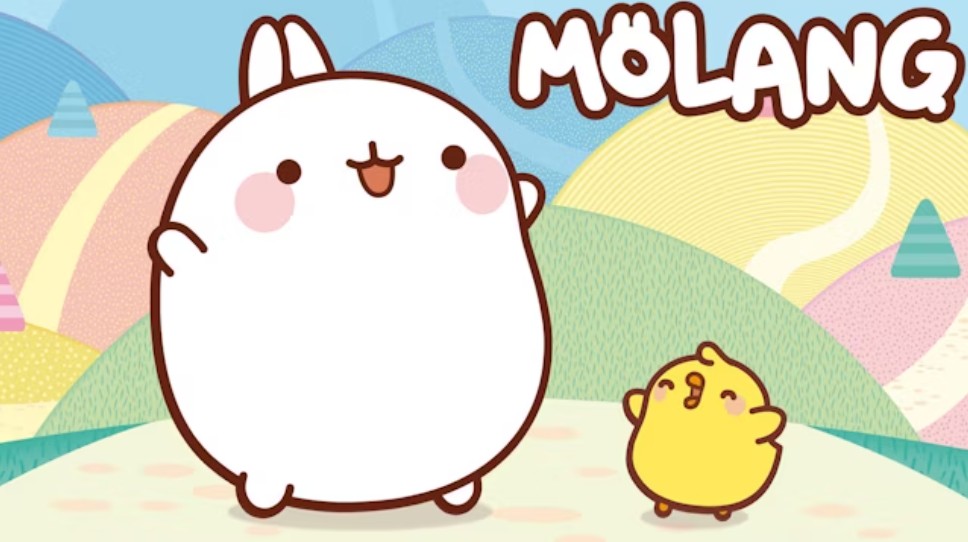
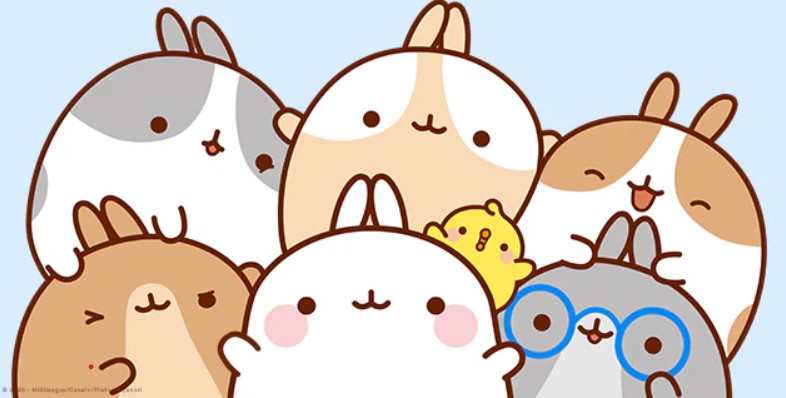
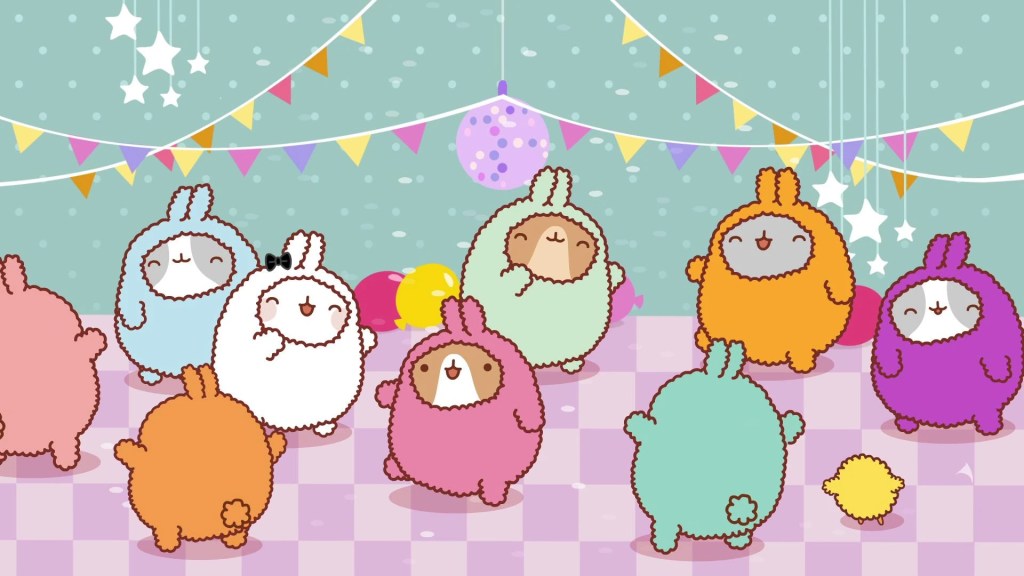
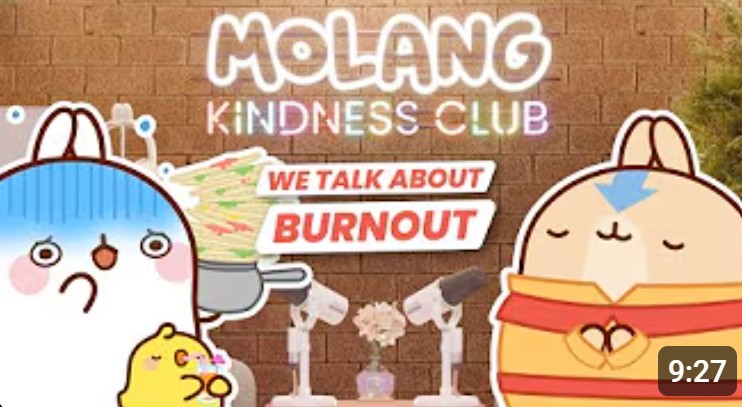
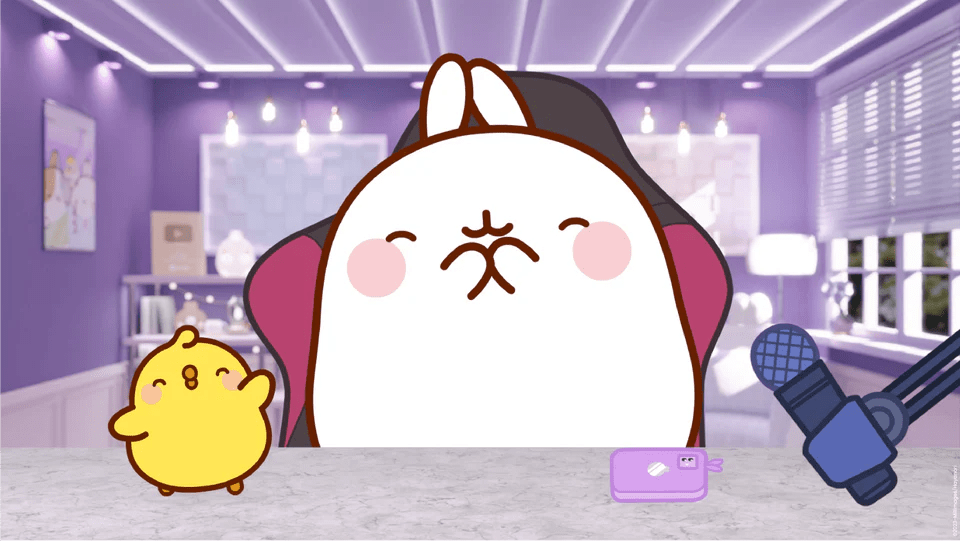
Molang even has an active YouTube channel, Molang YouTuber, where they and Piu Piu sometimes speak English. But I prefer the originals. The lack of real words makes the show feel like ambient softness, something I can dip in and out of while I write, scroll, or spiral. When Netflix has the audacity to ask if I’m still watching, the answer is always yes.
I’ve watched Molang many times over the past few months, and I’m still not entirely sure who the intended audience is. It’s ostensibly designed for preschool-aged children, but I’m convinced it was made for people like me: overstimulated adults with too many tabs open and a deep need for softness. Molang is chubby, cheerful, and occasionally chaotic. Piu Piu is neurotic and frequently the voice of reason. Together, they bake, drive, picnic, DJ, ride hot air balloons, and occasionally travel back in time. Every episode is a microcosm of joy and curiosity. Their lives may be quiet, but they’re full.
Molang doesn’t ask me to keep up. Molang just shows up—bright, unbothered, and squeezable. And somehow, that feels like enough. In a world that demands productivity, commentary, and constant opinions, it’s radical to watch something where the biggest drama is running out of strawberries or finding the perfect outfit for a picnic. All I know is that when the world feels jagged, I turn to Molang. And Molang always shows up—just in time.
 factorycandy