The World of the Rich and Reckless: Beverly Hills, 90210 Through the Eyes of a Seven-Year-Old

Millennials are often accused of being obsessed with childhood nostalgia. But for me, childhood isn’t something to long for—it’s something I survived. Growing up in a far-flung Brooklyn housing project in the early 1990s, I qualified for reduced-cost lunch at school, and my family relied on food stamps and WIC checks. As white residents in a majority-minority neighborhood, we were outsiders in more ways than one, and I stuck out like a sore thumb among my black classmates. To outsiders, the Brooklyn of the era was a scary place, the setting of countless rap songs and crime movies. Both my parents worked constantly, and they frankly had neither the time nor the will to supervise me, in stark contrast to many of my peers who recall growing up with “helicopter parents.” I was a solitary child who spent most of her time reading or watching television.

Home Sweet Hovel

My family didn’t have cable, so the only children’s programming available to me were PBS Kids and Saturday morning cartoons. By the time I was seven, I was still watching childhood favorites such as Sesame Street and Mister Rogers’ Neighborhood, but my palate had already expanded to include shows designed exclusively for adult consumption—gritty dramas like NYPD Blue and, of course, Beverly Hills, 90210.

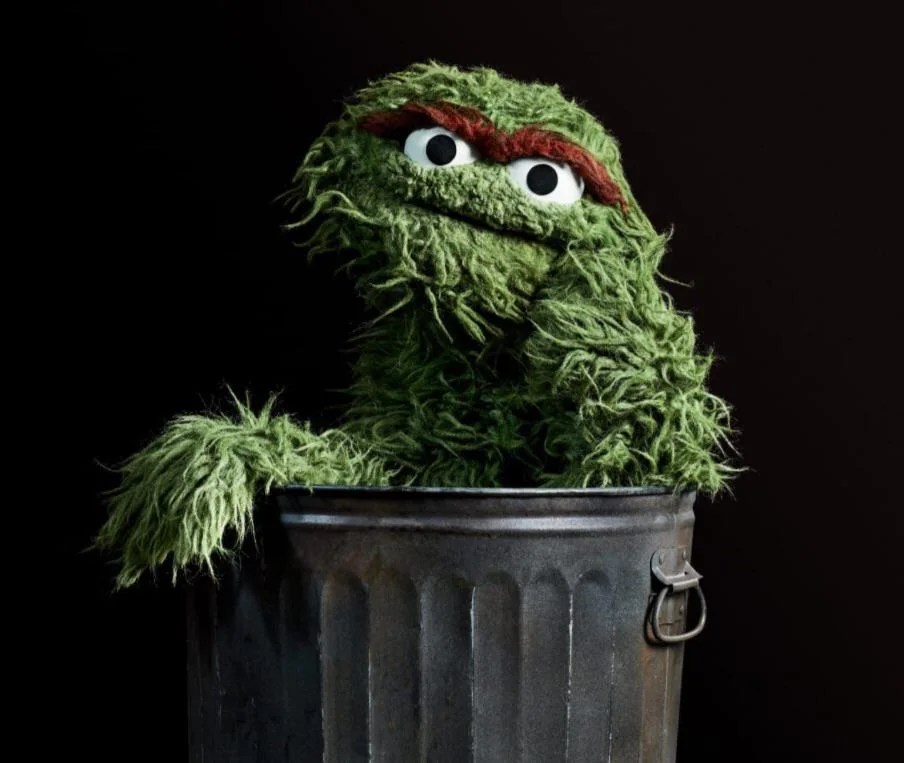
Early in life, I was drawn to characters with an edge: first, Oscar the Grouch, then Married… with Children’s Peggy Bundy. To me, there was no hard line between children’s programming and “all that other stuff.” If it was on TV, I watched it. By the time I was five, that meant stumbling upon Beverly Hills, 90210, first catching up on the high school years during daytime syndication. It didn’t take long for me to become a hardcore fan, and I devoured the show with a hunger normally reserved for Barbie dolls or a Sherlock Holmes mystery (I read those stories at that age as well).
90210 was undeniably my first favorite television program, but I kept my obsession with it largely a secret. No one on the playground talked about Brandon and Kelly’s on-again, off-again drama, and I knew better than to bring it up. The show was too mature, too sexual, too “grown-up”— far too inappropriate for my peers, whose parents were apparently more discerning than mine. I knew even back then that my media diet wasn’t normal, that the glossy, drama-filled exploits of Brandon, Dylan, Kelly, Donna, and the others weren’t designed for a kid in single digits living in a Brooklyn housing project. But that didn’t stop me from absorbing it.
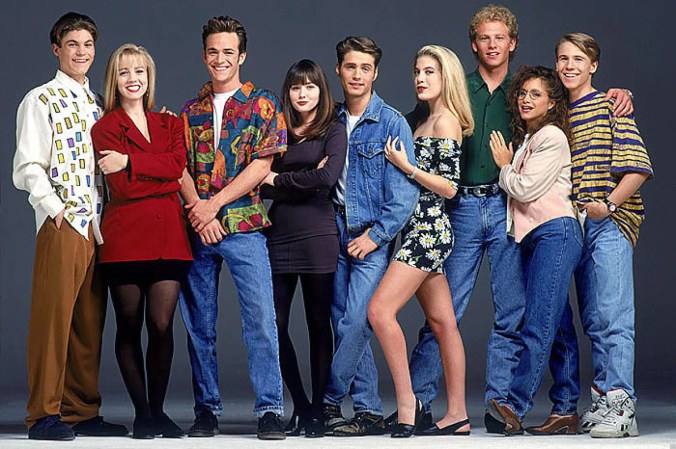
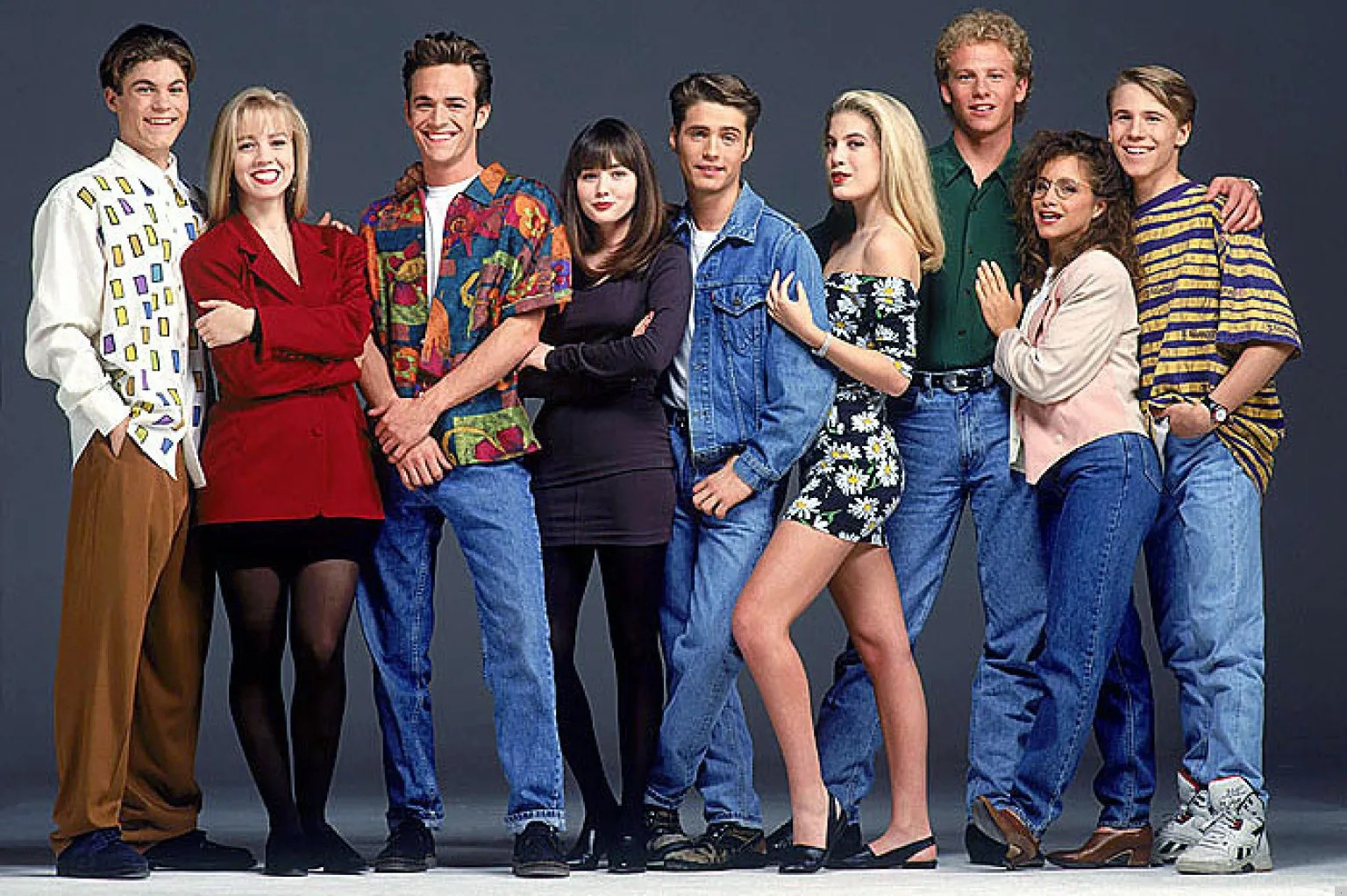
Beverly Hills, 90210‘s season one cast

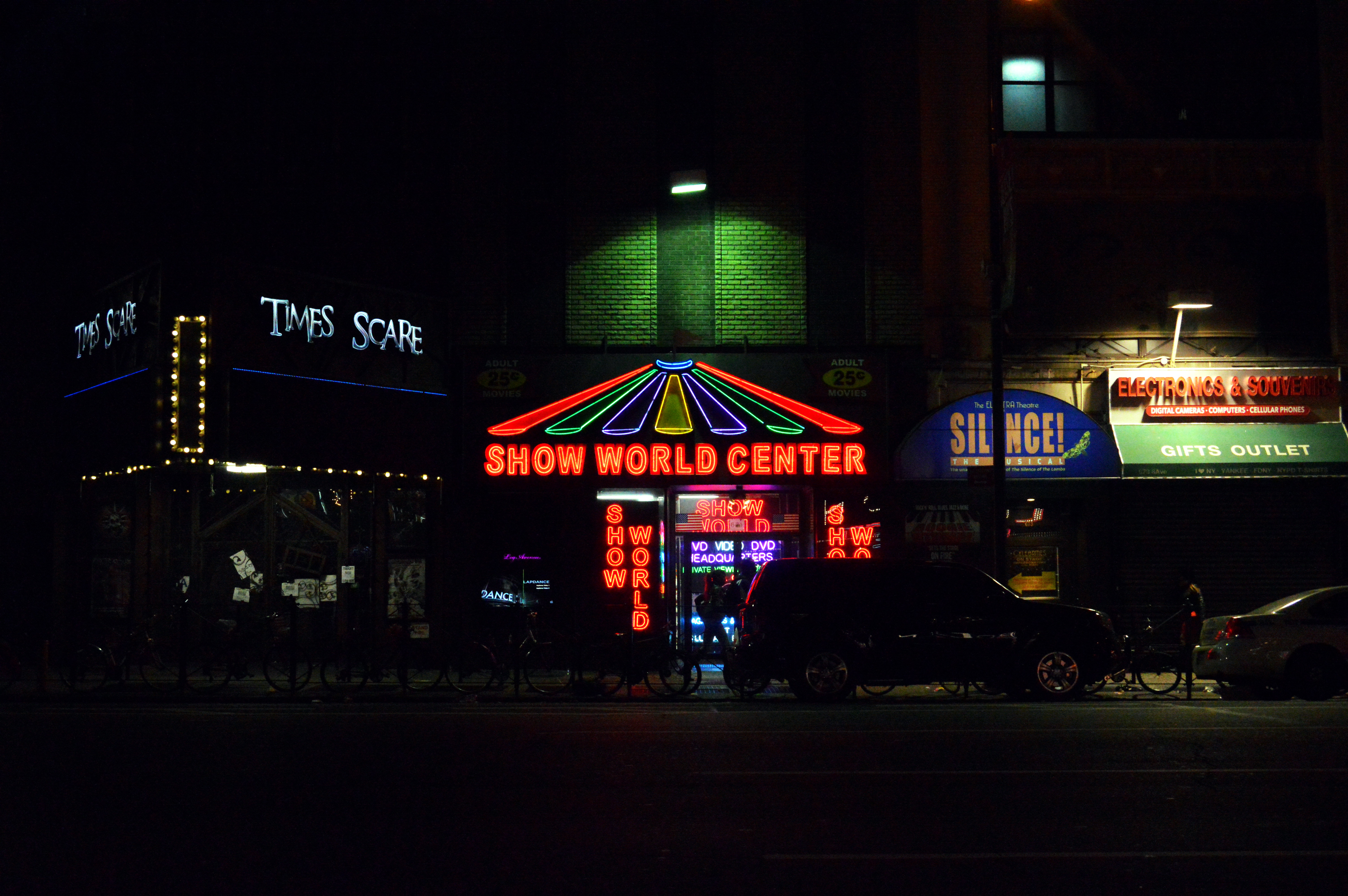
The neon-drenched opening credits and impossibly good-looking cast hypnotized me, providing a window into a life beyond my comprehension. These people had mansions, cars, and closets full of outfits that changed every episode. Their lifestyle was foreign to me and their problems—breakups, betrayals, and implausibly complex social hierarchies—were a world away from mine, but I watched them with the same intensity as if I were studying for a spelling test. I wanted so badly to be a “California girl.”

At my early age, I didn’t fully grasp what was happening on screen, but I understood that Beverly Hills, 90210 was about things that were supposed to be important to adults: romance, sex, rebellion, social status. I kept track of every breakup, every betrayal. I knew Dylan McKay was the kind of bad boy older girls fell for—he was my favorite character by far, less so because he was brooding and more because, even then, I could tell Luke Perry was the best actor on the show. The relationships on the show were dramatic, full of teary breakups and passionate makeups—concepts I had no real-world context for, but I filed them away for later, assuming that’s what being a young adult was supposed to look like.

The sex, in particular, went over my head. Even at seven, I could tell sex was everywhere—woven into the dialogue, in the kisses that lingered too long, in the way the camera panned away just before something “bad” happened. I didn’t fully understand what Donna was holding out on or why David was so impatient, but I knew it mattered. I remember sensing the weight of when Brenda lost her virginity to Dylan, even if I couldn’t put it into words. It was the kind of thing that made adults mad and made kids feel like they were learning a secret they weren’t supposed to know.

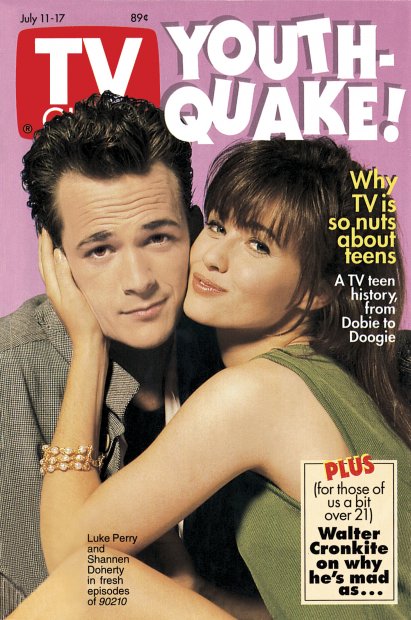
Looking back, I can’t precisely pinpoint how Beverly Hills, 90210 shaped me, only that it must have. Maybe it planted the first seeds of class consciousness, or maybe it just confirmed what I already knew: that some lives were easier, more privileged, sun-drenched, and dripping in excess. I envied those lives, but the real hook wasn’t the money—it was the longing, the search for belonging. Maybe that’s why I devoured every episode. In its own strange way, 90210 wasn’t just an escape—it was also a window into a world I couldn’t completely understand, but that I aspired to be a part of.


On the (Job) Hunt

If you work for a living, why do you kill yourself working?
The Good, the Bad, and the Ugly (Sergio Leone, 1966)

Image generated by AI

Job hunting. It seems like an endless, merciless search for gainful employment. This question posed in Leone’s masterful film feels particularly relevant in today’s job market, where people work longer and harder for less, without even the promise of security or satisfaction. In 2025, the search for a job seems especially brutal. Well-meaning advice from older generations is unfortunately meaningless. The days of walking into an establishment or office and asking for an application are long gone. Welcome to the days of fighting for a job that won’t even pay the bills.

Truthfully, I know few people these days who have what might be called a conventional job. One friend is teaching without a certification at a desperate school in flyover country. Another is walking dogs. We’re all well into our thirties, all with substantial professional experience. As for me, I am currently with multiple staffing agencies but am without employment. It’s frankly a terrifying spot to be in, but I can take comfort that I’m not alone. One swipe on TikTok and I see plenty of fellow millennials struggling to make ends meet.

It’s been over a decade now since I graduated college, and I have yet to use my Cinema Studies degree. I’ve spent the last several years of my life working in the Financial Services industry out of necessity. I have the misfortune of living in the world’s metropolis, New York City, where the cost of living is sky-high. If you ask me, the worst part of being poor in NYC is not having the money to leave.

This past fall, I resigned from my most recent Finance position for personal reasons. I’ve been temping since, and even that comes with its own laundry list of guidelines and expectations. I had temped quite a bit in the previous decade, but the experience differed significantly. These days, competency tests, several interviews, and an extensive reference check are often required even for temporary roles of two to three months. It can be overwhelming, and I can’t imagine how much worse it must be for Gen Z.

Job searching is a balancing act, particularly for people with creative backgrounds and/or aspirations. I am a writer, but I’ve been doing administrative work for years to pay the bills. While this may seem like a normal thing to do, companies these days are seeking out people who really have passion for the work. It’s not enough to be a plain old Administrative Assistant; if you want to land the job, you need to sell yourself as a “career EA,” someone who lives and breathes for providing clerical support.

Personally, I’ve lost myself to overwhelm many times over the past few months. As I sit in the same boat as many others, I’ve started to see a larger trend: more and more, job hunters are not just competing for positions – they’re being asked to reinvent themselves to meet increasingly arbitrary standards. I’ve asked myself whether my lack of passion for Executive Assistant work has worked against me, and I think the answer is, sadly, yes. Because it’s not enough to work hard or have the right experience, and anyone who’s in a similar position will tell you as much. Selling yourself is an art form, and only those who fully commit can succeed in this cutthroat job market.

The expectations get higher and higher, while salaries continue to stagnate, and sometimes slump. It’s not enough to do a great job, you have to be a “rockstar.” It’s not enough to work nine to five, you have to be “flexible.” And now, with return to office mandates increasing, those who want or need remote work are left in the dust. In a world where job descriptions encompass more and more for lower pay, I’m left wondering – when do we get to just be ourselves? Where is there time for rest, recreation, and pursuits outside of what we do for a paycheck? I don’t know. For now, I keep hunting. When the world demands so much of us, what else can we do?


Sneak Preview: “A Night at the Automat”

For many months now, I've been struggling with what to do with this website. I've spent the past ten months working a (no longer new) regular Executive Assistant job while plodding through this novel I've been trying to get written.

What's that, a novel I'm writing? Yes indeed, I've been working on my debut novel, which I'd like to somehow complete within the next three months. I could go on about my writing process, but instead of making a pitch right now, I'm just going to share an excerpt that I'll call A Night at the Automat:
Image generated by AI

I’m constantly hungry but I never enjoy eating. By the time my weekly binge rolls around I’m starved and I stuff myself as soon as I get home. Tonight, Friday night, is no exception.

Amidst the neon-lit labyrinth of Midtown, lies a sanctuary of indulgence, both clandestine and conspicuous: today’s reinvented Automat. Not too far removed from the Horn & Hardarts of the previous century, this place encompasses the modernity and spotlessness, but also the seediness, of those archaic culinary establishments that shuttered long before I was even born. With its bright, eye-catching signage and sleek, minimalist façade, it is an aesthetic oasis amid the concrete shitpile. Inside, rows of gleaming, glass-fronted compartments stand sentinel, each harboring tantalizing treasures veiled in mystery and abject craving.

The Automat is a place I come back to time and time again. On Friday evenings I go to this location in Turtle Bay. It’s on the opposite side of the island from my office, and far enough from anyone I know that I’m comfortable enough to go in. Once I finally make it to 1st Avenue, I like to look out onto the East River and stretch my legs as I pass the United Nations building.

I spend the bulk of each week navigating the sterile corridors of corporate servitude, my hungers suppressed, my desires buttoned up tight. But come nightfall, when the city’s pulse hits a different rhythm and inhibition unravels, I surrender to the siren call of excess. As I hurriedly walk eastward from the office, I pull out a dark grey Uni Qlo hoodie from my handbag and put it on as I walk. As I get closer to my destination, I pull the hood up over my head.

Friday nights have become my bacchanalian pilgrimage, a ritualistic descent into oblivion which commences with a feast. I descend upon the Automat with a feverish hunger, my senses heightened by frenzied anticipation. My resolve begins to crumble like the multiple single servings of tres leches cake I will soon be indulging in.

The items on offer this evening sing to me from their gleaming glass cells, culminating in a symphony of temptation, each morsel a sin waiting to be savored. At long last, I succumb to the allure of comfort and familiarity, looking through the windows at the teensy trays laden with decadent delights: crispy fried chicken tenders, gooey macaroni and cheese, and black slices of chocolate cake beckoning with promises of euphoria.

If I were truly honest, I’d be able to own the fact that it is not merely the act of unbidden consumption that seduces me; it is that the act is one of rebellion that really gets me hot and hungry and oh so bothered. Each bite drowns out the cacophony of self-doubt and guilt, replacing it with a fleeting ecstasy, a momentary reprieve from the suffocating weight of my pathetic existence. In these moments I choose to defy the constraints of societal norms, of decorum, of my personal demons.

Beverages, too, play their part in this hedonistic symphony. I wash down my indulgences with the effervescent kiss of full-calorie cola, the sharp bite of caffeine-laced elixir fueling my nocturnal escapes. Each sip is a balm to my aching soul, a fleeting respite from the relentless march of time. I fill up a 30-ounce cup and then push the tray with my items toward the self-checkout. In addition to the gratis water and condiments, a major perk of the Automat is the self-checkout terminals. I can be here and not interact with a single other person. It feels… safe.

I pay and discreetly place my items into two gallon-sized Ziploc bags that I close and tuck into my purse. The anticipation has gripped me tightly now; hungry, thirsty, sleep-deprived and worn, I call an Uber and head home to stuff myself silly. I feel a tingle in my toes as I ride to my building in a well-maintained royal blue Honda.

Tonight’s menu is comprised of two mac & cheese krokets, one cheeseburger slider, one chicken pot pie, one roast pork bun, two pizza dumplings, one cup of glazed donut holes, and two slices of the tres leches cake. Plus, my Coca-Cola, the supreme beverage of bingers everywhere. I can barely contain my glee as I rush into my apartment like the fool I am.

And so, I feast and falter and fill myself to bursting, trapped in the vicious cycle of deprivation and excess, loathing and longing, never climbing down from the precipice of restraint and release. In the shadows of the city that never sleeps, I am both predator and prey, seeking salvation in the embrace of consumption, only to find myself lost in the labyrinth of my own desires… Every. Single. Time.

Alice Doesn’t Work Here Anymore

I did it. What did I do? I bailed. Skedaddled. Flew the coop. Escaped, some might even say.

Putting it plainly, I quit. I quit my corporate job after six years working in Finance in the heart of Manhattan.

I handed in my letter of resignation on Monday, January 17th, 2023. The word that I was leaving spread like wildfire, and reactions were something like this:

The reactions I got were frankly quite flattering. People were genuinely shocked that I was leaving, especially after I told them why. Before I met with boss in the afternoon, I had a private conversation with my closest and very beloved coworker (who for the sake of this article we will call “Jane”) to share the news with her. It was pretty excruciating, and I started crying. Jane had been my work bestie, my confidante, and my biggest advocate since my very first day at the company. But alas, it was time for me to move on from my fancy-schmancy corporate job in the Financial Services industry in New York City.

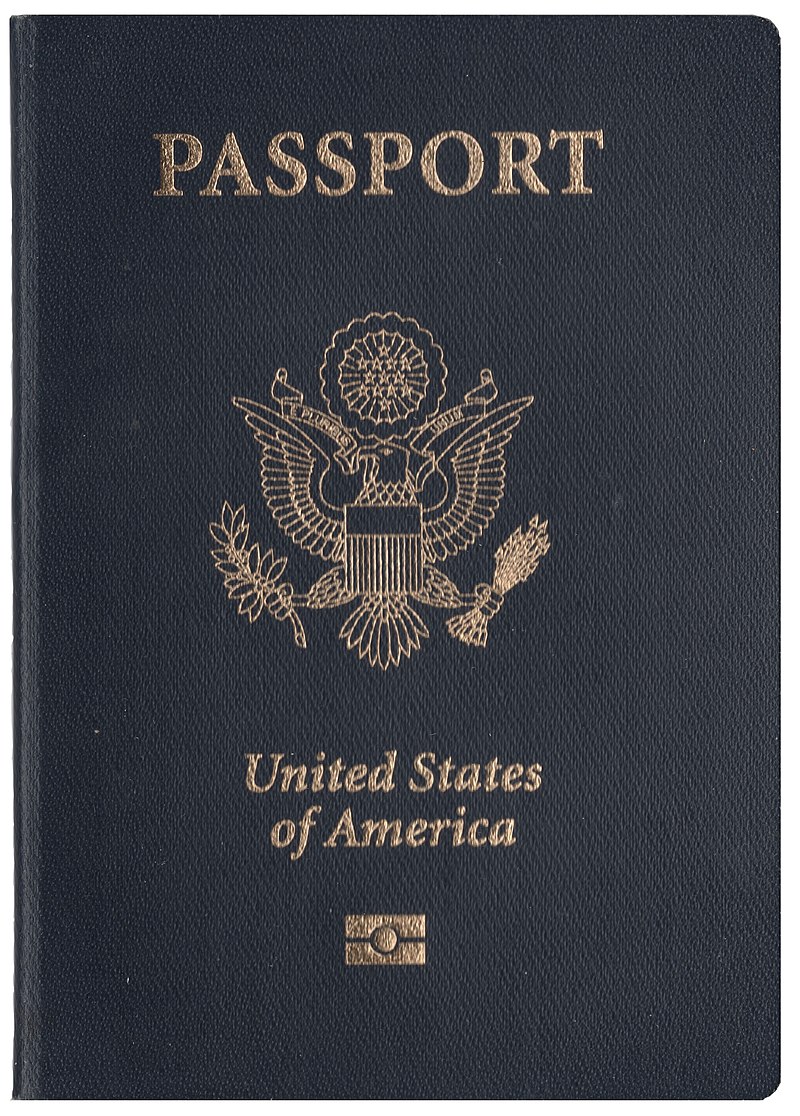
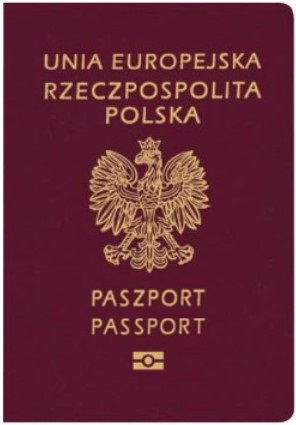
So, why did I quit? Sometime in November I decided that I would like to relocate to Europe for an indeterminate length of time. Now that I am a full-fledged citizen of Poland (in addition to being a citizen of the United States of America), I do not need a visa to work or stay indefinitely in the European Union. It took me some time to gather the courage to pull the trigger on this decision, but I am going to go stay with a friend of mine in France for a while as I figure out what I want to do with myself in the long run.

The choice to leave what is commonly thought of as an almost stereotypically cushy job was a difficult one to make. I was never a fish out of water in the corporate world; on the contrary, I fit in well and navigated that environment with relative ease. However, I grew bored with the drudgery and the 24/7 demands of someone in my position. Although I thrived within the confines of my role, it became clear over time that there really wasn’t any room for me to grow and I frankly didn’t want to remain in NYC anyway. Ultimately, I realized that I want to make a name for myself and spend much more time working towards goals in other arenas. I have enormous gratitude for having been able to hold down a demanding corporate job and accumulate enough savings to move overseas. While I don’t know what the future holds for me, I do want to keep writing and put my energies toward more creative pursuits.

I have been fortunate enough to accumulate some savings, and I intend to travel a bit throughout Europe over the summer and into the fall. The clock is running out on my time in NYC, and I am going to be moving in early May. I still can’t believe that this is actually happening, but indeed it is. I have not posted a new article on this site in two years because I have been so busy, but going forward I would like to write a new article at least twice a week. I think I do have potential as a writer, and I would like to explore that further.

I still struggle with a lot: depression, dropping the weight I put on during the COVID-19 WFH days, financial anxieties, and more. That said, I am actively working on myself and I intend to accomplish a lot over the next few months. I will be sharing a lot of what I am going through on here, as I think it might be useful to document my journey. Additionally, I am working on an article about obtaining and eventually leaving a corporate job on the best possible terms. Perhaps that will be useful to someone someday.

Thanks for reading. More to come soon.

~GCL~

In Pursuit of Global Citizenship

I am an American by birth. With the exception of those few months I spent living in Tel Aviv in 2015, I have always resided here in the United States of America. I am, however, the descendant of 20th century immigrants. I was born in New York in the late 1980s to a father whose grandparents were born and raised in Eastern Europe, and a mother who emigrated to the United States from Poland just a few years before I was born.

I have never known my extended family and for that reason have always been slightly envious of friends whose families have been in this country for generation after generation. For one thing, it seemed that they had a much easier time on Ancestry.com or the like when they looked up their families. Unfortunately for me, I didn’t have that privilege. I was lucky to find a ship’s manifest or place of birth, but that would be about it. There were no military records, birth logs, or marriage certificates, as those would have been issued halfway around the world.

About three months into the COVID-19 pandemic, I was having a casual conversation with my father when he mentioned to me that I might be eligible for Polish citizenship through my mother’s side of the family. This was an intriguing prospect. I have always been guilty of wanderlust. Growing up, my family was poor and we couldn’t afford to travel out of the country. Despite my best efforts, I was not able to study abroad during college due to lack of funds. I didn’t leave the US until I was 23 years old, and that was only after working like a dog the summer before and saving up every penny for the trip. I traveled to London and Paris on a shoestring, staying with family friends and getting around primarily on foot. In Paris, I slept in a utility closet in a garret at the top of spindly staircase. As far as I was concerned, it was heaven. It was great to finally be out in the world and exploring two of its great cities.

I have never been to Poland. After my adventure in Western Europe, I didn’t get the chance to travel abroad again until January of 2015, when I went on a birthright trip to Israel. I liked Tel Aviv so much that I went back that summer to live and intern at a start-up incubator there. I had already fallen in love with travel but it was during those months that I realized I actually wanted to live and work in a place far from my home. I do not wish to move to Poland (although I would love to visit), but upon conducting further research I realized that if I became a Polish citizen I would then be eligible for an EU passport, which would permit me work and travel freely within the European Union. I have always wanted the option to work in Europe, and obtaining this passport would make it considerably easier to do so.

As the pandemic had dashed any hopes of traveling abroad, I was even more motivated to find out if I was actually eligible for Polish citizenship. I researched various law firms until I found one in Kraków that had good reviews and offered a free eligibility check. After a few weeks of emails back and forth, I learned that I was indeed eligible. I was overjoyed, but the journey to locate supporting documents had only just begun. I needed to obtain my estranged mother’s birth certificate, my grandparents’ marriage certificate, and a genealogical record stating that my grandfather never became a United States citizen (he actually eventually left the US under threat of deportation). I felt overwhelmed by the amount of work needed to obtain these vital records, but I was up for the challenge.

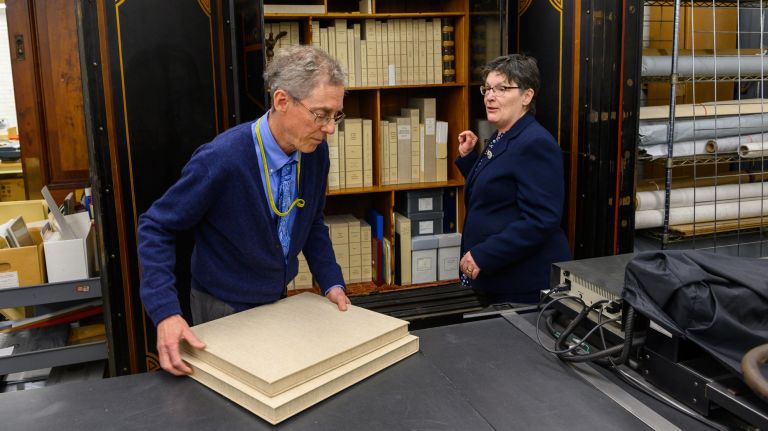
Getting a copy of my mother’s birth certificate ended up being easy, but I then had to wait for the other two documents. To obtain my grandparents’ marriage certificate, I needed to put in a request at the NYC Municipal Archives. After a couple of months went by, I received a very exciting phone call. A kindly gentleman named Kenneth Cobb, who turned out to be the Assistant Commissioner of the Archives, called me personally to let me know that he had found this vital document. I was thrilled, and I let him know it. He wished me luck on my dual citizenship journey, and I sent him a thank you card for his efforts. A couple of weeks later, I received notarized copies of the marriage certificate in the mail.

Assistant Commissioner Kenneth Cobb with Commissioner Pauline Toole, right, by a safe that holds the oldest records in the Conservation Unit of the NYC Municipal Archives. Photo Credit: Jeff Bachner

My hunt wasn’t over yet though; I still needed to provide documentation that my grandfather never became a naturalized American citizen. I put in a Freedom of Information Act request for this last summer, and that got passed along to the genealogy division of United States Citizenship and Immigration Services (USCIS). Someone at USCIS informed me that they were facing a tremendous backlog due to the pandemic, and that it would take some time for them to pull the relevant files. In the interim, my attorney’s office gathered all the necessary documentation on the Polish side. I waited and waited and waited. Then finally, at long last, a CD containing the documents arrived in the mail.

This was about three weeks ago. After copying the documents onto my laptop and sending my lawyer scans of the relevant pages, I ran to the shipping store to send the CD to Poland via DHL Express. The process is now out of my hands. All the documents that I worked so hard to obtain are being translated into Polish, and then once that is done they will be sent to the Polish government. If all goes according to plan, I will be granted a Polish citizenship certificate within the next few months. Then, after that, a coveted EU passport.

I cannot overstate how excited I am about my future and the possibility that it may be out of the United States. I love my country, but I want to experience the world. Watch this space for more updates on my dual citizenship journey!

~GCL~

Problematic Art in the Age of Cancel Culture: An Expeditious Rant

I am a very private person, generally. I don’t advertise my beliefs (or my closely held concerns, even) and I don’t feel a need to force my opinions on others. However, I feel pulled to voice my opinion regarding the zeitgeist of our year 2020 and how it relates to creative types.

I am no different from anyone, in that I am a problematic human being. We all have our quirks and kinks and secrets and flaws, though are likely disinclined to admit this. As do all of us who live in this same shame-drenched, moralistic culture, I put my best face forward in the day-to-day. This is a survival mechanism for us humans.

As a self-labeled artist who aspires to write and produce her own films someday, as well as teach at the university level, I have in recent years grown very concerned about the current environment for people in both creative pursuits and the academic world. I take serious issue with “cancel culture” and this seemingly predominant push to censor work that is either perceived as offensive or crafted by someone with a less-than-stellar history of personal behavior. Furthermore, I do not believe it is the obligatory duty of all artists to educate or to generate work that is deemed acceptable to large audiences. Not everything is intended or appropriate for everyone, nor should it be. We choose to infantilize ourselves as a society when we encourage censorship and apply subjective standards of morality to creative work.

In the same vein, I am coming out firmly against the use of trigger warnings. I am no stranger to trauma, but in spite of all I’ve been through, I do not wish to live in an enforced bubble of ignorance. I don’t need to be protected from ideas, words, and pictures. In fact, I gain more intellectually when I confront emotional material, and I would expect no less from those who consume the content that I create. Coddling does us no good. You can keep your safe space.

If you’ve made it this far, I am warning you now: if provocative art and writing offends you then you probably won’t love what I have cooking on the back burner. You may as well cancel me out now, as you have determined that it does not matter that I am an ethical, kind-hearted, and morally upright person. You have chosen to toss the innocuous baby out with the problematic bathwater.

These days, we have students across the United States demanding that their universities protect them from work that contrasts with their personal values or simply arouses an undesirable reaction. This plea for institutionalized censorship is a fearful phenomenon. It discourages discourse amongst students and faculty, and it also dissuades them from generating work that is innovative and thought-provoking. If a controversial thought is put into writing, speech, or art, it could cost a student their college education and a professor their job. Campuses have traditionally been a haven for free speech; it disturbs me that this appears to no longer be the case, especially at a time when I am in the process of applying to graduate school.

Thank you for reading this, the first of many rants regarding our current culture of censorship. Thoughts are welcome in the comments! Also, if you are curious about what sources I utilized in writing this article, please do not hesitate to ask me about them.

~GCL~

On Depression

I suffer from depression. Or, to be clinical, major depressive disorder. Depression has been my constant companion for as long as I can remember. It is the reason I sometimes cannot get out of bed. It is the reason I cannot maintain (or even pursue) relationships of any kind. It is the reason I have not yet been able to apply to graduate school. It is the reason I have not posted an article on this website since the spring of 2017.

I have now been in therapy for over four years, and I still struggle to open up. I was in a co-counseling program for five years prior to that, and that really did not work for me. I feel bad, ashamed that I will likely remain in therapy for the duration of my life. But therapy, for me, is a necessity. I would be so much worse off without it. It is only with the support of a trained professional that I have been able to begin writing again. I have a long way to go, however, when it comes to other matters.

My depression has caused me to “ghost” many people in my life. With others, I have simply neglected to ever reach out. My brain repeats the same mantras over again: that no one really likes me, that I am ugly inside and out, that I am not worthy of friendship. While I hate to admit it, I usually believe the lies. I then feel tremendous guilt, which doesn’t help matters.

In short, depression is a disease of the mind. I am trying my best to move from coping with it to healing from it, but I often feel that I do not deserve to heal. Another lie I choose to believe over and over again. The disease makes it easy to believe the untruths; it is far more difficult to fight them.

I hope this brief article can do a little to explain why I am often introverted, difficult to get a hold of, and seem insecure and far away. I will be posting more articles in the coming days, and digging a little deeper into my personal life and professional aspirations. Until then, thank you for reading.

Depressive girl

~GCL~

Too Little, and Now Late: Mourning Glenn O’Brien

Time is an immortal enemy, of sorts.

One cannot see time passing, but it passes. It’s there. Time is unremitting, inescapable, and forever beyond our grasp.

Just three short months ago, I started writing a rather extensive essay about TV Party, a groundbreaking television show that aired on Manhattan Cable from 1978-82. That essay was to be the first installment in a series of ruminations on the golden age of Manhattan public-access.

The host and star of TV Party was Glenn O’Brien, a man who I had described in my essay as “a writer, editor, and all-around creative smarty-pants.” I went on to gush a bit about how big a fan I am of him. I proclaimed that I could easily dedicate an entire essay to Mr. O’Brien’s written works alone, but that I wanted to first introduce him to my readers through the lens of TV Party.

That was in January.

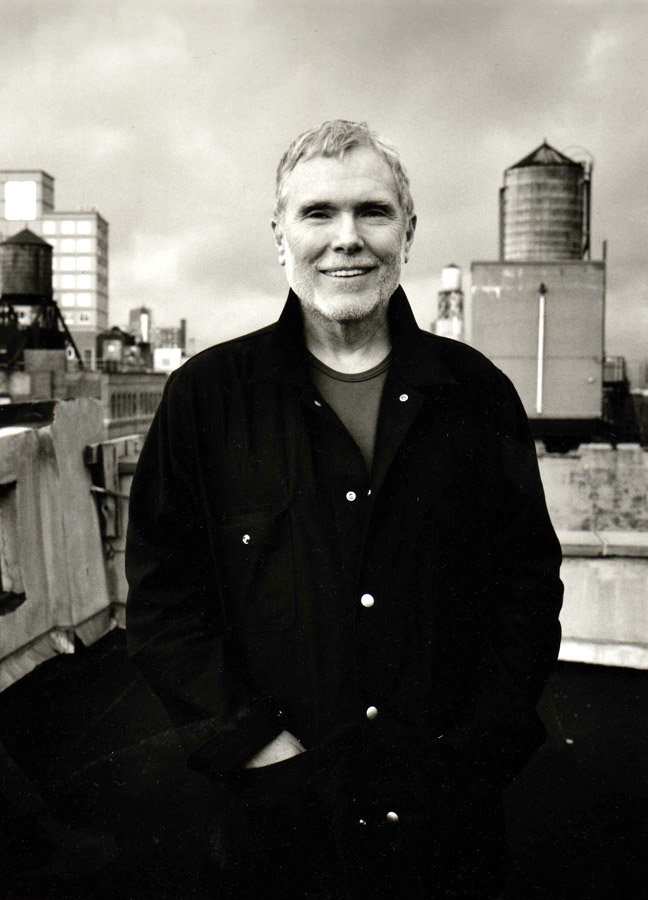
Glenn O’Brien. Photo Credit: Shawn Mortensen, 2008.

I’ve been searching for a full-time job over the past few months, and it is a time-consuming process. Everything else in my life, including all ongoing personal projects, has fallen by the wayside. While I have continued to conduct research and accumulate data on TV Party and Glenn O’Brien’s writings and editorial work (thanks in no small part to my volunteer position at a media preservation institution), I pressed pause on the actual writing process. I kept telling myself that finding steady work was my only priority, and that everything else could wait. I figured I could finish writing later. I fantasized about reaching out to Mr. O’Brien at some point and talking with him at length about his vibrant career, but I wanted to get my own affairs in order first. I thought I could do it all “later”, whenever that was supposed to be. I told myself that it was all fine, that I had plenty of time…

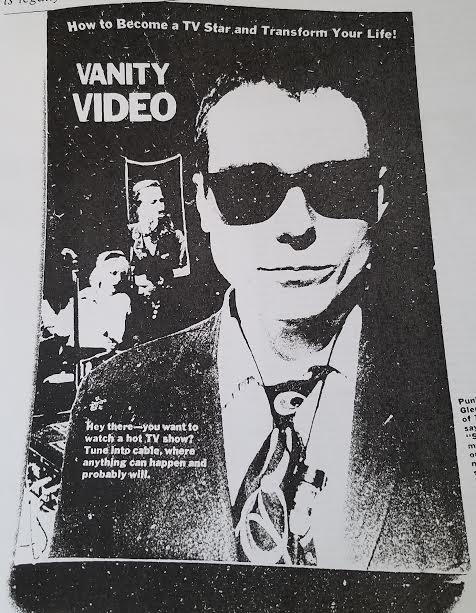
glennvanityvideo
I spent Friday evening going through old microfilm and came across this image of Glenn O’Brien, in a New York Magazine article, August 1979.

This past Friday, April 7, 2017, Glenn O’Brien passed away. Time ran out.

He was 70 years old.

I discovered Glenn O’Brien precisely six years ago, in April of 2011, when I was enrolled in a lecture course entitled Art Since 1945. This was the kind of class that assigned biweekly essays as homework, and for my final paper I decided to write about Jean-Michel Basquiat. That seemed like an easy option for me, as I had been a big fan of Basquiat since pre-kindergarten, when my older sister gave me a copy of Life Doesn’t Frighten Me as a graduation gift.

I tend to go off on mental tangents whenever I do research, which is pretty much every day. I am always unearthing new topics to explore, with the current one tying nicely into the next one. April 2011 was no exception to this rule. After barreling smoothly through my essay, I stayed in the campus library, reading up on Basquiat’s short but prolific life. I quickly discovered that he had made several appearances on an obscure late-night public-access show called TV Party.

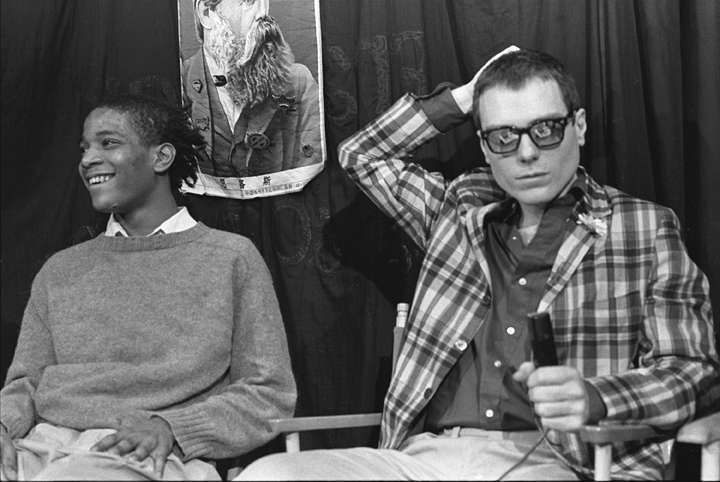
After his initial appearance on TV Party in 1979, Jean-Michel Basquiat became a regular guest, and he and Glenn O’Brien soon became friends. In 1980-81, they collaborated on the film New York Beat, which remained incomplete for years and would not see the light of day until 2000, when it was released under the title Downtown 81.

Jean-Michel Basquiat and Glenn O’Brien on the set of TV Party

I think it is important to note that both Jean-Michel Basquiat and Glenn O’Brien were friends and collaborators of Andy Warhol. Warhol’s life and work, as well as his death in 1987, greatly influenced the trajectory of the two men’s respective careers. It has been asserted by many that Basquiat’s final spiral into heroin addiction, which led to his death in 1988 at the age of 27, was a direct result of his grief over Warhol’s sudden passing. Although he never succumbed to addiction, O’Brien would feel the effects of this loss for the next thirty years of his own life.

How do I know this?

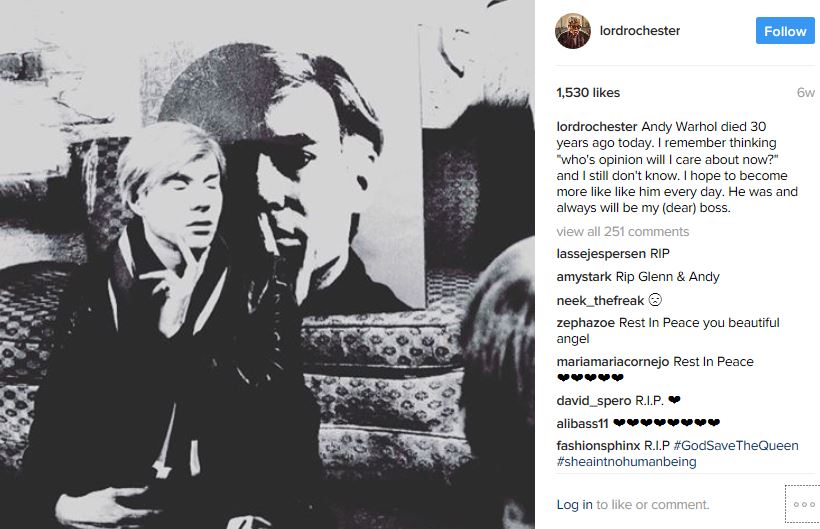
Because he said so himself, not two months ago, on the 30th anniversary of Andy Warhol’s death.

glennandandy
Glenn O’Brien’s final Instagram post: a tribute to Andy Warhol

Glenn O’Brien had been the Editor and Art Director of Warhol’s Interview magazine from 1971 to 1974. By the time he embarked on TV Party in 1978, he was already well-established as a writer. What I always admired about him was his embrace of different artistic outlets; over the course of more than 45 years, Glenn O’Brien did indeed function as an “all-around creative smarty-pants.” He was a writer, editor, essayist, magazine columnist, poet, style guru, and enigmatic television host.

I miss him, and I look forward to learning, reading, and writing more about him. I had thought I had time. What I have written today must suffice for now, but is indeed too little, and now late.

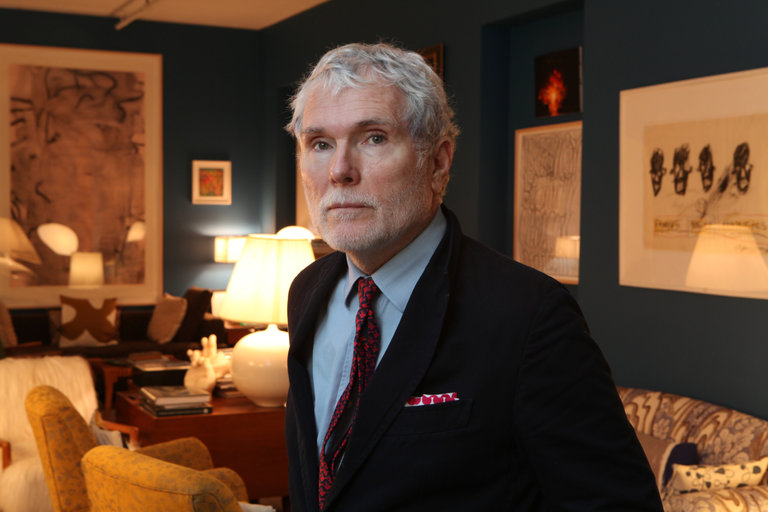
Glenn O'Brien by Chester Higgins Jr.
Photo credit: Chester Higgins Jr./The New York Times

Rest in power, Glenn O’Brien.

~GCL~

Two Late Greats

Two amazing legends, Chuck Berry and Jimmy Breslin, passed away this weekend.

As both a lover of rock ‘n’ roll and an aspiring journalist of sorts, the deaths of these two men have had a significant effect on me.

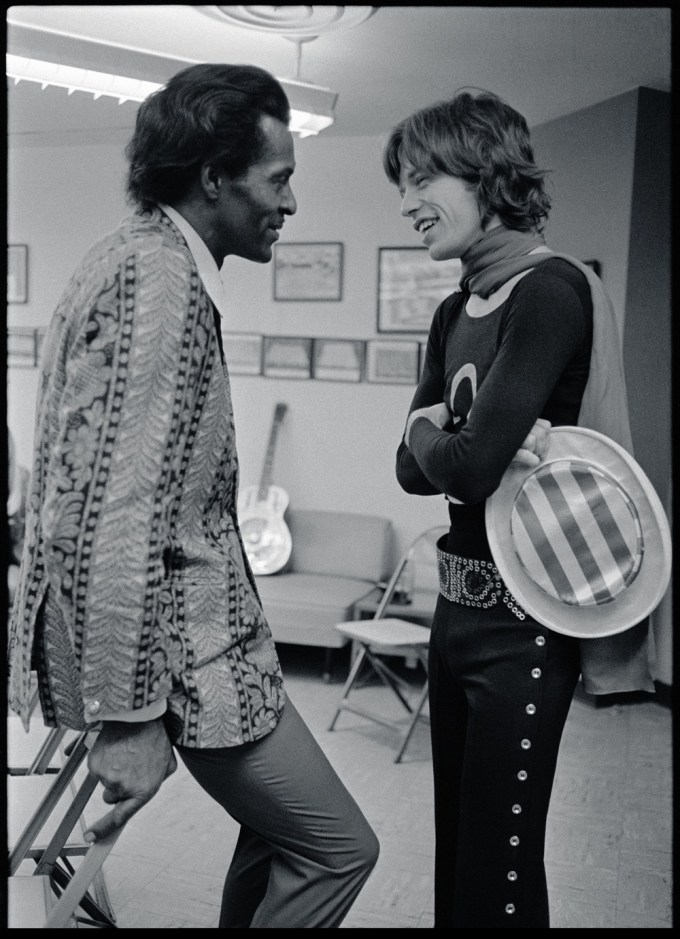
The first Chuck Berry song I ever listened to was “School Days.” It was neither his best song, nor his most famous, but I was hooked on his sound immediately. Over twenty years later, I continue to listen to his music on a regular basis. His influence is profoundly apparent in the music of many other artists, particularly the Rolling Stones, who featured multiple Berry covers on their debut album.

Chuck Berry and Mick Jagger, 1969. Photo Credit: Ethan Russell

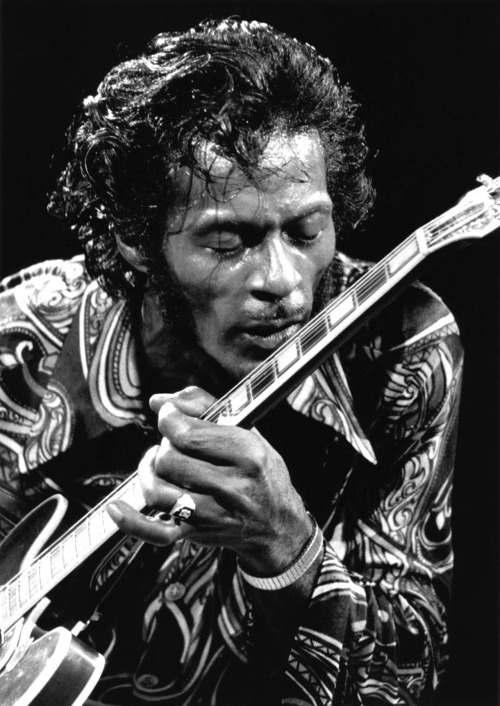
When I was about ten years old, I saw a cartoon version of Chuck Berry in a magazine (I think it may have been Entertainment Weekly, but I could be mistaken). The image of this man in a spiffy suit, riffing on his guitar and literally bouncing off the walls, drew me in immediately. I became, and remain, fascinated with the Father of Rock ‘n’ Roll.

Chuck Berry in performance in New York City, 1971. Photo Credit: Bob Gruen

The one thing that Chuck Berry and Jimmy Breslin had in common is that they were both pioneers within their respective fields.

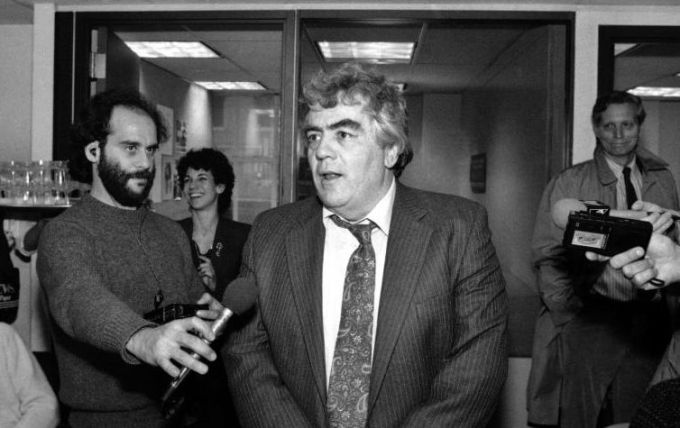
Jimmy Breslin was an journalist, author, and newspaper columnist from Queens, and his unique perspective on the working-class of New York City earned him a Pulitzer Prize. He also wrote several very good books, including How the Good Guys Finally Won, which is about the Watergate scandal.

Jimmy Breslin speaks to reporters in the New York Daily News newsroom in Manhattan on April 17, 1986 after winning the Pulitzer Prize. Photo Credit: Mario Cabrera/Associated Press

I actually have A LOT to say about Jimmy Breslin and his legacy, but I am afraid I don’t have the energy to get into it tonight. I am making a point to post something every day though, and I already working on a longer piece about this groundbreaking character.

In the meantime, check out this interesting article about Breslin’s commentaries on Donald Trump. It’s a good read.

Until tomorrow…

~GCL~