The Socially Relevant Anomaly That Was PBS’ Ghostwriter

In the afternoon hours of October 4, 1992, a new children’s program premiered on PBS. The series was designed to teach reading and writing skills to elementary and middle-schoolers, but for me (the child of an English teacher and an editorial proofreader), its impact had nothing to do with improving my grammar. What struck me from the very beginning was that it depicted kids like me (albeit several years older than I was), living in my city, in a neighborhood just a few miles from my own.

The name of this television program was Ghostwriter.
ghostwriter_3

There are many things to potentially write about in reference to Ghostwriter: its well-crafted mysteries, its enduring educational value, its eponymous “ghost” which was really just a weird ball of light rendered by cheap, ’90s CGI… But I’m not interested in discussing any of those.

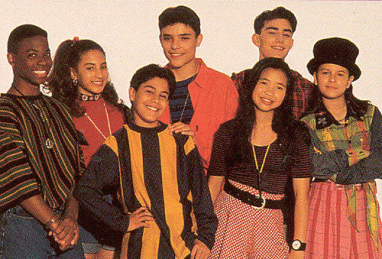
Ghostwriter is generally considered one of the most diverse children’s programs in television history. It didn’t focus on issues of race or social status, but it didn’t avoid them either. It was a complex show that possessed a remarkable verisimilitude that is as exceptionally rare today as it was back then, almost 25 years ago.
ghostwriter_4
Those fashions… (puke)

Images of the upper crust of American society have dominated our television screens since the early 1980s. The soapy sob stories of shows like Dynasty and Beverly Hills, 90210 were attractive, sensational, and easy to digest. Their realities were always picturesque and promising, even at moments when characters were placed in the most perilous scenarios. Simply put, they were pretty.

Ghostwriter was a children’s show through and through, but it was never pretty. It was very atmospheric, and the backdrop of a raw, unembellished New York City often seemed to function as a character in and of itself. There was an underlying layer of social commentary that presented itself visually, rather than through spoken dialogue. The streets were strewn with garbage and the junior high school seemed to get vandalized regularly, but those were not problems that needed to be tackled onscreen. That was just reality, and it was the reality that I grew up in as well. The characters on Ghostwriter were like me: poor latchkey kids, roaming the streets of a pre-gentrification Brooklyn.

Ghostwriter was set in the neighborhood of Fort Greene, and was unique in that it was shot on location. Many of the show’s settings were concentrated around the thoroughfare of Myrtle Avenue, which back then was known to us locals as “Murder Avenue.” To shoot a children’s program, or any production really, in that area, was atypical at the time.

It may seem strange, but although Ghostwriter was a harmless kid’s show, I have a difficult time watching it because it hits a bit too close to home. I can’t seem to sit through an episode without flashing back to my tender years, which were spent living in a housing project in a far corner of Brooklyn, attending a crappy, underfunded public school, and being the youngest member in a volatile household that often relied on food stamps. Unlike many other “millennials,” I do not have nostalgia for my childhood.

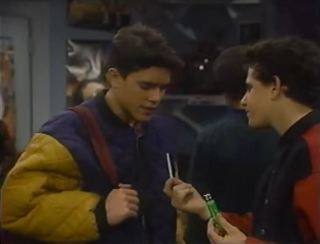
Personal crap aside, Ghostwriter is a great go-to if you’re ever searching for an unvarnished, but accessible, portrayal of Brooklyn in the early nineties, before all the hipsters and high-end boutiques poured in. It’s also just a great vestige of the decade in general, and the show has aged so poorly that it’s almost impossible not to snicker at it. The outrageous MTV-inspired attire is just cringe-worthy now. There’s also a “very special episode”that evokes memories of those ludicrous anti-marijuana PSAs, such as the ones produced by the Partnership for a Drug-Free America, that were everywhere throughout the nineties.
ghostwriter_18
Alex’s friend pushes him to try marijuana, which is presented as a “gateway drug”

Ghostwriter was canceled in early 1995, due to lack of funding. It’s unfortunate, as it received widespread critical acclaim and garnered high ratings for PBS stations across the country. The series was imperfect but smart, and it dealt with real issues facing relatable Brooklyn youth. It possessed a variety of family-friendly grit evocative of the early seasons of Sesame Street and the original The Electric Company. It utilized a science fiction premise in the pursuit of greater truths. It is a striking relic from a bygone era, and it’s definitely worth a gander.

Thanks for reading.

~GCL~
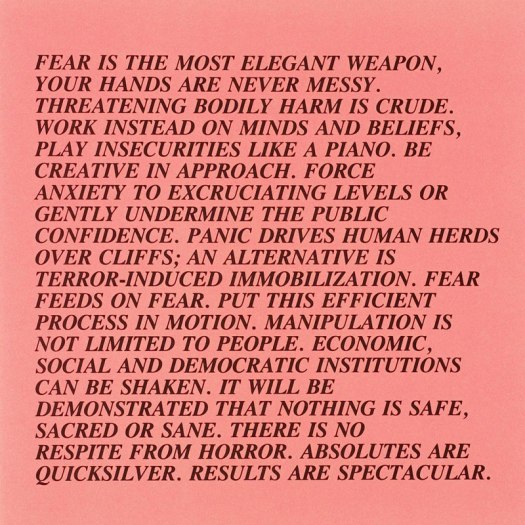
Jenny Holzer’s Inflammatory Essays

While I know that there is some socially relevant art being produced in our contemporary moment, it really appears to be slim pickings out here. I just hope that this is not a permanent trend. Although I am going through some tough times I am also working on multiple projects, and I am trying to write and make stuff that reflects our current (and quite possibly crumbling) society. I am not going to pretend that it’s easy, because it’s not. But artists are important, especially in times like these.

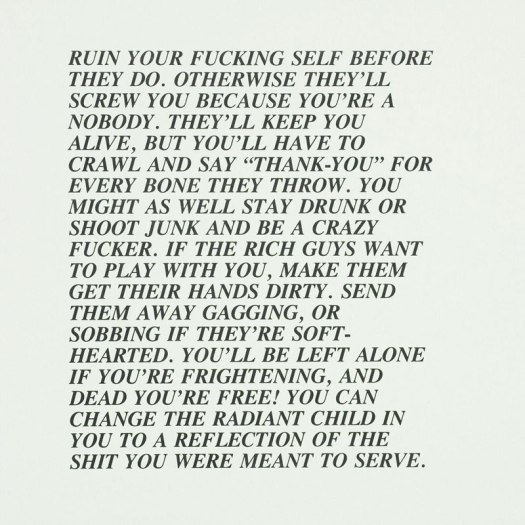
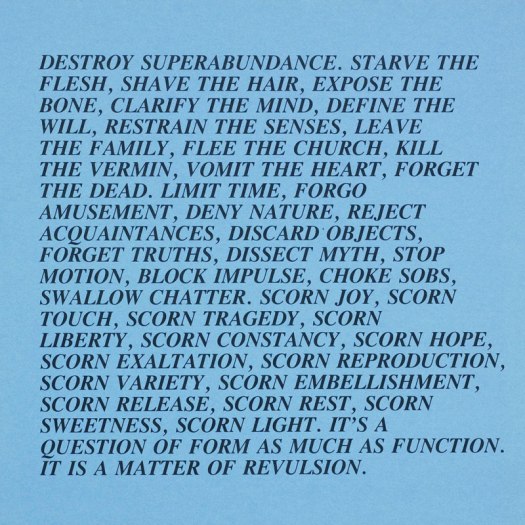
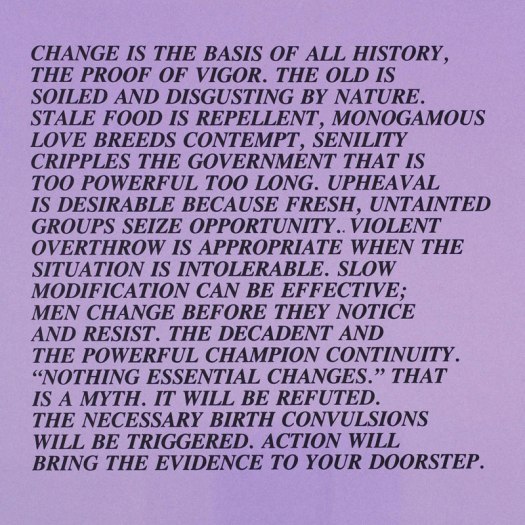
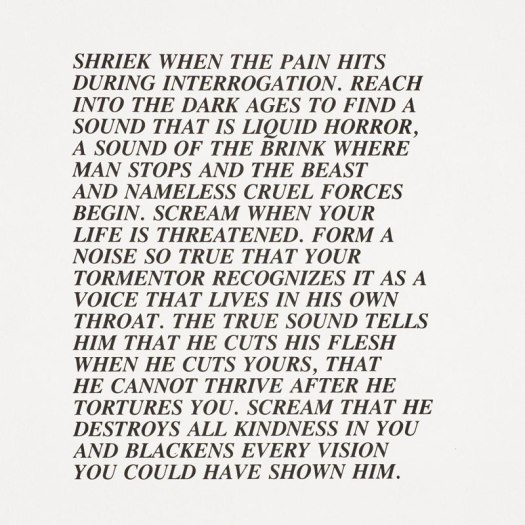
Tonight I revisited a brilliant series of text works by the great conceptual artist, Jenny Holzer. I won’t be able to do them justice, so I will let the work speak for itself.

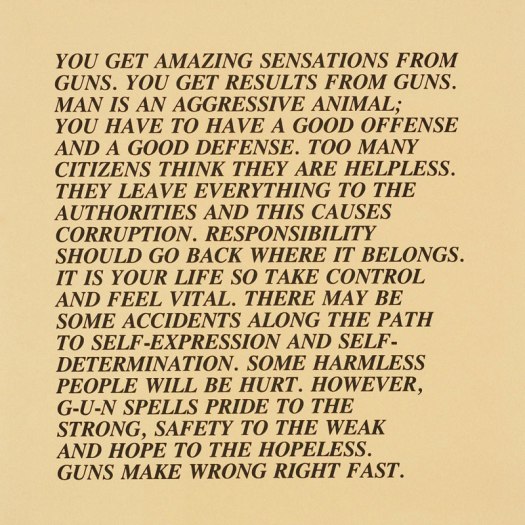
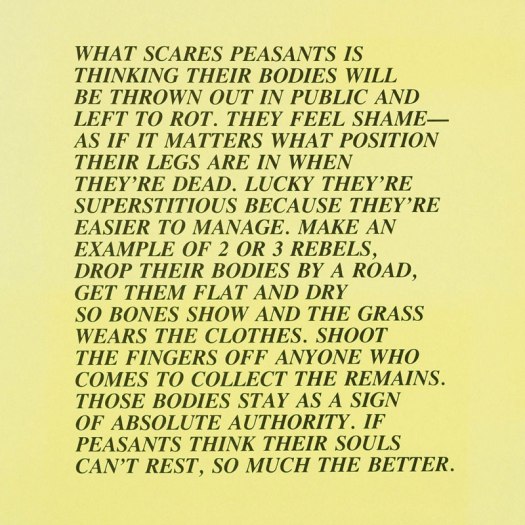
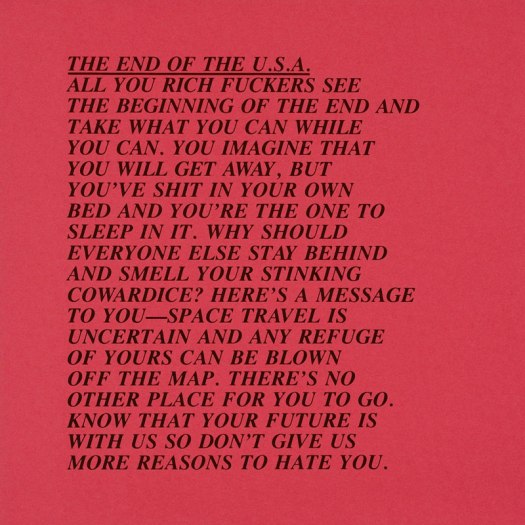
Inflammatory Essays, 1979-1982 

In a statement provided by the Holzer studio, the Inflammatory Essays are described as:

“a collection of 100-word texts that were printed on colored paper and posted throughout New York City. Like any manifesto, the voice in each essay urges and espouses a strong and particular ideology. By masking the author of the essays, Holzer allows the viewer to assess ideologies divorced from the personalities that propel them. With this series, Holzer invites the reader to consider the urgent necessity of social change, the possibility for manipulation of the public, and the conditions that attend revolution.”

There are others in addition to the ten pictured here, and I highly recommend examining more of Holzer’s work.

TEXT AS TOOL: http://projects.jennyholzer.com

~GCL~

Photo post #3: Signs & Storefronts I

I love old things and I love quirky things. Old AND quirky is ideal.

Here in NYC, I occasionally go around and take shots of old and/or notable signage and storefronts. I guess you could say that it’s a hobby of mine. I really should do it more often; it helps me cope with the massive, decades-long wave of hyper-gentrification that continues to destroy everything I know and love.

I hope you like some of these shots. More, better quality ones to come (at some point)

*NOTE: A couple of these photos were taken in places other than New York City, and are captioned accordingly.

~GCL~

Happy Birthday Brian Jones

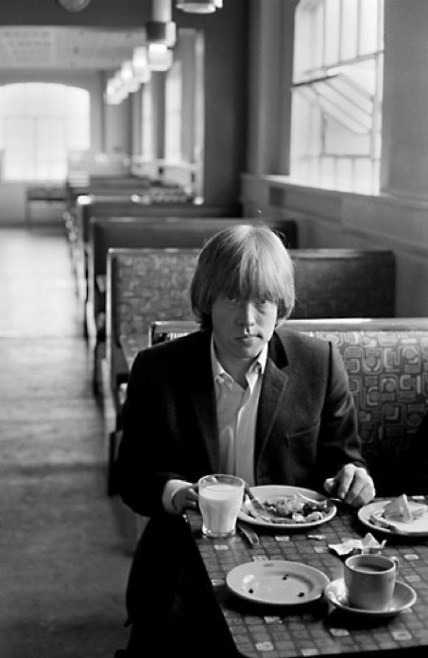
75 years ago today, a man named Lewis Brian Hopkin Jones was born in Cheltenham, Gloucestershire, England.

He would later be known as Brian Jones, the founder of the Rolling Stones.

AZO0224C_03.tif
Brian Jones, circa 1965.

For those who may not know, I am an enormous Rolling Stones fan, and have been for many years. I have always been really irritated by the fact that so many people, including those who seem to be fairly knowledgable about rock music, don’t appear to have ever heard of Brian Jones. Given his many unique musical contributions to several of the band’s hit songs from 1962 to 1968, it’s a damn disgrace that this guy has never received the recognition he deserves.


tumblr_m877zgwqov1r6sispo1_500
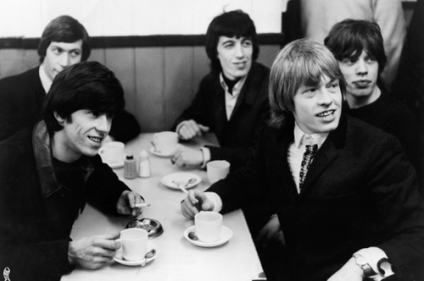
Brian with the band (from left: Keith Richards, Charlie Watts, Bill Wyman, Mick Jagger. 

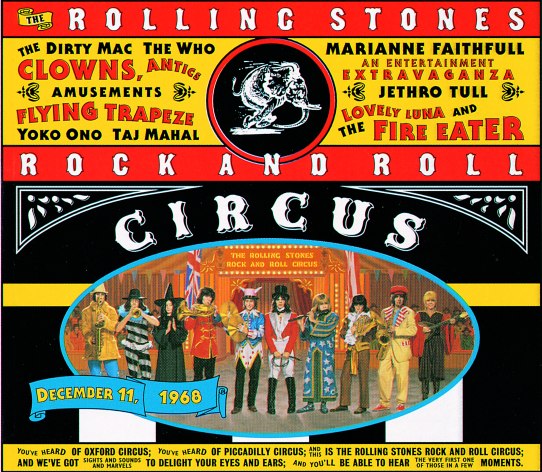
That all being said, Brian had his demons. He was a very emotional person, and he consumed a great deal of drugs (this was actually a couple of years before the onset of Keith’s very long tangle with heroin). He had awful mood swings, and was prone to self-isolation. The Stones formed in 1962, and by 1967 Brian had already become estranged from the other members of the band. His last contributions were on Beggar’s Banquet, and his final public appearance as a Rolling Stone was in Rock and Roll Circus in December of 1968.

Brian would be  officially replaced in June of the following year, by Mick Taylor.

circus
The Rolling Stones Rock and Roll Circus (1968) – If you can find this, you should watch it because it is AMAZING!


In the earliest hours of July 3, 1969, Brian Jones was found dead at the bottom of his swimming pool at Cotchford Farm (coincidentally the house where A.A. Milne authored the Winnie-the-Pooh books). The cause of death was attributed to overuse of drugs and alcohol which enlarged his liver and heart, and presumably caused him to fall into the pool and drown.

Unfortunately, by the time Brian died, the world of rock & roll music had already moved on. It’s odd; although he was only 27 years old at the time of his death, he is seldom included in “27 club” memorials. This bothers me in a very personal way. I recall one night, when I was in college, where I attended one such memorial that was taking place on my campus. Upon realizing that Brian Jones was omitted from the ceremony, I proceeded to make a big to-do, and stormed out. I huffed and puffed around for the rest of the night (a bit excessive yes, but I suppose that’s just the way I am).


tumblr_ltv3d8csod1qjmmogo1_500
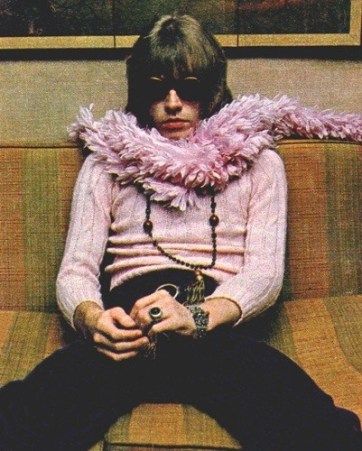
This is definitely either ’66 or ’67. Not sure which, but if I had to guess I’d say 1966.

Perhaps one day I will write a longer piece about Brian Jones. I do have several years of notes that could be put to good use… It’s funny how people can have a powerful presence for a short period of time, only to be forgotten soon after. Brian was friends with many of the biggest names in music, including Jim Morrison, who would die exactly two years later, at the same age. Unless I am seriously mistaken (which I doubt), Morrison wrote a beautiful statement after Jones’ death. I wish I had it in front of me, but I definitely have a copy of it somewhere.

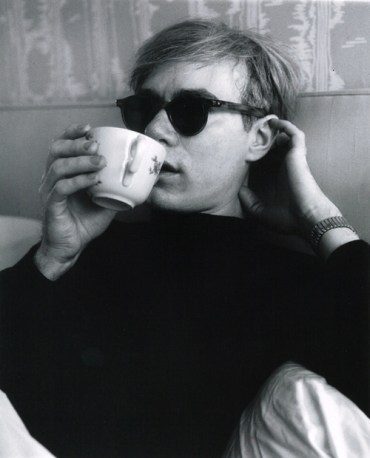
All the dark stuff aside, some of my favorite anecdotes about Brian come from another dead figure I feel close to, Andy Warhol. Andy and Brian met early on, I believe in 1964. In POP:ism The Warhol Sixties, Andy refers to “…tiny Brian with his pale, pale skin and fluffy strawberry blond hair…”.

That one always makes me chuckle.


tumblr_lsz0v0wgu01qi75gqo1_500
A rare shot of Andy and Brian together, taken by Nat Finkelstein in 1966.


Well, that concludes tonight’s post. I’m rather busy this week, but new content will be forthcoming.

Thanks for reading.

~GCL~


IN MEMORIAM: Andy Warhol

I have wanted to write something regarding Warhol all day, but coming up with the right words has been rather challenging.

30 years ago today (February 22, 1987), Andy Warhol passed away in his sleep after undergoing gallbladder surgery. Although I hadn’t yet been born at the time of his death, I have for years been profoundly affected by his legacy and vast body of work. Anyone who knows me can tell you that I frequently refer to Andy as my “life idol” (for better or worse).

andy3.jpg
Andy Warhol (Photo credit unknown, unfortunately)

I wish I could explain precisely why I feel such a connection to Andy Warhol, but I don’t think I really know how to explain it. All I will say is that I admire his creative output, in terms of both quality and quantity. I love how obnoxious he was when it came to describing his work. I love how he took complete advantage of the commercial art world, generating edgy, avant-garde masterpieces that managed to seamlessly permeate the mainstream. I think he was brilliant, I truly do.

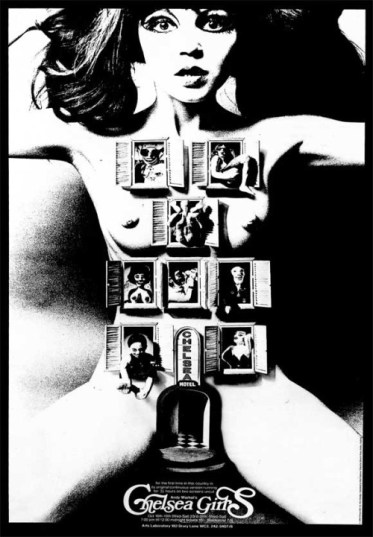
I have been familiar with Andy Warhol’s work my entire life, but it was when I discovered his filmography that I really became obsessed. Several years ago, I came across some stills from his Chelsea Girls (1966) in an introductory film studies textbook. I could tell right away that seeing that film would change my life. It took me several months to find Chelsea Girls, but the wait was worth it. This long-winded, virtually incoherent, creatively daring tour de force won me over with its style and substance. I aspire to produce something like that one day. It’s one of my top ten goals in life (no joke)

chelseagirls.jpg
I’m not even going to try to explain what this film is; you just really need to see it.

Anyway, I could write a 4o -page essay about this right now (I did it my undergrad!), but today is almost tomorrow and I just want to get this up and out there. In conclusion, Andy Warhol continues to be the premier creative influence in my life, and I am always happy to explain why and defend my assertions if necessary.

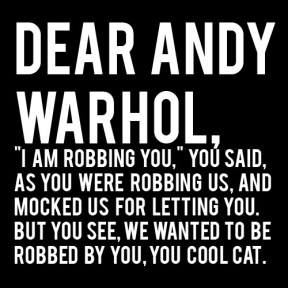
I found this graphic on my old hard drive today. I have no idea where it’s from, but I think it would be nice to end this post with it:

tumblr_kvwexi6ryB1qaw7fzo1_500.jpg

Thanks for reading.

~GCL~

I Miss the Middle East

Sounds kind of crazy, maybe? I don’t think so, but allow me to explain:

I absolutely LOVE to travel. I love learning new languages, I love geography, I love crossing places off of my bucket list. It’s a thrill, and I get pleasure out of knowing that I am comfortable going almost anywhere as a solo traveler when so many others (especially fellow women) are often reluctant to do so. For me, there is nothing more wonderful than finding myself in a brand-new place, with a brand-new culture and language.

So, almost two and a half years ago, I visited Israel for the first time. I didn’t go for any kind of religious or political reason, but out of simple curiosity. I wanted to learn more about the Israel-Palestine conflict, but I also just wanted to experience life in the region and talk to people who live there.

Before I even boarded my flight, reality struck like a hammer to the head. I was booked on El Al, Israel’s national airline, and I was unprepared for the onslaught of questioning that I would be subject to before I could even get in line to go through security. It was intense; I ended up being sequestered with two other redheads, and we sat together as a group as the El Al staff searched all of our belongings. Fortunately, we made our flight. Although I was shaking a little, I was very happy to be on the plane and on my way.

Long story short, I ended up spending a solid portion of 2015 living in Israel. I lived in Tel Aviv, a liberal, cosmopolitan, and very beautiful city. I worked at a startup incubator on the port off of the Mediterranean Sea. I made a great friend, began to learn two languages, and saw a lot of wonderful art. I also visited parts of the West Bank, witnessed religious extremism up close, had additional problems with Israeli security, and saw quite a bit of government-endorsed discrimination. I guess you could say my experience was a mixed bag, but it was certainly an adventure.

I get bored easily. I get antsy. My focus in life right now is getting a full-time job but I do hope to return to the region one day. I want to see more of the West Bank, and I also really want to go to Jordan. Maybe UAE too, or Qatar. I am very aware, probably more than most people, of the various instabilities in the Middle East. But that’s not necessarily a deal-breaker for me. Life is risk, and although I don’t plan on traveling to any war zones, I do want to spend more time in that part of the world. Life for me is a learning experience, a class that I never want to end.

I have a ton of photos from my time in Israel, but I’m going to divvy them up. I’m saving conflict-related shots for a future post. I also have a series of photos of Tel Aviv’s street cats, but that will also be saved for another day.

Tonight’s pictures are some of my most personal I guess. I have better shots, but these are just the introductory images. I don’t know…

Enjoy, hopefully:

DSC_0005.JPG
I got off the plane and this is where I went first: the village of Zikhron Ya’akov.  (c) Gabrielle Lipner 2015
DSC_0863.JPG
Respect your local vandals. I have a ton of great graffiti pics, but they’ll have to wait for another day. (c) Gabrielle Lipner 2015

I think that’s enough for one night. Thoughts welcome, as always.

~GCL~

Photo post #2

I’ve been rather busy lately. Between my seemingly endless search for a full-time job and my volunteer position at the Paley Center for Media, I haven’t been able to dedicate my attention to writing as much as I’d like. No complaints, though. I am getting things done, and I even had time to do a little last-minute Valentine’s Day photo shoot for an old co-worker of mine.

Enjoy the photos. More writing stuff coming very soon.

~GCL~

A Very Abridged and Selective History of Manhattan Public Access Cable

I am a lover of the avant-garde, the weird, the obscure, and the almost-impossible-to-find. I myself am rather weird. After all, writing essays is one of my favorite hobbies and I perform research in my spare time, trying my best to investigate various topics that are off the beaten path.

My current fascination is with obscurities from the heyday of Manhattan public access TV (roughly the mid-seventies through the mid-eighties). In spite of the overwhelming lack of available resources on the subject, I have spent the last week and a half conducting research on it. I am currently in the midst of writing two related pieces on specific programs that fall under the Manhattan Public Access Cable umbrella, and I thought I would write this overview and post it first so that I can reference it in future essays.

Now, for your learning pleasure:

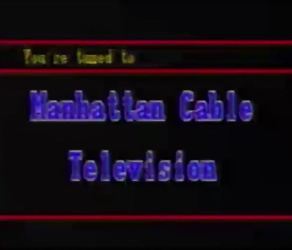
manhattancable
My, how video ages poorly…

Public access television can be loosely defined as a form of non-commercial mass media where the general public can create original content which is then “narrowcast” through cable TV specialty channels. Narrowcasting (not sure if it’s an actual word in the dictionary or just an industry term) refers to the distribution of information to a niche audience. In the case of public access, the niche audience would be a local community (which, in the context of this essay, is the NYC borough of Manhattan).

The rationale for public access television actually predates cable technology, and goes all the way back to the Communications Act of 1934. The Communications Act, although at the time referring to radio and wire service, posited that the airwaves belong to the people and that it is necessary in a democratic society to multiply public participation in political discussion by providing opportunities to do so outside of the mainstream media.

Now, I don’t know about you, but I actually didn’t have cable when I was a kid. My family had an old-school boxy analog TV, complete with an antenna on the top that sometimes needed to be wrapped in aluminum foil in order to get better reception. When I was really little, we hadn’t even gotten a color set yet. One of my most prominent childhood memories is of my father setting up our first ever color television: a bulky Sony Trinitron, which at the time represented some of the best in cathode-ray tube technology, with incomparable color and image quality. That I night I saw the Simpsons’ yellow flesh for the first time, and I remember finding it shocking and exciting.

sonytrinitron
This was cutting-edge in 1994.

Although I personally didn’t make the transition from analog to cable until 2005, the technology behind cable television dates back to the 1950s. Allow me to briefly describe the differences between the two technologies in a (hopefully comprehensible) nutshell: analog television functions via signals transmitted on a particular radio frequency, from the TV stations’ transmitting antenna over the air to the receiving antenna on the top of your TV set. Each station, and therefore each channel, corresponds to a particular frequency. Cable television is technologically different, primarily because it functions via radio frequency signals transmitted through cables (traditionally, coaxial cables and now fiber-optic cables) that are located underground. Get it? I hope so, because it sure took me a long time to figure out how to explain it.

Public access television has always been exclusively a cable phenomenon. While experiments in non-commercial local television date back to the late 1960s, the unofficial first year of public access was 1971, when cable television began its introduction to the American public. The following year, the Federal Communications Commission (FCC) mandated that all new cable systems in the country’s 100 largest markets provide channels for government, educational purposes, and of course, community public access.

Manhattan was the first American metro area to be wired for cable and consequently it established the world’s first public access channels. Black-and-white signals had always been able to transmit over the air with no problems but with the onset of color TV, Manhattan’s towering skyscrapers badly interfered with reception. In order for color sets to sell, the only option was to lay cable underground, beneath the streets, to limit service disruptions.

In 1970, two companies, TelePrompTer and Sterling-Manhattan Cable agreed to pay the city $30,000 each in annual royalties in return for 20-year franchises. The two companies divided the island between them, with Sterling-Manhattan Cable taking 86th Street and below, and TelePrompTer taking everything above. Those earliest cable subscribers paid $5 a month to get all regular channels in color, plus the “flagship” channel 10, which offered about 12 hours of eclectic programming a day, including a show produced by New York magazine. In return for subscription fees and their contract with the city, the cable companies would provide studio space, training, equipment, and airtime for free, to anyone who wanted it, on a first-come, first-served basis. They also consented to reserve two channels for the direct participation of the public and commercial-free self-expression. These channels, channels C and D, both premiered in 1971.

Channels C and D birthed an entirely different breed of programming, one that often reflected the interests of groups and individuals on the fringes of society, excluded from mainstream television. Public access TV was also unique in that it was not subject to conventional network censorship, only to obscenity and libel laws. Cable companies were to allow the public to go uncensored except where it was necessary to protect themselves from liability.

Naturally, Manhattan’s public access offerings pushed boundaries from the get-go, and there was immediate confusion regarding content. Some of the earliest programs had their tapes edited for harsh language, only to have the cuts restored the following day, after it was determined that the content did not violate the cable station’s terms of use. However, people would continually test the limits of what was acceptable, and this would eventually lead to the creation of a third public access outlet, Channel J.

In 1976, Channel J, the very first “leased access” channel was created. J was different from C and D; airtime slots were not free, but ran $50 apiece. However, producers were permitted to sell spots to advertisers, making Channel J the first commercial public access channel ever. From its inception through to its extinction in 1991, Channel J was plagued by controversy and threats of legal action due to its bizarre assortment of off-color adult programming. However, the controversies should not diminish the fact that Channel J provided a unique opportunity for talented performers to produce original content and subsidize their own creative endeavors. Whether or not anyone was watching is a different story.

It really breaks my heart that many (if not most) of the early public access shows are long-gone, with only print sources remaining to inform us of their existence. The most common reason for this considerable loss is simply the deterioration of the mediums on which these shows were recorded. Many of these programs were taped on early consumer-grade video, like the Portapak, which degrades fairly quickly and is exceedingly difficult to copy (something I actually know from personal experience). It’s unfortunate, because the Portapak allowed for a great deal of independent, innovative, on-the-go video production but due to its chemical instability, much what was produced is now lost. Plus, by 1980, live studio facilities would become a key facet of public access programming, and the technology would evolve accordingly.

Now, this post could certainly be longer, more comprehensive, and perhaps a bit less dry. But this essay is really just an overview, an introduction to things that I will be writing about in the very near future.

I hope that you continue reading.

~GCL~
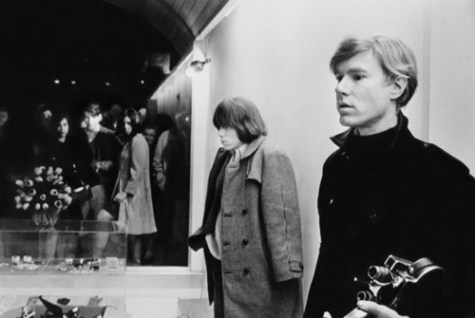
 

Photo post #1

I have a lot to say, and I enjoy writing. However, I am very tired tonight, so I thought I would post some of my favorite photographs that I’ve taken over the past few years. Enjoy the visual pleasures, and stay tuned for more essays/text posts coming very soon.

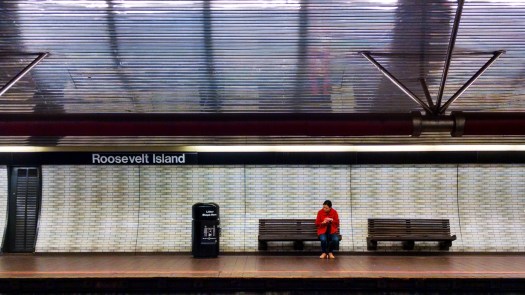
IMG_20151112_154014222_HDR_2.jpg
Roosevelt Island subway station, New York, NY. November 2015. (c) Gabrielle Lipner
DSC_0232_2.jpg
Tribeca, New York, NY. August 2016. (c) Gabrielle Lipner
Proof #5 (2).jpg
Westchester, NY. November 2012. (c) Gabrielle Lipner
DSC_0243.JPG
Syracuse, NY. August 2016. (c) Gabrielle Lipner

~GCL~

The Unmitigated Power of Images

IMAGERY – according to the Merriam-Webster dictionary – is defined as 1. the product of image makers, 2. figurative language, and 3. mental images (i.e., memories or the products of imagination). The majority of what we humans process comes at us in a visual form.

Several years ago, when I was a sophomore in college, I decided that I would attempt to start an “Imagery Club”. It was an ambitious undertaking which ultimately failed because the name of the club was so vague that no one knew what the hell it was. Basically, what I had in mind were weekly meetings where people would get together and talk about images and their influence. Each person would bring in a picture or video clip or whatever and we would talk about what we were looking at. The Imagery Club lasted a month and a half, and had three members at its peak. Meetings lasted about twenty minutes. The club was a failure, but I had fun.

What is the purpose of this lengthy preamble? Well, if there is anything I’ve learned from the Imagery Club, it’s that I think an awful lot about how images affect and influence us. That pretty much describes my entire undergraduate field of study (Cinema Studies major, Art History minor). Imagery extends beyond what is visual, but when I refer to images in the context of this post, I am mostly referring to pictures.

Visual images manipulate the way that we perceive reality, and when I use the word “manipulate”, all I mean is that pictures factor into what we like, what we want, and how we feel about everything.

I have been told that my upbringing differs from that of most “millennials”. I never experienced “helicopter parenting” and I was more of a latchkey kid than anything else. My parents were self-described intellectuals who didn’t believe in censorship, but the quality of whatever I was consuming had to be first-rate (or at least have some kind of socially redeeming value). I ended up watching a lot of old movies and TV shows (and a ton of TV news), and spending time reading a vast array of books and magazines. Nothing’s changed; I like what I like and I care about what I care about.

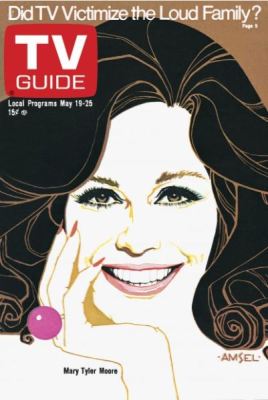
Growing up, my favorite magazine was TV Guide. From TV Guide, I learned a huge portion of what I now know about television history. I made it a point to watch at least one episode of every show that TV Guide had deemed culturally significant. When Mary Tyler Moore passed away three days ago, I was filled with a peculiar sense of nostalgia. While I did occasionally watch The Mary Tyler Moore Show and its most famous spin-off, Rhoda, when I was a kid, most of what I know about them came from TV Guide and various books on television history.

mtmtvguide1973_2
Mary Tyler Moore on the cover of TV Guide: May 19, 1973

I love history. I love television. I love movies. I love magazines. I love books. I love news, in all its forms. I also love the First Amendment. As stated above, my parents were staunchly opposed to censorship, and I am no different.

Freedom of speech and the free flow of information are critical to maintaining a healthy democratic society. Even something as seemingly nonthreatening as TV Guide can function as a valuable cultural resource, particularly in times of strife. Images and stories are important, and can serve to keep us from repeating history’s mistakes!

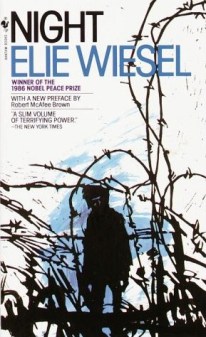
Having been a latchkey kid, I got terrible grades in junior high school. However, my reading and writing skills were really good so I was placed in the “gifted” Creative Writing class. It was there that I became exposed to some of the most influential texts from modern history, including Elie Wiesel’s Night, which I read when I was eleven.

nightwiesel
Elie Wiesel’s Night (1960)

Yesterday was International Holocaust Remembrance Day, and it got me thinking about this book again. Those who haven’t read it, should. It is historically significant, it is strangely poetic, and it BITES. And as an eleven-year-old history buff growing up in a home with no prohibition on images, it propelled me into a fact-finding frenzy. I ended up compiling a comprehensive file on the Holocaust, complete with some of the most horrifying photographs I have ever seen in my life.

Now, those images entered my brain when I was pretty young and they affected me in a multitude of subjective ways (as a child, as a female, as a person of European Jewish heritage, etc.), as well as just a human being on Earth. Pictures do speak louder than words (as much as I love words), and they can affirm reality in the face of skeptics. Some things need to be seen, by everybody, even if we don’t want to look.

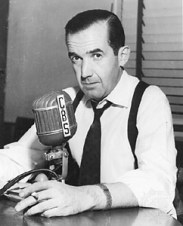
The U.S. Army arrived at Buchenwald, the concentration camp where Elie Wiesel was imprisoned, on April 11, 1945. The following day, legendary journalist Edward R. Murrow, along with his associate Bill Shadel, were the first reporters to reach the camp.

In his radio broadcast which aired three days later, Murrow relayed his story of the nightmare of Buchenwald. The report is eloquent, but unembellished. Murrow innately understood that the world needed to hear what he had to say about the gas chambers, emaciated bodies, and corpses piled into heaps. He knew that at that moment in time people could not, should not, be spared from the truth’s sharp teeth. As the broadcast concludes, he states “If I have offended you by this rather mild account of Buchenwald, I am not in the least sorry.” There’s a reason this guy is a legend.

edward-r-murrow-cbs
Edward R. Murrow at CBS Radio

The first version of Night was longer, reportedly more macabre, and entitled And the World Remained Silent. The world did remain silent, until it was too late for many.

It is the responsibility of journalists (and often artists as well) to show people the truth, in a way that makes that truth inescapable. We should be grateful to journalists and artists for sticking their necks out at times to ensure that we all know what the hell is going on. A free press is crucial to any democracy, and state-sanctioned censorship can sometimes signal the beginning of an end of an era.

This brings us to our current moment:

nyt2nyt1

The two main points that I am trying to get across in this post are as follows:

  1. Images manipulate the way we perceive reality, and how we feel about things
  2. Images and stories, along with freedom of speech and the free flow of information, are CRITICAL to maintaining a healthy democratic society

This past week has been a whirlwind of shit (I don’t usually like to swear but you know what, it’s warranted). I for one am grateful to all the people who risk censure or worse in order to bring truths into the light. We have a First Amendment, and if we do not actively defend it we might one day wake up to find that it is with us no longer. Let us not waste any time.

The actions of the Trump administration are not only frightening; they are also baffling because they differ so much from what we thought was normal or acceptable. I am happy that the media has continued to prod, question, and point out the many inconsistencies within the Trump cabinet, although I also feel like it really isn’t enough.

I am disgusted at what has happened today and continues into the night. The world needs to not remain silent. We must not permit the images of what has been going on in Syria and Yemen, along with what is happening at JFK Airport in New York City, to leave us. Images are IMPORTANT. I hate the guy with a passion, but perhaps if Donald Drumpf Trump had read Night or listened to Murrow’s broadcast or seen Alain Resnais’ Night and Fog (1956) he would think twice before turning people away. Then again, probably not.

To all who have read this up to this point, thank you for sticking with me. More to come soon.

~GCL~