โ€œA Parade of Slutsโ€

Sexual Politics, Female Agency, and the Moral Framework of The Handmaidโ€™s Tale

Image via Huluโ€™s The Handmaidโ€™s Tale (Promotional Still)

โ€œBoy, look at these outfitsโ€ฆitโ€™s a parade of sluts.โ€

Thatโ€™s how Aunt Lydia snarls her assessment of the world before Gileadโ€”an era of sexual freedom, pants, dating apps, and bad decisions. In her eyes, the collapse of the former United States was inevitable. A society built on female autonomy was too much for her to stomach. It was bound, she believes, to unravel.

And yet, when you watch The Handmaidโ€™s Taleโ€”not just read it, but see it in its contemporary iterationโ€”it becomes clear that what Lydia (Ann Dowd) calls chaos is really freedom in disguise. Freedom to love badly. Freedom to grieve, to fuck, to run, to refuse. Freedom to choose, even when those choices are messy, shameful, or simply โ€œincorrect.โ€

Huluโ€™s adaptation doesnโ€™t just dramatize a dystopian futureโ€”it reflects, refracts, and confronts the moral panic of the present. In its brutal choreography of scarlet robes and white bonnets, it shows us what happens when protection becomes control, when โ€œfreedom fromโ€ is used to erase โ€œfreedom to.โ€

Lydia isnโ€™t just a characterโ€”sheโ€™s a mouthpiece for a worldview that sees freedom as chaos, and womenโ€™s bodies as the battleground.

In this scene where she delivers this โ€œparade of slutsโ€ line (season 1, episode 10), a group of young women, including June Osborne (portrayed by Elisabeth Moss), are marched through the Red Centerโ€”a repurposed gymnasium turned indoctrination facility where fertile women are โ€œtrainedโ€ to become Handmaids. It is here that they are taught to accept their assigned role in Gileadโ€™s monthly ritual of state-sanctioned rape known as The Ceremony. In this ritual, the Commander has sex with the Handmaid while she lies between the knees of his barren wife, whose hands rest on hers as a symbolic gesture of ownership and compliance.

Gilead has, with the exception of Alaska and Hawaii, replaced the United States of America. Fertile women are whittled down to their uteruses. Their identities erased, their names stripped. Their bodiesโ€”functionally desecratedโ€”are rendered public property.

Lydia refers to them always as โ€œgirls,โ€ never โ€œwomen.โ€ Her power comes from belittling theirs. And in that same scene, she preaches to them: โ€œHumble yourself in the eyes of the Lord, and He shall lift you up.โ€ How do they humble themselves? By disappearing. Hands clasped. Eyes down. Even in forced service to this new world order, sexually active women must hang their heads in shame.

This is where Lydiaโ€™s fatal miscalculation begins. She believes modesty can erase memory. That shame can erase longing. That rebranding women as vessels will unwrite their history. But even in this forced new order, the truth seeps through: sex is still happening. Desire still hums beneath the ritual. And everyoneโ€”Commanders, Wives, Handmaidsโ€”knows it.

Letโ€™s be honest: Gilead cloaks the Ceremony in Biblical reverence, but itโ€™s a pageant of control. The sex is stiff, quiet, choreographedโ€”designed to be clinical. Thereโ€™s supposed to be minimal touching, no intimacy. Itโ€™s meant to look like healing. But it is, by all measures, state-sanctioned rape. A performance for the benefit of power.

And yet, even in this cold and calculated setting, the lines blur. Commanders bend the rules. Wives develop resentments. Handmaidsโ€”particularly the younger onesโ€”are still viewed through a lens of temptation. Which brings us back to something obvious that too many pretend isnโ€™t true: humans gonna human. They want. They deviate. They make up stories to justify the gap between what theyโ€™re told to want and what they actually crave.

Peopleโ€”not just men, and I cannot emphasize that enoughโ€”will use almost any excuse to justify their desire to color outside the lines. Rather than own up to non-monogamy, sexual need, or the hunger to imprint on more than one life, they build myths. Rituals. Ideologies. Sometimes entire nation-states.

Gilead wasnโ€™t born of perversion. It was born of denialโ€”denial of messiness, of ambiguity, of the very human impulse to want what youโ€™re told you shouldnโ€™t. Most people donโ€™t want absolute power. They want permission. They want the illusion of righteousness wrapped around their hungers.

And honestly? I get it. Human beings are kind of gross. Iโ€™m gross too. But Iโ€™d rather name it than pretend itโ€™s virtue.

We see this need for control masquerading as righteousness most clearly in the men of Gileadโ€”particularly in Commander Waterford and later with Commanders Blaine and Wharton.

In season two, we see Nick Blaine (Max Minghella) get assigned a teenage wife. She is quiet, compliant, pious, and visibly nervous. This isnโ€™t courtship. Itโ€™s state-sponsored grooming at best. And no one flinches, except for June. Because in Gilead, ritual is how they normalize the unthinkable.

The girl is later executed by drowning for having an affair (with a young man closer to her age) after Blaine neglects her. And he does neglect her, because he is not, in every horrifying sense, a pedophile. He doesnโ€™t abuse her. But he doesnโ€™t protect her either.

Commander Putnam (Stephen Kunken), too, takes his pubescent Handmaid as a mistress, only to ultimately be executed for apostasy, as he raped the young girl before she was officially assigned to him, a stark violation of Gilead law.

And then of course, there is Commander Waterford (played by Joseph Fiennes), Serena Joyโ€™s first husband. Waterford is a rapist. A hypocrite. A pompous ass. A pervert. A founder of Gilead and a leader in its government, he is directly responsible for the suffering and deaths of thousands, at least. His eventual fate suits him. He is eventually executed via beating and then hanged, but not before spending years benefiting from the very system he helped construct. Heโ€™s beaten to death and hanged by a horde of women whose lives his ideology attempted to destroyโ€”destiny catching up to cruelty after years of impunity.

Then, finally, in the final season, Commander Wharton (Josh Charles) marries Serena Joy (Yvonne Strahovski) in a lavish, unsettling ceremony, only to receive a Handmaid as a โ€œgiftโ€ that same night. Itโ€™s positioned as practicalโ€”about fertility, about dutyโ€”but the reality is far more sinister. When Serena protests, trying to humanize the girl and pleading with Wharton that she herself is fertile, he looks her in the eyes and says, โ€œBut youโ€™re only one person, my love.โ€ And there it is. The quiet confession. The truth beneath the system. This isnโ€™t about building big families. Itโ€™s about leaving a mark on multiple women. Itโ€™s about indulgence under the guise of order.

Not every woman in Gilead is raped. But that does not mean theyโ€™re free.

The system has its own form of punishment for women it doesnโ€™t want to fuck: it makes them invisible. If some women are over-sexualized in Gilead, others are erased altogether.

Marthas are the domestic classโ€”women too old, infertile, or noncompliant to bear children. They cook. They clean. They keep the household running in silence. They wear drab olive and speak in whispers. There is no ritual to their existence. No protection. No recognition. Marthas compete with Handmaids to represent the worst of the chattel slavery that defines Gilead.

EconoWives are allowed to live with their husbandsโ€”if you can call it living. They wear grey. They do everything and get nothing. They raise children if they can, labor if they must, but they are seen as second-class even by other women. They are barely acknowledged by the state.

And then there are the women in the Coloniesโ€”exiled to dig through toxic waste, stripped of purpose, future, or identity. Gilead doesnโ€™t execute them, but it doesnโ€™t let them live either. It rebrands slow death as spiritual grace.

These women are not seen as sexual. They are not even seen as dangerous. They are simply erased. And in Gilead, thatโ€™s supposed to be a mercy.

But not every woman is erased. Some are repurposed.

Enter Jezebelsโ€”Gileadโ€™s underground brothel, reserved for powerful men and visiting diplomats. Itโ€™s where โ€œfallenโ€ womenโ€”rebels, queers, former professionals and several former Handmaidsโ€”are given a second chanceโ€ฆ if you can call it that. Their lives are spared, but their bodies become a playground.

The hypocrisy is brutal. Jezebels is the physical manifestation of Gileadโ€™s central lie: that it values purity. It doesnโ€™t. It values control. These women are dressed up in cocktail dresses and lingerie, forced to perform sexual servitude in secret while the regime praises chastity in public. Itโ€™s a system that punishes visibility while quietly indulging in everything it condemns.

Moira, Juneโ€™s best friend (played by Samira Wiley), ends up here after escaping the Red Center early in the story. Her survival comes at the cost of her freedom. Her slow walk through that mirrored hallwayโ€”wrapped in silk, neon, and dangerโ€”is one of the seriesโ€™ most chilling visuals. Sheโ€™s not protected. Sheโ€™s not empowered. Sheโ€™s tolerated, because sheโ€™s useful. Because her body can still serve a purpose.

Jezebels isnโ€™t a loophole. Itโ€™s a mirror. A funhouse reflection of every system that pretends to protect women while exploiting their bodies behind closed doors.

If Jezebels is where Gilead hides its appetites, then Janine is where it reveals its cruelty.

Janine (Madeline Brewer) is often treated as a form of dark comic reliefโ€”flighty, overemotional, naรฏve. But her story is one of the most brutal in the entire series. Lydia has one of her eyes taken out early on for resisting. She is raped, repeatedly, under the guise of The Ceremony. She becomes pregnant, gives birth, and then watches her child be taken from her and renamed. She tries to end her life. She survives. And somehow, she remains tenderโ€”an impossible softness in a world that rewards only silence and steel.

She is everything Gilead hates: vulnerable, loving, defiantly alive.

Commander Lawrence (Bradley Whitford), who first shelters June as his Handmaid, is one of the few men in Gilead who shows sincere glimpses of guilt. He refuses to perform the Ceremony with Juneโ€”less so out of virtue, more so out of discomfort and a simple lack of desire to do so. He is only forced to comply when a state doctor comes to literally check that he ejaculated. Itโ€™s one of the most viscerally humiliating scenes in the seriesโ€”for everyone involved. Even his resistance is bureaucratized. The trauma of witnessing the ordeal ultimately drives Lawrenceโ€™s wife to madness.

Later, Lawrence arranges for Janine to be sent to Jezebels after his new wife, Naomi (formerly Naomi Putnam) refuses to have her in the home. Naomiโ€™s daughter is in fact Janineโ€™sโ€”she is Angela to Gilead, Charlotte to Janine. Itโ€™s a grotesque act of protection. A trade-off. A life spared, but at what cost? Lawrence doesnโ€™t save Janine. He simply chooses the less immediate cruelty. And in Gilead, sometimes thatโ€™s the closest thing to mercy anyone gets.

Throughout the series, June is trapped between two men: Luke (O-T Fagbenle), the man she loves from before, and the aforementioned Nick, the man she loves in captivity. Neither can save her. Neither fully understands her. And yet, their existence in her orbit is a reminder that even in systems built to erase choice, desire still flickers. Juneโ€™s agency is constrained, but never extinguishedโ€”not emotionally, intellectually, or sexually.

Toward the end of the series, June gives a monologue that cracked something open in me. Iโ€™ve lived long enough to know what it feels like to be both too much and not enough. To be wanted and discarded. To be told silence is safety. Thatโ€™s why Juneโ€™s voice matters so much. She speaksโ€”not with sorrow, but with fireโ€”about the women whose voices have been taken.

โ€œโ€ฆweโ€™re not fallen women,โ€ she says.

โ€œWeโ€™re rising up because, in each and every one of us, is this immaculate soul that was given to us by God thatโ€™s just crying out for dignity and freedom.โ€

Not just survival. Not protection. Dignity. Freedom.
The things weโ€™re told we donโ€™t deserve unless we behave properly. Unless we play the part.

But June doesnโ€™t behave, despite her early efforts. She defies. She resists. She choosesโ€”over and over againโ€”herself, her daughters, her rage, her complexity. She is not pure. She is not polite. And thatโ€™s precisely what makes her powerful.

Which brings me back to that line, that insult Lydia flung like scripture: โ€œa parade of sluts.โ€

Maybe thatโ€™s what we are.
Women who refuse to be simple.
Women who choose desire, even when it makes us look bad.
Women who make mistakes, then get up and make more.
Women who want to be touchedโ€”and left alone
Women who want to own our bodiesโ€”even when weโ€™re still figuring out how.

Gilead fears sluts not because theyโ€™re dirtyโ€”but because theyโ€™re free. And so do a lot of people, honestly.

But Iโ€™ll take a parade of sluts over an army of sanctimonious zealots any day.

Originally published via Gigi After Hours on Substack (May 16, 2025).

Let me know what you thinkโ€”DMs are open, comments welcome, or find me over at Gigi After Hours for more like this.

No Plot, Just Vibes: A Love Letter to Molang

Thereโ€™s a Molang pop-up in Paris right now. Itโ€™s full of plushies, ephemera, and an adult-sized ball pitโ€”honestly, if I were anywhere near it, Iโ€™d probably burst into tears. Molang, the round, radiant character born of Korean and French roots, has quietly become my emotional support marshmallow. No gender, no nationality, no ageโ€”Molang just exists: squishy, sweet, and emotionally fluent in vibes.

I first discovered Molang several months ago. I had just finished Acorda, Carlo! (a Brazilian cartoon) after asking ChatGPT to recommend another brightly colored show that wasnโ€™t in English. What I got was something so much better: five-minute episodes with no plot, no dialogue, and no chaosโ€”just a blob-shaped bunny rabbit and their anxious little chick friend, Piu Piu, living their best pastel lives.

They bake cakes. They ride in a tiny motorcycle with an even tinier sidecar. They go to space. They never fight. They never explain themselves. They justโ€ฆ exist. Itโ€™s like ASMR, therapy, and a weighted blanket all rolled into one.

I love that I canโ€™t understand a word Molang says. Technically, they speak Molangueseโ€”a delightfully expressive language that Iโ€™m proud to say I can almost comprehend at this point, after several viewings. Alongside singsong exclamations like โ€œBaaaah!โ€, there are actual words: specti (look), rabono (good), norabono (bad), and Boomboom Shoobidoowa, which apparently means โ€œdisco house party.โ€ Whether the gibberish makes sense to you or not, the meaning always comes through. Itโ€™s part of what makes the show so calming: no exposition, no moral, just candy-colored cartoon adventures.

Molang even has an active YouTube channel, Molang YouTuber, where they and Piu Piu sometimes speak English. But I prefer the originals. The lack of real words makes the show feel like ambient softness, something I can dip in and out of while I write, scroll, or spiral. When Netflix has the audacity to ask if Iโ€™m still watching, the answer is always yes.

Iโ€™ve watched Molang many times over the past few months, and Iโ€™m still not entirely sure who the intended audience is. Itโ€™s ostensibly designed for preschool-aged children, but Iโ€™m convinced it was made for people like me: overstimulated adults with too many tabs open and a deep need for softness. Molang is chubby, cheerful, and occasionally chaotic. Piu Piu is neurotic and frequently the voice of reason. Together, they bake, drive, picnic, DJ, ride hot air balloons, and occasionally travel back in time. Every episode is a microcosm of joy and curiosity. Their lives may be quiet, but theyโ€™re full.

Molang doesnโ€™t ask me to keep up. Molang just shows upโ€”bright, unbothered, and squeezable. And somehow, that feels like enough. In a world that demands productivity, commentary, and constant opinions, itโ€™s radical to watch something where the biggest drama is running out of strawberries or finding the perfect outfit for a picnic. All I know is that when the world feels jagged, I turn to Molang. And Molang always shows upโ€”just in time.

Arrested Development, Indeed

I didnโ€™t respond. I wrote this instead.

Not long ago, at 7:00 AM on a Saturday, I woke up to a text that simply read: I was arrested.

No context. No apology. No โ€œgood morning.โ€ Just another man in my life sending me his chaos like it belonged on my breakfast plate.

This wasnโ€™t the first time. Or the second.

Last year, Miles spent months going back and forth to court in Missouri for hearings related to an order of protection against his ex, who had repeatedly threatened his life. Heโ€™s also been dodging calls from police in his hometown in Passaic County, New Jersey. They supposedly want to โ€œask a few questionsโ€ about a harassment case involving yet another man. To be fair, that one did sound like bullshitโ€”if his version was to be believed. But still. The pattern is the pattern.

This time, the charge was public drunkenness. Miles was arrested at a street festival, thrown in solitary โ€œto dry out,โ€ and later hired a lawyer for $3,000 to try to make the charge go away. When I told him that was a privilege, he deflected. Rolled right past it. Just like always.

Miles has been seeing a guy named Deanโ€”a former meth addict in his fifties. Theyโ€™ve known each other maybe two months. Somehow, Miles says the arrestโ€”and the relapse that followedโ€”have made him feel better about this relationship.

Dean relapsed after Miles enabled his drinking, and then Dean ended up smoking crystal meth for two days. Milesโ€™ justification? โ€œEveryone fucks upโ€ and โ€œat least he didnโ€™t have sex with anyone.โ€ I told him to get everything in writing if he was serious about giving this guy another chance. He wonโ€™t. Of course he wonโ€™t. But he says heโ€™s crazy about him. Says theyโ€™ve talked boundaries. Says theyโ€™re going to get married. Maybe raise children.

And donโ€™t worry, he saysโ€”if Dean ever does this again, heโ€™ll leave. Sure.

Dean, according to Miles, โ€œis not white trash.โ€ Whatever that means.

Itโ€™s also worth noting: Miles is a borderline alcoholic. Thereโ€™s no denying it anymore. And not in the fun, tipsy-on-the-weekend way (or at least, not anymore). In the blurry nights, bad decisions, and waking up with handcuffs way. Nowadays heโ€™s the kind of man who makes you wonder not if something bad will happenโ€”but when. And this morning, it was at 6:41 AM Eastern / 5:41 AM Central. My guess? He spent the night in jail and texted me the moment he got out. Like Iโ€™m supposed to be shocked. Like Iโ€™m supposed to be relieved.

Meanwhile, Iโ€™m the one who redid his entire LinkedIn profile that he has yet to even glance at (โ€œIโ€™m not worried. I trust you!โ€). Iโ€™m the one who tried to support him when he was spiraling. I even gave him a copy of Salt Kiss for Christmasโ€”a dark romance with teeth, full of people making terrible decisions in beautiful, cinematic ways. I thought heโ€™d like it. I thought he might even see himself in it. But heโ€™s never opened the book. Just like heโ€™s never once read anything Iโ€™ve written, liked a post Iโ€™ve shared, or shown the bare minimum interest in what I do.

He thinks heโ€™ll move to Dallas-Fort Worth to live with Dean and just land some great job in โ€œcustomer serviceโ€โ€”whatever that means to him. Heโ€™s said, out loud, that he doesnโ€™t want anything โ€œlow-end.โ€ And yet his rรฉsumรฉ is flimsy, his experience is spotty, and his computer skills are practically nonexistent. Heโ€™s 34 and barely knows how to navigate the modern workplace. He doesnโ€™t even grasp that heโ€™s unqualifiedโ€”because heโ€™s never had to. The entitlement is staggering.

And then thereโ€™s his politics.

The smug parroting of right-wing talking points. He doesnโ€™t discuss issues (although he thinks he does)โ€”he recites slogans. โ€œWhy are leftists obsessed with protecting thugs?โ€ he asked recently, like it was a clever observation and not a lazy, racist oversimplification. I used to ignore it. Smile through it. Iโ€™ve let so many moments like that pass just to avoid confrontation, just to preserve some imagined friendship that didnโ€™t even serve me. He thinks we agree; I no longer have the energy to explain nuance to a man who wonโ€™t even let me finish a sentence.

Hereโ€™s the raw truth: Iโ€™ve spent years thinking, writing, and challenging myself to understand complexity. I believe in nuance, accountability, autonomy, contradiction. He believes in whatever gets the last word in a Facebook comment section. He doesnโ€™t read. He doesnโ€™t ask questions. He doesnโ€™t evolve. His worldview is one long eye roll wrapped in entitlement.

And Iโ€™m done pretending ignorance is harmless. Iโ€™m done pretending this is someone I relate to.

And hereโ€™s the kicker: I considered this person my best friend. Looking back, I must have been out of my damn mind.

Miles isnโ€™t just emotionally chaotic. Heโ€™s lazy. Uncurious. Brash. Foolish. Desperate. Privileged. And maybeโ€”just maybeโ€”not very intelligent. Not in any way that matters. Not in any way that will help him navigate a world that no longer gives soft landings to unskilled men with delusions of grandeur.

And Iโ€™m done.

I am done being the emotional mule for other peopleโ€™s crises. I am done performing calm for people who only text me when the sky is falling. I am done offering depth to people who only want surface-level connection until theyโ€™re drowning.

You canโ€™t build your life around broken people and then act surprised when youโ€™re the one left in pieces.

So noโ€”I didnโ€™t respond to Milesโ€™s text. Not for hours. For once, I chose silence rather than get sucked into the role of emotional caretaker for an adult child.

Because I am not your rehab. I am not your therapist. I am not your emergency contact.

I am a writer. A builder. A person with shit to do.

What happens next is anyoneโ€™s guess. Maybe heโ€™ll end up in jail. Maybe heโ€™ll manage a Dunkinโ€™ Donuts in a gay conservative outpost just outside Fort Worth. I donโ€™t know, and Iโ€™m done caring. I canโ€™t continue caring about someone who doesnโ€™t care for himself.

Read my work, or donโ€™t. But donโ€™t text me from jail.

I Canโ€™t Afford It, But I Still Love It: Eating in NYC

The places I return to โ€” physically, spiritually, and otherwise.

New York City is changing, faster than ever, it seems. But these are a few of the places I return to โ€” sometimes physically, sometimes just in memory. Some are holdouts. Some are chains. Some are ridiculous. All of them are real to me. A combination of old and new in a city thatโ€™s constantly shifting identities.

Collage of New York City restaurants featured in the article

Nathanโ€™s Famous (Coney Island)

Iโ€™ve been going to Nathanโ€™s for as long as I can remember. My paternal grandmother lived in Coney Island, and a visit always held the promise of a stop at the flagship location on Surf Avenue. As far as Iโ€™m concerned, the Fourth of July isnโ€™t complete without the Nathanโ€™s Hot Dog Eating Contest broadcast โ€” and yes, Iโ€™ve watched every year, even when Iโ€™ve lived abroad. I even met Joey Chestnut once โ€” at a Kroger in Cincinnati, of all places. (He was lovely. Very polite. Iron stomach.)

Are the hot dogs overpriced? Absolutely. But theyโ€™re also delicious. I stopped eating pork hot dogs decades ago โ€” too pale, too rubbery, too weird โ€” so the fact that Nathanโ€™s uses all-beef kosher-style dogs (are they technically kosher? unclear) has always worked in my favor. The crinkle-cut fries are elite. The cheese fries? Divine. This place is a relic, a tourist trap, a national institution masquerading as a corner stand โ€” and I love it. Get the lemonade.


Levain

Chocolate Chip Walnut. Oatmeal Raisin. And my favorite โ€” the perennial Black and White Chocolate Chip. Decadent. Delectable. Delightful. No shade to Dominique Ansel, but Iโ€™ve never cared for the gooey treacliness of cronuts or the greasy pats of salted butter masquerading as cookies. Levain gets it right: hefty, crisp at the edges, chewy without being molten.

Anselโ€™s Double Chocolate Pecan is quite good, and Iโ€™ll give credit where itโ€™s due. But if you want a cookie fit for a queen? Go no further. Levain is the indulgence I crave when I want something truly celebratory โ€” and now, sadly, one I canโ€™t quite afford. Iโ€™m weirdly fine with that. Some cookies should be reserved for special occasions.


Katzโ€™s Delicatessen

Yes, itโ€™s touristy now. Sure, the ticket system makes me a little anxious every time. But Katzโ€™s is still Katzโ€™s. The question of pastrami or corned beef remains evergreen. Some people pretend thereโ€™s a right answer. There isnโ€™t. It matters less which option you choose than how you prepare it: get it in its original fatty state, falling apart on rye with grainy mustard โ€” it may be painfully overpriced for many nowadays, but it remains one of the most satisfying things you can eat in this city.

You donโ€™t need the โ€œIโ€™ll have what sheโ€™s havingโ€ table to feel something here. Just the fluorescent hum, the clatter of trays, the guy at the counter who slices you a sample without being asked. Katzโ€™s has personality, and a sense of humor: the last time I was there, someone had hung a framed photo of Al Goldstein eating pastrami next to the ladiesโ€™ room. I nearly choked laughing. Whoever did that? God bless.

Katzโ€™s is one of the few places in Manhattan that still feels like it operates on its own rules. Not faster, not fancier โ€” just there, pulsing with a very specific kind of New York energy. A sandwich, a Dr. Brownโ€™s, fries or maybe a knish if youโ€™re feeling bold. Itโ€™s chaos, salt, and permanence.


Shake Shack

I know what it represents: a sanitized burger chain posing as nostalgia, the poster child for gentrification served in a paper boat tray. Jeremiah Moss would spit on my crinkle fries. And yet โ€” Iโ€™ve been there, more than once. Midtown. Astor Place. Flatbush Avenue in Brooklyn. Discreetly shoving my Shake Shack bag into a zippered reusable tote for the commute home.

I recently discovered the Shack Stack: a quarter-pound of 100% Angus beef with American cheese, topped with a crispy-fried portobello crown, lettuce, tomato, and ShackSauce on a toasted potato bun. Hands down, one of the best burgers Iโ€™ve ever had. I canโ€™t deny it. Sometimes, youโ€™re too tired to resist the tide. And a $9 burger tastes like a massage feels.


Serendipity 3

I love Serendipity 3 in large part because of the Warhol connection. Itโ€™s sugary, campy, a little over the top โ€” exactly the kind of place that made sense in Andyโ€™s orbit. Legend has it he adored the Frrrozen Hot Chocolate and the lemon icebox cake. My favorites? The โ€œSummer Briesโ€ sandwich, once available only at the original East 60th Street location but now relegated to the Times Square spin-off: sliced turkey, melted Brie, sliced apples, alfalfa sprouts, raisin pumpernickel, and Thousand Island dressing. It shouldnโ€™t work. It absolutely does. Perfect for the wandering palate โ€” mine included.

The frozen drinks are as absurd as they are wonderful. The Frrrozen Hot Chocolate is the classic, but Iโ€™ll take the Frrrozen Hot Strawberry White Chocolate any day. Serendipity is like a dreamscape of unique desserts and elevated American fare. I canโ€™t afford it right now, but Iโ€™ve made peace with that. Some places, like Serendipity, should exist just outside your daily reality. Theyโ€™re not for errands. Theyโ€™re for occasions. They make you feel like youโ€™ve stepped sideways into a pastel-colored dream fueled by sugar and style.


Jollibee

I first learned about Jollibee from the late, great Anthony Bourdain โ€” which feels both extremely Filipino and extremely New York: a white guy with impeccable taste blessing the masses with a new brand of fried chicken and rice. In 2016, I made the pilgrimage to Woodside, Queens, home of the cityโ€™s first Jollibee.

That mascot alone โ€” bee, bowtie, irrepressible joy โ€” was enough to earn my loyalty. But the real magic? Chickenjoy fried chicken, sweet Jolly Spaghetti, and the crisp, golden Peach Mango Pie. I still donโ€™t understand why they took halo-halo off the menu. I mourn it like I mourn the McDonaldโ€™s chicken fajita. (Yes, Iโ€™m dating myself. I donโ€™t care.)


Economy Candy

There are candy stores, and then thereโ€™s Economy Candy. No minimalist displays. No artisanal branding. Just bins, buckets, and chaos. Itโ€™s what childhood felt like โ€” if childhood came with 2,000 kinds of sugar and walls nearly collapsing under the weight of nostalgia.

Licorice laces. Chocolate coins. Pez dispensers. Turkish taffy. Sour belts. International treats like Canadian Coffee Crisp, Japanese Kit Kats, and Milka bars (oh man, the Milka bars). The smell alone is half-sweet, half-industrial, and it sticks with you for hours. Iโ€™ve walked in with $5 and walked out with a sensory overload and at least one item I forgot I loved. Every time Iโ€™m in there, I rediscover Chuckles. Itโ€™s tied to a private joke, but I feel compelled to buy a pack anyway.

Itโ€™s cluttered. Itโ€™s dusty. Itโ€™s everything a candy store should be. A place where joy is crammed onto every surface and no one is too old for sugar. Long live this storied institution.


Taim

Taim: bright, clean, unexpectedly satisfying. I discovered this place in 2014 through a coworker and walked out converted. The falafel โ€” crisp, herbaceous, soft inside โ€” is some of the best Iโ€™ve had outside the Middle East. The cauliflower shawarma pita has the power to uplift. But my personal recommendation: The Sabich Pita. Itโ€™s not quite Sabich Frishman in Tel Aviv, but itโ€™s the best Iโ€™ve had in the U.S. And get the fries, with any of the delicious sauces.

What I love about Taim is how quietly confident it is. No trend-chasing. No overwrought packaging. Just good food made well and served fast. Itโ€™s healthy without being smug, casual without being forgettable.

In a city that sometimes confuses excess with quality, Taim is a reminder that simple can still slap.


Donut Shoppe (Shaikhโ€™s Place)

Tucked under the Q train on Avenue U in Brooklyn, the Donut Shoppe โ€” also known as Shaikhโ€™s Place โ€” is a relic of old New York charm. Its unassuming exterior hides the warmth inside, where the scent of freshly fried dough greets you at the door. The glazed donuts โ€” crisp on the outside, pillowy on the inside โ€” have a cult following, and the cheap coffee is a comforting constant in a city that never stops inflating its prices.

Cash only. The sandwiches and tacos are pretty good too. Open 24 hours, itโ€™s the kind of spot where night owls and early risers cross paths over paper Anthora cups and quiet conversation about Yankees vs. Mets. Back in 1999, I was commuting from Bergen Beach and caught my bus right across the street. The Donut Shoppe was there then, and itโ€™s still there now. Some places donโ€™t need a rebrand.


Rice to Riches

Thereโ€™s no reason this place should work. Maybe thatโ€™s the real reason people have accused it of being a front for a criminal enterprise. Itโ€™s a sleek, aggressively branded temple to rice pudding โ€” a dessert that sounds like something youโ€™d be served at some sad hospital or institution. And yet, Rice to Riches is irresistible. Futuristic fonts. Wall-to-wall snark. A menu that reads like someone dared them to make rice pudding sexy.

Coconut Coma. Sex, Drugs, and Rocky Road. Oreo โ€œGasm.โ€ You get the idea. The pudding itself? Shockingly good. Thick, creamy, borderline obscene in its richness. Dessert as performance art. Thereโ€™s something deliciously unserious about walking into a place that treats rice pudding like haute couture for the stomach. Sometimes indulgence needs to be ridiculous.


I donโ€™t know how much longer Iโ€™ll be here. But I know these places helped shape my life in this city โ€” and when I think of โ€œhome,โ€ these are some of the flavors Iโ€™ll remember.

Analog Freedom

Or, Why Iโ€™ll Never Go Fully Digital (No Matter How Many Apps I Download)

There was a big roll-top desk in our apartment when I was a child. The kind with hidden compartments. It was grandiose and weighed a ton. My mother kept it stocked like a general store for the written word: stacks of notepaper, fountain pens, rubber stamps, fat highlighters, and a roll of postage stamps nestled in one of those round brass dispensers โ€” back when stamps had to be licked. We didnโ€™t have embossers or wax seals, but we had everything else. That desk was a chapel of potential.

Photo by Ylanite Koppens via Pexels

Decades later, I am still devout, still loyal to paper and pen. Iโ€™ve spent years in sleek, paperless offices that worship at the altar of efficiency, and yet Iโ€™ve always had a notepad next to my keyboard โ€” college-ruled, cluttered with ink and marginalia.

I donโ€™t just write โ€” I equip. My desk is a quiet armory of ink: Uni-ball, Zebra, Paper Mate, Pilot, Pentel, Sharpie. I know their weights and temperaments the way a violinist knows bows. A Schneider Slider glides when I need a ballpoint. A Uni-ball Vision Elite rollerball pen is for when I need to scribble something down quickly. The Pilot G-2 in 1.0? That oneโ€™s telling bold truths. Pen choice is never random. Paper is never just paper. These tools โ€” humble, beautiful, cheap โ€” have gotten me out of bad jobs, bad relationships, and bad moods. A single scrap of paper and a decent pen can map a plan, draft an escape, or start a story. I may live in a digital world, but my soul still scribbles. This is a love letter โ€” not just to stationery, but to the physical act of committing thought to page.

I journal in composition notebooks covered in stickers; Iโ€™ve used college-ruled paper since the third grade โ€” and Iโ€™m never going back. I carry pastel notepads for work, spiral-bound notebooks for world-building and travel plans, folders stuffed with scribbled scraps. My handwriting is sharp and fast, which means I smudge a lot โ€” but that just means the thoughts were moving faster than the ink could dry. Pens are chosen with care: rollerball for journaling, ballpoint for signatures, Pilot G-2s in assorted colors for nearly everything else.

Iโ€™ve never trusted the cloud the way I trust a notebook. I print out research. I highlight in pink and yellow. The right rollerball makes the thoughts flood the page; the wrong pen makes me feel like Iโ€™ve never had a thought in my life.

This is a love letter to all these tools. Not because I reject technology โ€” I use it, rely on it, even admire it. But it will never replace the feeling of dragging pink highlighter across a printed article, or peeling a cute sticky tab from a Daiso pack to flag a sentence that made me feel something. Pen and paper are cheap, portable, analog freedom. They ask for nothing but attention. And in a world obsessed with optimization, they remind me that slow, smudgy, handwritten thought is still worth honoring.

Pen and paper donโ€™t require a password. They donโ€™t crash. They donโ€™t auto-correct my thoughts. They let me be slow and smudgy and nonlinear. And in that space โ€” somewhere between the click of a Sharpie S-Gel and the curl of a sticky tab โ€” I find something I donโ€™t find anywhere else: my actual voice.

They ask for nothing but attention.
And sometimes, thatโ€™s everything.

Union in Orbit: The Rise and Fall of the International Space Station

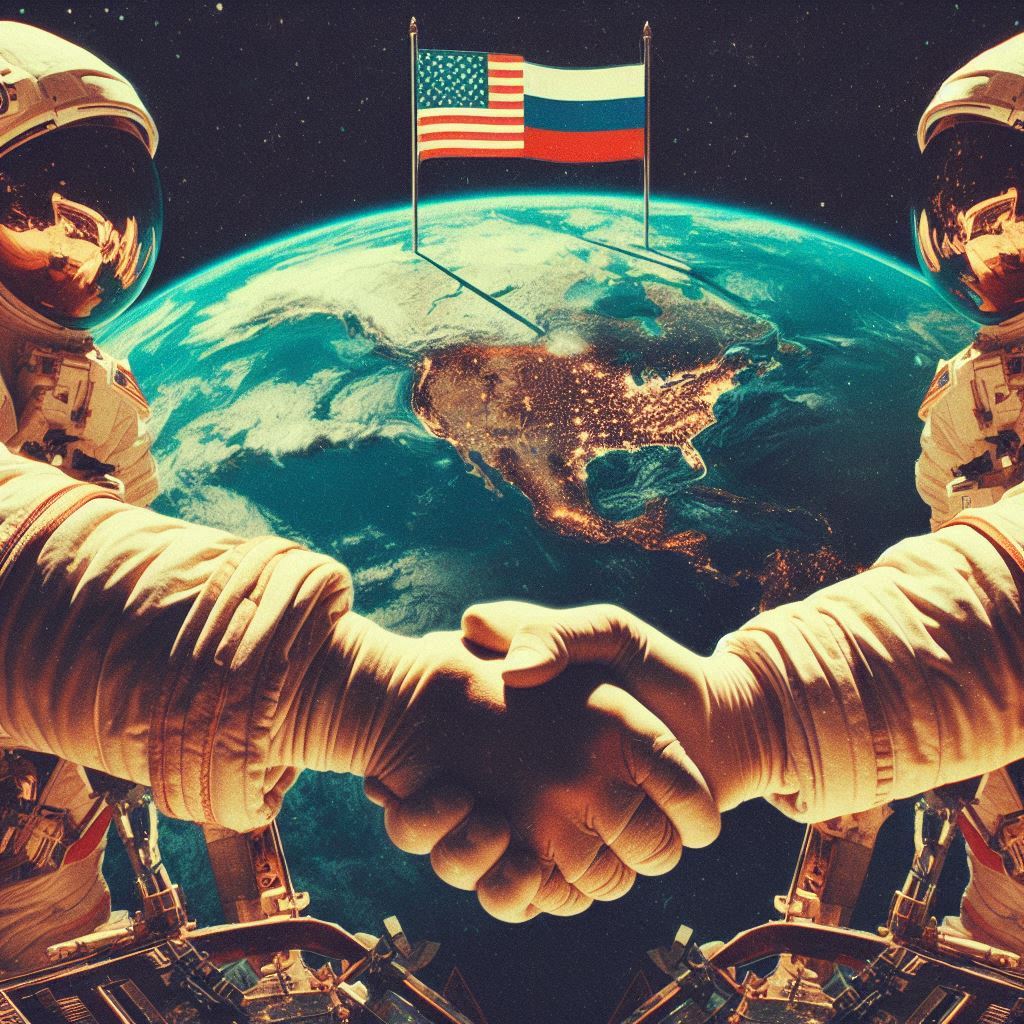
Image generated by AI

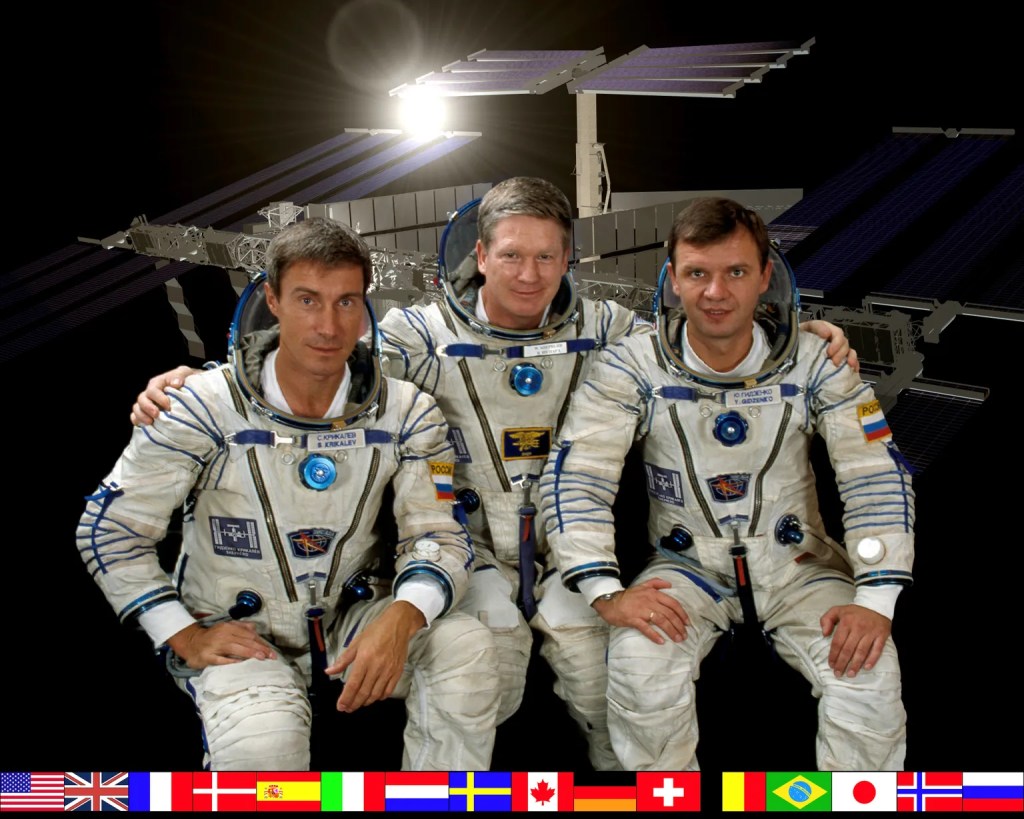
In November 2000, the first long-duration crew arrived at the International Space Station. Bill Shepherd, an American commander, and two Russian cosmonautsโ€”flight engineer Sergei Krikalev and Yuri Gidzenko, commander of the Soyuz, the spacecraft that would dock with what was then still a work-in-progressโ€”a floating symbol of what postโ€“Cold War cooperation could look like.

The launch of the Expedition 1 crew occurred a week before the United States presidential election, so it got little attention in a country that had long been uninterested in space travel following Apollo 11โ€™s inaugural moon landing in 1969. As Earth turned over from the 20th to the 21st century, the astronauts, American and Russian together, were laughing. They passed food between themโ€”thermostabilized packets from the Americans, cans from the Russiansโ€”like it was the most natural thing in the world: Earthbound enemies suspended in zero gravity, passing rehydrated beef stew between them, as if it were nothing at all.

Sergei Krikalev, Bill Shepherd, and Yuri Gidzenkoโ€”the first long-duration ISS crew, November 2000.

At the time, we were told this was the future: peace, cooperation, progress. The International Space Station wasnโ€™t just a scientific endeavorโ€”it was a gesture, a fragile handshake held across decades of suspicion and vacuous sky.

But, less than a year later, the twin towers would fall, and Vladimir Putinโ€”already acting president and suspected by some as the mastermind of the 1999 apartment bombings in the Russian cities of Buynaksk, Moscow, and Volgodonsk, that were blamed on Chechen terroristsโ€”would begin tightening his grip on Russia. The future that was supposed to begin in orbit began to dim. But for a moment, we believed. For a moment, we shook hands in zero gravity.

Before I ever understood what space really was, I watched 2001: A Space Odyssey. I was too young to grasp its plot, but I was mesmerized by its silence, its strangeness, its vastness. My father, born in 1950, came of age with the Mercury, Gemini, and Apollo programs and remembers the moon landing as a moment of pure awe. Though, it was my mother who told me something that really stayed with me: that the filmโ€™s depiction of American and Soviet scientists working together was, at the time, almost incomprehensible. Cooperation wasnโ€™t the story we were told. Maybe thatโ€™s why I loved the film so much.

Later, Iโ€™d watch Apollo 13 on repeat until I could recite the lines from memory. Something about the combination of disaster, ingenuity, and quiet collaboration gripped me. And growing up in a mixed household full of inherited ambivalence toward Russia, I found myself fascinated by its history. I had picture books about imperial princesses and ballet legends like the Nijinsky siblings, who were technically Polish but always shelved under Russian greatness. At nine, I watched all seven hours of the Soviet War and Peace on grainy VHS, courtesy of our upstairs neighbor from Biaล‚ystok. By the time I moved to Brighton Beach as an adult, the Russian language was already familiar to my ears. It felt like part of the background music of my life.

My mother and sister spent their early years in Communist Poland. My motherโ€™s stories from that time flickered between drudgery and grandeurโ€”ration lines one minute, impromptu trips to the Black Sea the next. Iโ€™m not sure if this really happened, but I remember her telling me she visited Crimea once, back when it was just another stop in the vast, fraying tapestry of the USSR.

Those stories stayed with me. I grew up with inherited suspicionโ€”my Polish Catholic motherโ€™s disdain for Soviet control, my Ukrainian-Jewish grandmotherโ€™s grief for a familial homeland that kept changing names, borders, and loyalties. And yet, I was always drawn to Russiaโ€™s scale, its ghosts, its contradictions. I read about the Romanovs and the Bolshoi. I wanted to experience the white nights, the Mariinsky, the Hermitage.

The International Space Station was never supposed to workโ€”not in the literal sense, but in the geopolitical one. Built in pieces, launched across decades, and held together by bolts, code, and diplomatic tape, it was the improbable child of Cold War rivals who had once raced to the Moon with clenched fists. NASA and Roscosmos led the partnership, but Europe, Canada, and Japan also contributed crucial modules, technology, and crew. It was a patchwork not just of hardware, but of philosophies. For years, it worked. For years, it floated above the mess we made of things down here.

The first real fracture came early. In February 2003, the space shuttle Columbia disintegrated on re-entry, killing all seven astronauts aboard including Ilan Ramon, payload specialist and the first Israeli in space.

The seven astronauts of Columbiaโ€™s final flight, STS-107. All were lost when the shuttle disintegrated during re-entry on February 1, 2003.

The tragedy rippled quietly through the programโ€”no explosions, no thunder, just a slow unraveling of confidence. Flights paused for over two years. The shuttle program limped along until its retirement in 2011, ending not just an era of American spaceflight, but the illusion that the U.S. could reach the stars on its own.

After Columbia, every American astronaut en route to the ISS had to ride in a Russian Soyuz capsule, launched from the Baikonur Cosmodrome in Kazakhstan. It was an ironic dependenceโ€”Cold War rivals now relying on each other to keep a shared dream alive. NASA paid Roscosmos tens of millions per seat.

Soyuz (ะกะพัŽะท) means โ€œunionโ€ in Russian.

And for a while, it was.

There were delays. Language barriers. Political tensions. Budget fights. But the station stayed occupied. The trust held. In orbit, American beverage pouches floated next to Russian canned goods. Translations happened midair.

What should have been a vulnerability became a strange kind of strength. The United States and Russia had to keep talking. Had to keep trusting. Thereโ€™s no solo option in orbit. On board, there was protocol, but also a quiet intimacyโ€”shared meals, joint repairs, music, jokes. Americans drank Russian tea. Russians used NASA equipment.

As the station quietly orbited above, Earthโ€™s priorities shifted. The U.S. turned space travel over to billionaires. Blue Origin and Virgin Galactic promised joyrides for the ultra-rich. Exploration in the name of science gave way to spectacle.

Russia turned inward, too. In 2014, it annexed Crimea. Sanctions followed. Diplomacy shriveled. Yet American astronauts still boarded Soyuz capsules. Russian cosmonauts still floated beside them in orbit. The cracks widened, but the station heldโ€”for a while.

The irony was striking: countries that could no longer share a diplomatic table were still brushing their teeth together in microgravity.

It became harder to explain, even as it became more essential. In an era of slogans and strongmen, the ISS was a relic of nuance: a space that required mutual trust, translation, and presence. There was no spin room in orbit. Just recycled air and shared responsibility.

Things began to shift more rapidly. In May 2020, SpaceX launched its first crewed Dragon 2 flight, marking the return of human spaceflight from U.S. soilโ€”and the beginning of a new era.

The reliance on Soyuz faded, but the fragility of the partnership remained. Roscosmos issued symbolic threats to cut ties, then reversed course. Diplomats bickered. Strongmen postured. Still, the station enduredโ€”crewed, humming, quietly miraculous.

The irony was inescapable: countries that could no longer sit at the same diplomatic table were still brushing teeth together in microgravity. Still trading language lessons. Still trusting each other with the air they breathed.

In 2022, Russia invaded Ukraine. The last illusion of postโ€“Cold War diplomacy shattered. Not long after, NASA confirmed plans to decommission the International Space Station by the end of the decade. There would be no multinational successorโ€”no shared orbiting lab, no continuation of that fragile alliance. Just private stations, corporate payloads, and a new Cold War chill.

Russia threatened to withdraw from the ISS by 2024, then backtracked, then contradicted itself again. The choreography of cooperation became clumsyโ€”almost dangerous. Trust wore thin.

Still, astronauts and cosmonauts floated side by side, growing lettuce in zero gravity while their governments postured on the ground below.

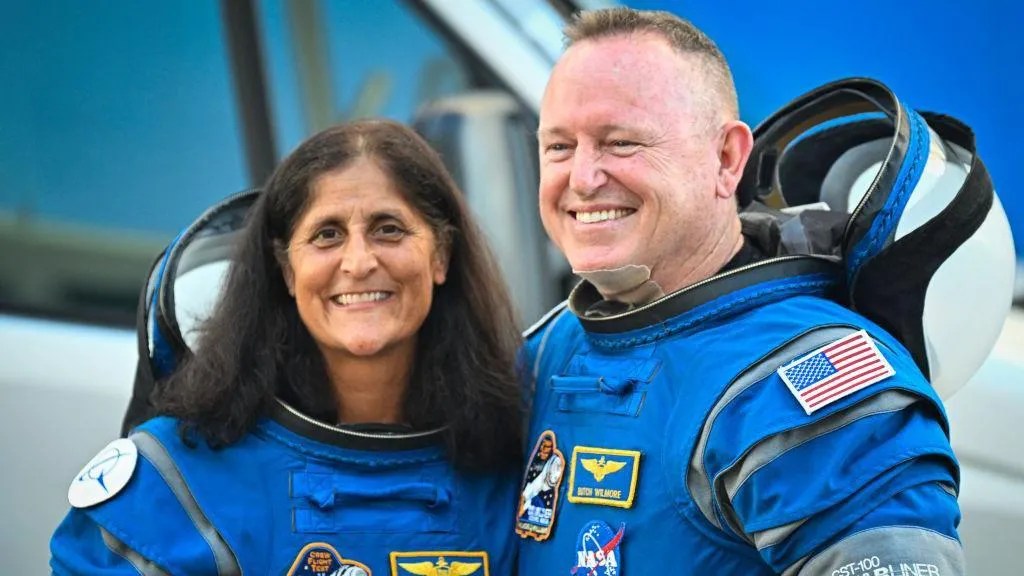
Most recently, two NASA astronautsโ€”Barry โ€œButchโ€ Wilmore and Sunita Williamsโ€”were stranded on the station for months after a routine mission was extended due to technical issues. The mission was only supposed to last eight days. NASA couldnโ€™t bring them home. SpaceX had to step in.

NASA astronauts Williams and Wilmore, whose ISS mission was extended due to technical delays. They returned home in March 2025 via SpaceX.

The irony was sharp: the most powerful country on Earth, unable to retrieve its own crew from a station it helped build.

The International Space Station was a relic of a brief, flickering hopeโ€”when cooperation wasnโ€™t just a dream, but an orbit. It never made headlines the way invasions or elections did. It just stayed up there, turning silently, asking us to believe in something bigger than flags.

Now that hope is dimmingโ€”not with fire or spectacle, but with the quiet dismantling of something too fragile to sustain. One module at a time. One silence at a time.