75 years ago today, a man named Lewis Brian Hopkin Jones was born in Cheltenham, Gloucestershire, England.
He would later be known as Brian Jones, the founder of the Rolling Stones.
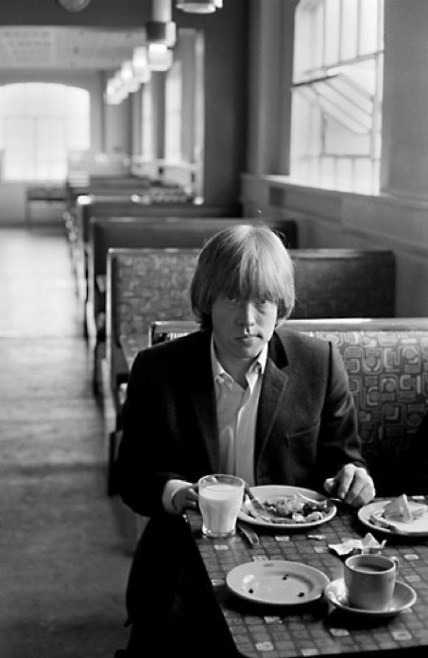
Brian Jones, circa 1965.
For those who may not know, I am an enormous Rolling Stones fan, and have been for many years. I have always been really irritated by the fact that so many people, including those who seem to be fairly knowledgable about rock music, don’t appear to have ever heard of Brian Jones. Given his many unique musical contributions to several of the band’s hit songs from 1962 to 1968, it’s a damn disgrace that this guy has never received the recognition he deserves.
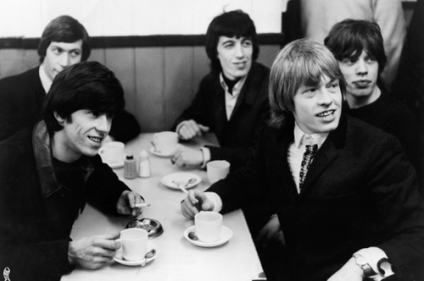
Brian with the band (from left: Keith Richards, Charlie Watts, Bill Wyman, Mick Jagger.
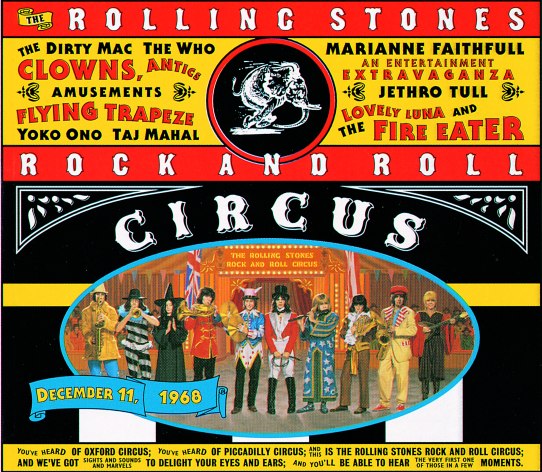
That all being said, Brian had his demons. He was a very emotional person, and he consumed a great deal of drugs (this was actually a couple of years before the onset of Keith’s very long tangle with heroin). He had awful mood swings, and was prone to self-isolation. The Stones formed in 1962, and by 1967 Brian had already become estranged from the other members of the band. His last contributions were on Beggar’s Banquet, and his final public appearance as a Rolling Stone was in Rock and Roll Circus in December of 1968.
Brian would be officially replaced in June of the following year, by Mick Taylor.
The Rolling Stones Rock and Roll Circus (1968) – If you can find this, you should watch it because it is AMAZING!
In the earliest hours of July 3, 1969, Brian Jones was found dead at the bottom of his swimming pool at Cotchford Farm (coincidentally the house where A.A. Milne authored the Winnie-the-Pooh books). The cause of death was attributed to overuse of drugs and alcohol which enlarged his liver and heart, and presumably caused him to fall into the pool and drown.
Unfortunately, by the time Brian died, the world of rock & roll music had already moved on. It’s odd; although he was only 27 years old at the time of his death, he is seldom included in “27 club” memorials. This bothers me in a very personal way. I recall one night, when I was in college, where I attended one such memorial that was taking place on my campus. Upon realizing that Brian Jones was omitted from the ceremony, I proceeded to make a big to-do, and stormed out. I huffed and puffed around for the rest of the night (a bit excessive yes, but I suppose that’s just the way I am).
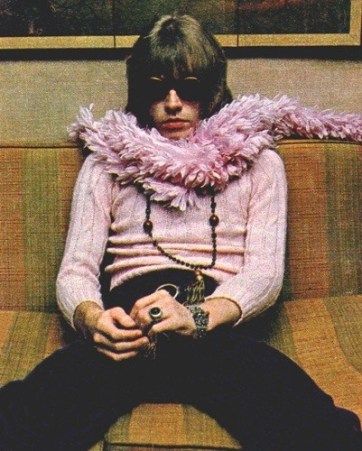
This is definitely either ’66 or ’67. Not sure which, but if I had to guess I’d say 1966.
Perhaps one day I will write a longer piece about Brian Jones. I do have several years of notes that could be put to good use… It’s funny how people can have a powerful presence for a short period of time, only to be forgotten soon after. Brian was friends with many of the biggest names in music, including Jim Morrison, who would die exactly two years later, at the same age. Unless I am seriously mistaken (which I doubt), Morrison wrote a beautiful statement after Jones’ death. I wish I had it in front of me, but I definitely have a copy of it somewhere.
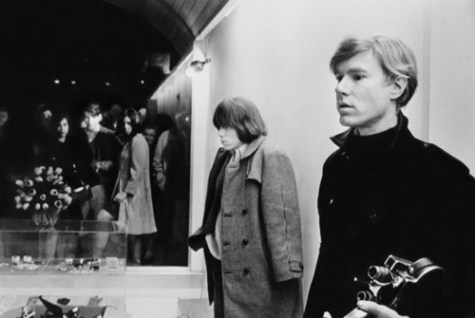
All the dark stuff aside, some of my favorite anecdotes about Brian come from another dead figure I feel close to, Andy Warhol. Andy and Brian met early on, I believe in 1964. In POP:ism The Warhol Sixties, Andy refers to “…tiny Brian with his pale, pale skin and fluffy strawberry blond hair…”.
That one always makes me chuckle.
A rare shot of Andy and Brian together, taken by Nat Finkelstein in 1966.
Well, that concludes tonight’s post. I’m rather busy this week, but new content will be forthcoming.
I have wanted to write something regarding Warhol all day, but coming up with the right words has been rather challenging.
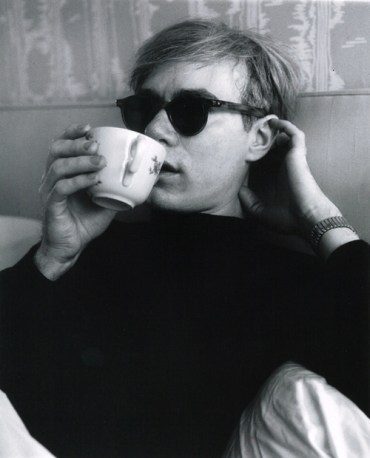
30 years ago today (February 22, 1987), Andy Warhol passed away in his sleep after undergoing gallbladder surgery. Although I hadn’t yet been born at the time of his death, I have for years been profoundly affected by his legacy and vast body of work. Anyone who knows me can tell you that I frequently refer to Andy as my “life idol” (for better or worse).
Andy Warhol (Photo credit unknown, unfortunately)
I wish I could explain precisely why I feel such a connection to Andy Warhol, but I don’t think I really know how to explain it. All I will say is that I admire his creative output, in terms of both quality and quantity. I love how obnoxious he was when it came to describing his work. I love how he took complete advantage of the commercial art world, generating edgy, avant-garde masterpieces that managed to seamlessly permeate the mainstream. I think he was brilliant, I truly do.
Searching for inspiration in a supermarket…
He found it, and now it hangs at MoMA.
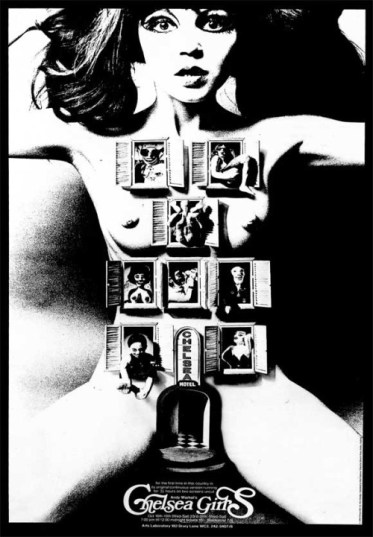
I have been familiar with Andy Warhol’s work my entire life, but it was when I discovered his filmography that I really became obsessed. Several years ago, I came across some stills from his Chelsea Girls (1966) in an introductory film studies textbook. I could tell right away that seeing that film would change my life. It took me several months to find Chelsea Girls, but the wait was worth it. This long-winded, virtually incoherent, creatively daring tour de force won me over with its style and substance. I aspire to produce something like that one day. It’s one of my top ten goals in life (no joke)
I’m not even going to try to explain what this film is; you just really need to see it.
Anyway, I could write a 4o -page essay about this right now (I did it my undergrad!), but today is almost tomorrow and I just want to get this up and out there. In conclusion, Andy Warhol continues to be the premier creative influence in my life, and I am always happy to explain why and defend my assertions if necessary.
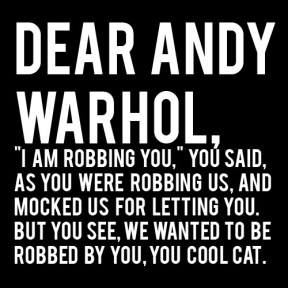
I found this graphic on my old hard drive today. I have no idea where it’s from, but I think it would be nice to end this post with it:
Sounds kind of crazy, maybe? I don’t think so, but allow me to explain:
I absolutely LOVE to travel. I love learning new languages, I love geography, I love crossing places off of my bucket list. It’s a thrill, and I get pleasure out of knowing that I am comfortable going almost anywhere as a solo traveler when so many others (especially fellow women) are often reluctant to do so. For me, there is nothing more wonderful than finding myself in a brand-new place, with a brand-new culture and language.
So, almost two and a half years ago, I visited Israel for the first time. I didn’t go for any kind of religious or political reason, but out of simple curiosity. I wanted to learn more about the Israel-Palestine conflict, but I also just wanted to experience life in the region and talk to people who live there.
Before I even boarded my flight, reality struck like a hammer to the head. I was booked on El Al, Israel’s national airline, and I was unprepared for the onslaught of questioning that I would be subject to before I could even get in line to go through security. It was intense; I ended up being sequestered with two other redheads, and we sat together as a group as the El Al staff searched all of our belongings. Fortunately, we made our flight. Although I was shaking a little, I was very happy to be on the plane and on my way.
Long story short, I ended up spending a solid portion of 2015 living in Israel. I lived in Tel Aviv, a liberal, cosmopolitan, and very beautiful city. I worked at a startup incubator on the port off of the Mediterranean Sea. I made a great friend, began to learn two languages, and saw a lot of wonderful art. I also visited parts of the West Bank, witnessed religious extremism up close, had additional problems with Israeli security, and saw quite a bit of government-endorsed discrimination. I guess you could say my experience was a mixed bag, but it was certainly an adventure.
I get bored easily. I get antsy. My focus in life right now is getting a full-time job but I do hope to return to the region one day. I want to see more of the West Bank, and I also really want to go to Jordan. Maybe UAE too, or Qatar. I am very aware, probably more than most people, of the various instabilities in the Middle East. But that’s not necessarily a deal-breaker for me. Life is risk, and although I don’t plan on traveling to any war zones, I do want to spend more time in that part of the world. Life for me is a learning experience, a class that I never want to end.
I have a ton of photos from my time in Israel, but I’m going to divvy them up. I’m saving conflict-related shots for a future post. I also have a series of photos of Tel Aviv’s street cats, but that will also be saved for another day.
Tonight’s pictures are some of my most personal I guess. I have better shots, but these are just the introductory images. I don’t know…
Enjoy, hopefully:
I got off the plane and this is where I went first: the village of Zikhron Ya’akov. (c) Gabrielle Lipner 2015
Two cousins in the middle of the Negev Desert, in the dead of winter. (c) Gabrielle Lipner 2015
Dog in the desert (c) Gabrielle Lipner 2015
Me, with my friend Alina, in the village of Ein Hod. (c) Gabrielle Lipner 2015
My roommate, Sara. We disagreed all the time about almost anything, and yet we still managed to get along famously. (c) Gabrielle Lipner 2015
New Central Bus Station in Tel Aviv, where someone spoke to me in Arabic for the first time. (c) Gabrielle Lipner 2015
A street in Jerusalem. Not really my scene, but still cool. (c) Gabrielle Lipner 2015
Inside a mosque in Haifa. (c) Gabrielle Lipner 2015
Cofix, a haven of really cheap sandwiches and coffee drinks. (c) Gabrielle Lipner 2015
Respect your local vandals. I have a ton of great graffiti pics, but they’ll have to wait for another day. (c) Gabrielle Lipner 2015
I think that’s enough for one night. Thoughts welcome, as always.
I’ve been rather busy lately. Between my seemingly endless search for a full-time job and my volunteer position at the Paley Center for Media, I haven’t been able to dedicate my attention to writing as much as I’d like. No complaints, though. I am getting things done, and I even had time to do a little last-minute Valentine’s Day photo shoot for an old co-worker of mine.
Enjoy the photos. More writing stuff coming very soon.
I am a lover of the avant-garde, the weird, the obscure, and the almost-impossible-to-find. I myself am rather weird. After all, writing essays is one of my favorite hobbies and I perform research in my spare time, trying my best to investigate various topics that are off the beaten path.
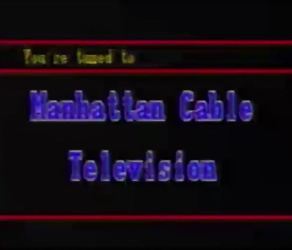
My current fascination is with obscurities from the heyday of Manhattan public access TV (roughly the mid-seventies through the mid-eighties). In spite of the overwhelming lack of available resources on the subject, I have spent the last week and a half conducting research on it. I am currently in the midst of writing two related pieces on specific programs that fall under the Manhattan Public Access Cable umbrella, and I thought I would write this overview and post it first so that I can reference it in future essays.
Now, for your learning pleasure:
My, how video ages poorly…
Public access television can be loosely defined as a form of non-commercial mass media where the general public can create original content which is then “narrowcast” through cable TV specialty channels. Narrowcasting (not sure if it’s an actual word in the dictionary or just an industry term) refers to the distribution of information to a niche audience. In the case of public access, the niche audience would be a local community (which, in the context of this essay, is the NYC borough of Manhattan).
The rationale for public access television actually predates cable technology, and goes all the way back to the Communications Act of 1934. The Communications Act, although at the time referring to radio and wire service, posited that the airwaves belong to the people and that it is necessary in a democratic society to multiply public participation in political discussion by providing opportunities to do so outside of the mainstream media.
Now, I don’t know about you, but I actually didn’t have cable when I was a kid. My family had an old-school boxy analog TV, complete with an antenna on the top that sometimes needed to be wrapped in aluminum foil in order to get better reception. When I was really little, we hadn’t even gotten a color set yet. One of my most prominent childhood memories is of my father setting up our first ever color television: a bulky Sony Trinitron, which at the time represented some of the best in cathode-ray tube technology, with incomparable color and image quality. That I night I saw the Simpsons’ yellow flesh for the first time, and I remember finding it shocking and exciting.
This was cutting-edge in 1994.
Although I personally didn’t make the transition from analog to cable until 2005, the technology behind cable television dates back to the 1950s. Allow me to briefly describe the differences between the two technologies in a (hopefully comprehensible) nutshell: analog television functions via signals transmitted on a particular radio frequency, from the TV stations’ transmitting antenna over the air to the receiving antenna on the top of your TV set. Each station, and therefore each channel, corresponds to a particular frequency. Cable television is technologically different, primarily because it functions via radio frequency signals transmitted through cables (traditionally, coaxial cables and now fiber-optic cables) that are located underground. Get it? I hope so, because it sure took me a long time to figure out how to explain it.
Public access television has always been exclusively a cable phenomenon. While experiments in non-commercial local television date back to the late 1960s, the unofficial first year of public access was 1971, when cable television began its introduction to the American public. The following year, the Federal Communications Commission (FCC) mandated that all new cable systems in the country’s 100 largest markets provide channels for government, educational purposes, and of course, community public access.
Manhattan was the first American metro area to be wired for cable and consequently it established the world’s first public access channels. Black-and-white signals had always been able to transmit over the air with no problems but with the onset of color TV, Manhattan’s towering skyscrapers badly interfered with reception. In order for color sets to sell, the only option was to lay cable underground, beneath the streets, to limit service disruptions.
In 1970, two companies, TelePrompTer and Sterling-Manhattan Cable agreed to pay the city $30,000 each in annual royalties in return for 20-year franchises. The two companies divided the island between them, with Sterling-Manhattan Cable taking 86th Street and below, and TelePrompTer taking everything above. Those earliest cable subscribers paid $5 a month to get all regular channels in color, plus the “flagship” channel 10, which offered about 12 hours of eclectic programming a day, including a show produced by New York magazine. In return for subscription fees and their contract with the city, the cable companies would provide studio space, training, equipment, and airtime for free, to anyone who wanted it, on a first-come, first-served basis. They also consented to reserve two channels for the direct participation of the public and commercial-free self-expression. These channels, channels C and D, both premiered in 1971.
Channels C and D birthed an entirely different breed of programming, one that often reflected the interests of groups and individuals on the fringes of society, excluded from mainstream television. Public access TV was also unique in that it was not subject to conventional network censorship, only to obscenity and libel laws. Cable companies were to allow the public to go uncensored except where it was necessary to protect themselves from liability.
Naturally, Manhattan’s public access offerings pushed boundaries from the get-go, and there was immediate confusion regarding content. Some of the earliest programs had their tapes edited for harsh language, only to have the cuts restored the following day, after it was determined that the content did not violate the cable station’s terms of use. However, people would continually test the limits of what was acceptable, and this would eventually lead to the creation of a third public access outlet, Channel J.
In 1976, Channel J, the very first “leased access” channel was created. J was different from C and D; airtime slots were not free, but ran $50 apiece. However, producers were permitted to sell spots to advertisers, making Channel J the first commercial public access channel ever. From its inception through to its extinction in 1991, Channel J was plagued by controversy and threats of legal action due to its bizarre assortment of off-color adult programming. However, the controversies should not diminish the fact that Channel J provided a unique opportunity for talented performers to produce original content and subsidize their own creative endeavors. Whether or not anyone was watching is a different story.
It really breaks my heart that many (if not most) of the early public access shows are long-gone, with only print sources remaining to inform us of their existence. The most common reason for this considerable loss is simply the deterioration of the mediums on which these shows were recorded. Many of these programs were taped on early consumer-grade video, like the Portapak, which degrades fairly quickly and is exceedingly difficult to copy (something I actually know from personal experience). It’s unfortunate, because the Portapak allowed for a great deal of independent, innovative, on-the-go video production but due to its chemical instability, much what was produced is now lost. Plus, by 1980, live studio facilities would become a key facet of public access programming, and the technology would evolve accordingly.
Now, this post could certainly be longer, more comprehensive, and perhaps a bit less dry. But this essay is really just an overview, an introduction to things that I will be writing about in the very near future.







 factorycandy