I have a lot to say, and I enjoy writing. However, I am very tired tonight, so I thought I would post some of my favorite photographs that I’ve taken over the past few years. Enjoy the visual pleasures, and stay tuned for more essays/text posts coming very soon.
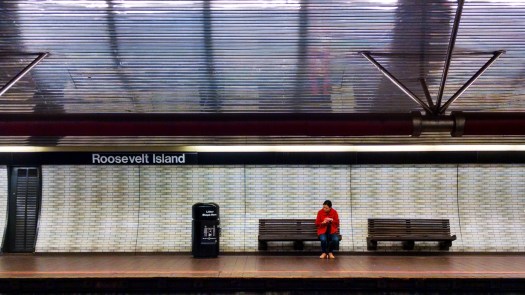
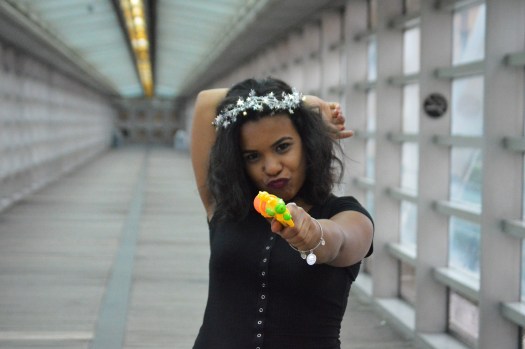
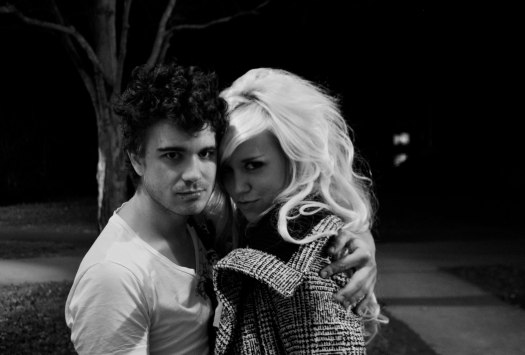
Roosevelt Island subway station, New York, NY. November 2015. (c) Gabrielle LipnerTribeca, New York, NY. August 2016. (c) Gabrielle LipnerWestchester, NY. November 2012. (c) Gabrielle LipnerSyracuse, NY. August 2016. (c) Gabrielle Lipner
IMAGERY – according to the Merriam-Webster dictionary – is defined as 1. the product of image makers, 2. figurative language, and 3. mental images (i.e., memories or the products of imagination). The majority of what we humans process comes at us in a visual form.
Several years ago, when I was a sophomore in college, I decided that I would attempt to start an “Imagery Club”. It was an ambitious undertaking which ultimately failed because the name of the club was so vague that no one knew what the hell it was. Basically, what I had in mind were weekly meetings where people would get together and talk about images and their influence. Each person would bring in a picture or video clip or whatever and we would talk about what we were looking at. The Imagery Club lasted a month and a half, and had three members at its peak. Meetings lasted about twenty minutes. The club was a failure, but I had fun.
What is the purpose of this lengthy preamble? Well, if there is anything I’ve learned from the Imagery Club, it’s that I think an awful lot about how images affect and influence us. That pretty much describes my entire undergraduate field of study (Cinema Studies major, Art History minor). Imagery extends beyond what is visual, but when I refer to images in the context of this post, I am mostly referring to pictures.
Visual images manipulate the way that we perceive reality, and when I use the word “manipulate”, all I mean is that pictures factor into what we like, what we want, and how we feel about everything.
I have been told that my upbringing differs from that of most “millennials”. I never experienced “helicopter parenting” and I was more of a latchkey kid than anything else. My parents were self-described intellectuals who didn’t believe in censorship, but the quality of whatever I was consuming had to be first-rate (or at least have some kind of socially redeeming value). I ended up watching a lot of old movies and TV shows (and a ton of TV news), and spending time reading a vast array of books and magazines. Nothing’s changed; I like what I like and I care about what I care about.
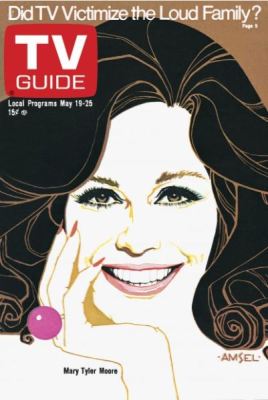
Growing up, my favorite magazine was TV Guide. From TV Guide, I learned a huge portion of what I now know about television history. I made it a point to watch at least one episode of every show that TV Guide had deemed culturally significant. When Mary Tyler Moore passed away three days ago, I was filled with a peculiar sense of nostalgia. While I did occasionally watch The Mary Tyler Moore Show and its most famous spin-off, Rhoda, when I was a kid, most of what I know about them came from TV Guide and various books on television history.
Mary Tyler Moore on the cover of TV Guide: May 19, 1973
I love history. I love television. I love movies. I love magazines. I love books. I love news, in all its forms. I also love the First Amendment. As stated above, my parents were staunchly opposed to censorship, and I am no different.
Freedom of speech and the free flow of information are critical to maintaining a healthy democratic society. Even something as seemingly nonthreatening as TV Guide can function as a valuable cultural resource, particularly in times of strife. Images and stories are important, and can serve to keep us from repeating history’s mistakes!
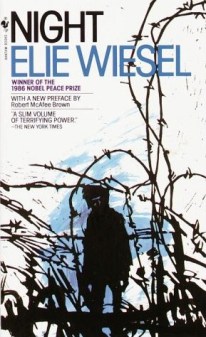
Having been a latchkey kid, I got terrible grades in junior high school. However, my reading and writing skills were really good so I was placed in the “gifted” Creative Writing class. It was there that I became exposed to some of the most influential texts from modern history, including Elie Wiesel’s Night, which I read when I was eleven.
Elie Wiesel’s Night (1960)
Yesterday was International Holocaust Remembrance Day, and it got me thinking about this book again. Those who haven’t read it, should. It is historically significant, it is strangely poetic, and it BITES. And as an eleven-year-old history buff growing up in a home with no prohibition on images, it propelled me into a fact-finding frenzy. I ended up compiling a comprehensive file on the Holocaust, complete with some of the most horrifying photographs I have ever seen in my life.
Now, those images entered my brain when I was pretty young and they affected me in a multitude of subjective ways (as a child, as a female, as a person of European Jewish heritage, etc.), as well as just a human being on Earth. Pictures do speak louder than words (as much as I love words), and they can affirm reality in the face of skeptics. Some things need to be seen, by everybody, even if we don’t want to look.
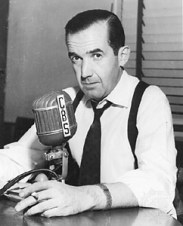
The U.S. Army arrived at Buchenwald, the concentration camp where Elie Wiesel was imprisoned, on April 11, 1945. The following day, legendary journalist Edward R. Murrow, along with his associate Bill Shadel, were the first reporters to reach the camp.
In his radio broadcast which aired three days later, Murrow relayed his story of the nightmare of Buchenwald. The report is eloquent, but unembellished. Murrow innately understood that the world needed to hear what he had to say about the gas chambers, emaciated bodies, and corpses piled into heaps. He knew that at that moment in time people could not, should not, be spared from the truth’s sharp teeth. As the broadcast concludes, he states “If I have offended you by this rather mild account of Buchenwald, I am not in the least sorry.” There’s a reason this guy is a legend.
Edward R. Murrow at CBS Radio
The first version of Night was longer, reportedly more macabre, and entitled And the World Remained Silent. The world did remain silent, until it was too late for many.
It is the responsibility of journalists (and often artists as well) to show people the truth, in a way that makes that truth inescapable. We should be grateful to journalists and artists for sticking their necks out at times to ensure that we all know what the hell is going on. A free press is crucial to any democracy, and state-sanctioned censorship can sometimes signal the beginning of an end of an era.
This brings us to our current moment:
The two main points that I am trying to get across in this post are as follows:
Images manipulate the way we perceive reality, and how we feel about things
Images and stories, along with freedom of speech and the free flow of information, are CRITICAL to maintaining a healthy democratic society
This past week has been a whirlwind of shit (I don’t usually like to swear but you know what, it’s warranted). I for one am grateful to all the people who risk censure or worse in order to bring truths into the light. We have a First Amendment, and if we do not actively defend it we might one day wake up to find that it is with us no longer. Let us not waste any time.
The actions of the Trump administration are not only frightening; they are also baffling because they differ so much from what we thought was normal or acceptable. I am happy that the media has continued to prod, question, and point out the many inconsistencies within the Trump cabinet, although I also feel like it really isn’t enough.
I am disgusted at what has happened today and continues into the night. The world needs to not remain silent. We must not permit the images of what has been going on in Syria and Yemen, along with what is happening at JFK Airport in New York City, to leave us. Images are IMPORTANT. I hate the guy with a passion, but perhaps if Donald Drumpf Trump had read Night or listened to Murrow’s broadcast or seen Alain Resnais’ Night and Fog (1956) he would think twice before turning people away. Then again, probably not.
To all who have read this up to this point, thank you for sticking with me. More to come soon.
Second post. I have no idea what I’m doing but I am attempting to sound intelligent while doing it.
So… today marks the birthdays of two deceased guys I like a lot: Warren Zevon and John Belushi. A lot of people I like, even love, are no longer with us. I guess that’s the price I pay for only liking old things (music, movies, TV shows, etc.). You know what? I accept that, and I am okay with it.
I didn’t get into listening to Warren Zevon until years after his death. Although best known for his hit “Werewolves of London”, my personal favorite songs of his are “Lawyers, Guns, and Money” and of course, “My Shit’s Fucked Up”. Zevon was a collaborator and friend of Jackson Browne (although I have always considered Zevon to be the superior songwriter).
Warren Zevon
This actually provides a convenient segue, because I was just watching an old Saturday Night Live episode a couple of nights ago, and Jackson Browne was actually the musical guest (total coincidence; I came across the episode when searching for the old Franken/Davis sketches). The episode was from 1977, so of course John Belushi was one of the featured “Not Ready For Prime Time Players”.
John Belushi
I have always liked John Belushi, and felt affected by his death even though he died in 1982, a few years before my birth. But that very sad photo of Bill Murray standing next to his coffin still gives me chills:
Photo credit: Unknown (darn internet!)
I do not care for contemporary SNL, but I LOVE the episodes from 70s (I’m sure I’ll write a separate post about that at some point) and Belushi was critical to the early success of the show. Greek diner, anyone? Samurai deli? BLUES BROTHERS?! Good shit stuff.
So… these two men were and are culturally important, and important to me personally. You should check them out.
I am a young woman. I am also a photographer, research enthusiast, news/history buff, and aspiring intellectual. I currently live in New York City (which is also my hometown), and I am also currently unemployed and seeking a full-time job.
I honestly do not care much for social media (I’m rather old-fashioned you see), and I am bad at introductions. But I have been told that I have some interesting ideas, and that the WordPress platform might be a useful tool for sharing them. So, I will be posting some of my thoughts and photographs and essays here from time to time. I don’t quite know what I want out of this, but here goes nothing.





 factorycandy